It's a familiar feeling for anyone managing a commercial apiary: the end-of-day ache in your lower back. After hours of lifting 50-pound supers, the physical toll is undeniable. You might even chalk it up as the "cost of doing business." But what if that physical strain is just the most obvious symptom of a much deeper, more expensive problem—one that's quietly eroding your operational efficiency and profitability?
The High Cost of "Good Enough" Foundations
When faced with hundreds of hives, the immediate goal is just to get them deployed. For many, the "solution" for a base is whatever is cheap and available: a stack of cinder blocks, old wooden pallets, or perhaps nothing at all. We tell ourselves it’s temporary or "good enough."
This is a common struggle, but the consequences are anything but trivial. These makeshift solutions create systemic problems that directly impact your bottom line:
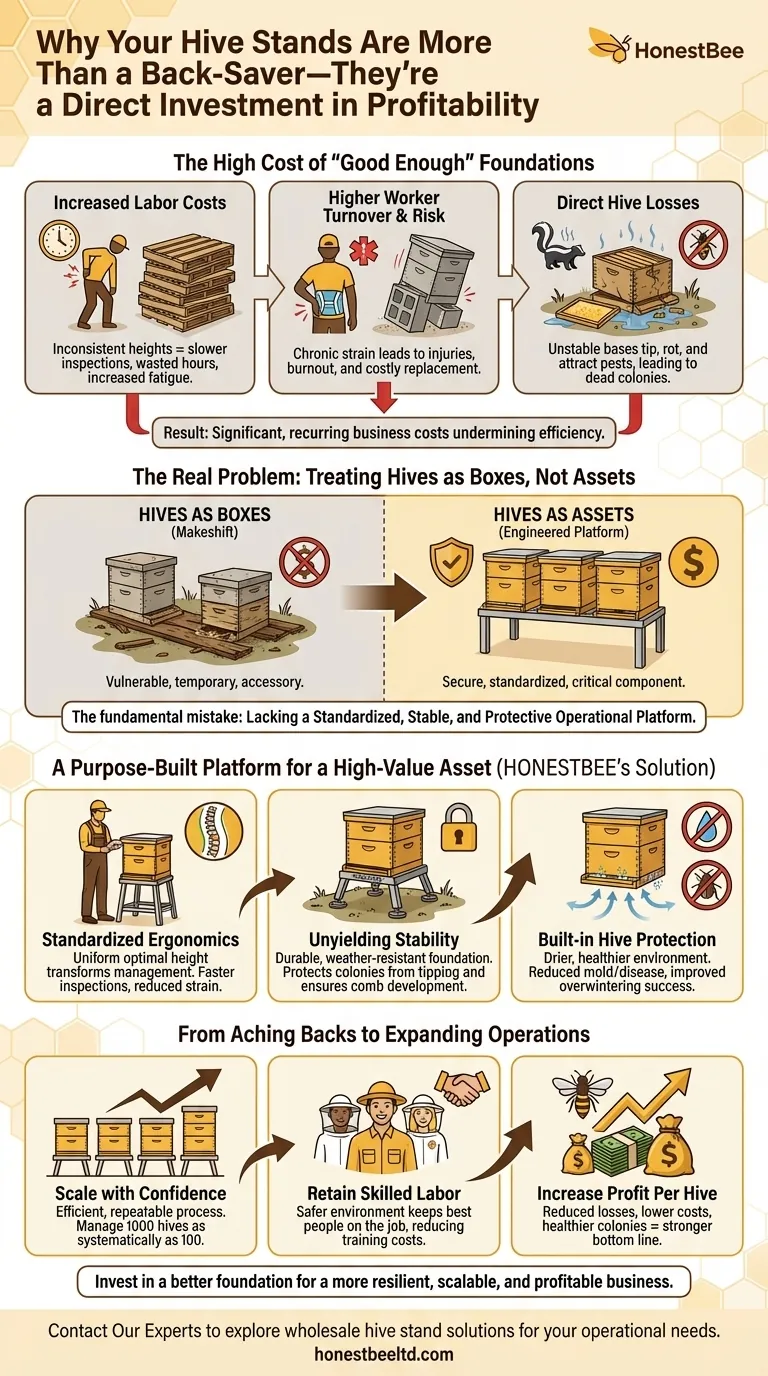
- Increased Labor Costs: Inconsistent heights mean every inspection requires awkward bending and lifting, slowing down your team. Across an entire apiary, those lost minutes per hive add up to hours of wasted labor and increased physical fatigue.
- Higher Worker Turnover & Risk: The chronic physical strain of improper lifting doesn't just lead to aches; it leads to injuries, burnout, and higher employee turnover. The cost of replacing and training an experienced beekeeper is significant.
- Direct Hive Losses: Pallets rot and become unstable. Cinder blocks shift on uneven ground. A single tipped hive means a lost colony, lost production, and lost revenue. Low-to-the-ground hives are also prime targets for pests like skunks and suffer from moisture wicking up from the ground, leading to mold, disease, and weakened colonies that won't survive the winter.
These aren't minor inconveniences; they are significant, recurring business costs that stem from a single, often-overlooked piece of equipment.
The Real Problem: Treating Hives as Boxes, Not Assets
The core issue isn't simply that bending over is uncomfortable. The fundamental mistake is treating the hive's foundation as an accessory rather than as a critical component of your production system.
In any other industry, the platform that holds a valuable, revenue-generating asset would be engineered for stability, security, and accessibility. Yet, in beekeeping, we often place our most critical assets on crumbling blocks and rotting wood.
This is why makeshift solutions inevitably fail. They only address the most basic symptom—"the hive is on the ground"—without tackling the root cause: a lack of a standardized, stable, and protective operational platform.
Cinder blocks can't provide uniform elevation or long-term stability. Wooden pallets actively absorb moisture and offer a haven for pests. These "fixes" ignore the underlying operational principles of asset protection and ergonomic efficiency, which are essential for any scalable commercial enterprise.
A Purpose-Built Platform for a High-Value Asset
To truly solve this problem, you need to stop thinking about "lifting the hive" and start thinking about "securing the asset." You need a tool designed not just for elevation, but for creating a consistent, safe, and productive working environment across your entire operation.
This is precisely why HONESTBEE's commercial-grade hive stands were engineered. They are not an afterthought; they are a solution born from a deep understanding of the commercial apiary's challenges. They are designed to solve the root cause of inefficiency and loss by delivering on three core principles:
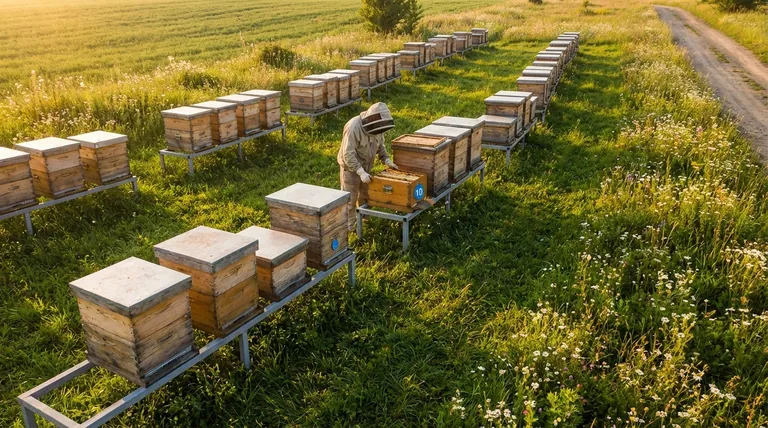
- Standardized Ergonomics: Our stands elevate every hive to a uniform, optimal working height. This transforms hive management from a physically punishing task into a streamlined process. Inspections become faster and more thorough, dramatically reducing labor costs per hive and minimizing worker strain.
- Unyielding Stability: Built from durable, weather-resistant materials, our stands provide a level and unshakable foundation. This protects your colonies—your assets—from the costly risk of tipping over and ensures proper comb development by keeping the hive perfectly level.
- Built-in Hive Protection: By elevating the hive and improving air circulation, our stands create a drier, healthier environment that is less prone to mold and disease. The elevation also forms a crucial barrier against ground moisture and common pests, reducing colony stress and improving overwintering success rates.
From Aching Backs to Expanding Operations
When you solve the foundational problem of hive stability and accessibility, you unlock potential that goes far beyond physical comfort. You create a more resilient and scalable business.
With a standardized system in place, you can:
- Scale with Confidence: Adding new hives becomes a repeatable, efficient process, not an exercise in improvisation. Managing 1,000 hives can be as systematic as managing 100.
- Retain Skilled Labor: By providing a safer and less physically demanding work environment, you can keep your best, most experienced people on the job, reducing training costs and improving the overall quality of care for your colonies.
- Increase Profit Per Hive: Reduced hive losses, lower labor costs, and healthier, more productive colonies all contribute directly to a stronger bottom line. The investment in a proper foundation pays for itself through improved operational performance.
Your apiary is a complex operation, and every component matters. Don't let a poor foundation undermine your hard work and limit your growth. Let's discuss how engineering a better foundation for your hives can build a more profitable future for your business. Contact Our Experts to explore the right wholesale hive stand solutions for your specific operational needs.
Visual Guide
Related Products
- Metal Hive Feet Bee Hive Stand for Ant Protection
- Plastic Bee Hive Stand for Beekeeping
- Metal Bee Hive Stand Bee Box Stand for Beekeeping
- Professional Ant-Proof Beehive Stand with Integrated Moat for Beekeeping
- Plastic Bee Frame Beekeeping Hive Frames for Wholesale
Related Articles
- How to Stabilize Beehive Stands in Wet Soil: Proven Techniques for Beekeepers
- How to Choose and Install a Beehive Stand for Pest Control and Colony Health
- The Unseen Foundation: Why a Beehive Stand Dictates Your Apiary's Success
- Beyond the Box: How a Simple Stand Prevents Compounding Failures in Beekeeping
- The Unseen Architecture of a Productive Apiary: Why Your Beehive Stand Height is a System Design Choice