A Single Feeder, A System-Wide Failure
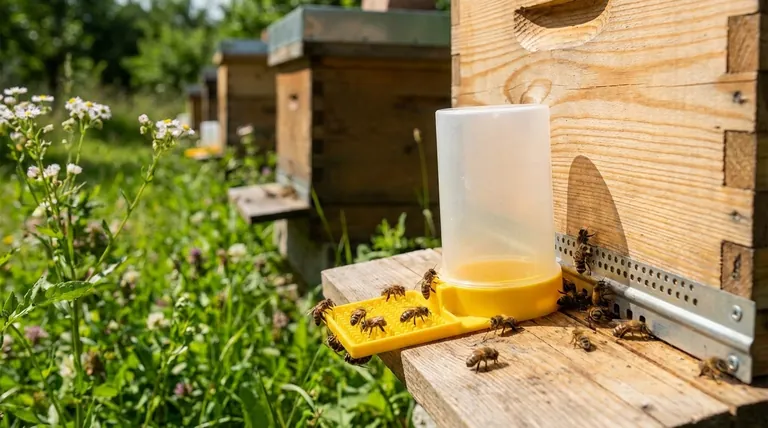
Imagine a beekeeper checking on a new, small colony. A few weeks ago, they placed a convenient entrance feeder, a simple inverted jar, to give the bees a boost. Today, the hive is unnervingly quiet. Inside, the colony is gone, ravaged by robber bees from a stronger nearby hive. The sugar syrup, meant as support, became a homing beacon for destruction.
This isn't just a failed piece of equipment; it's a failure of system design.
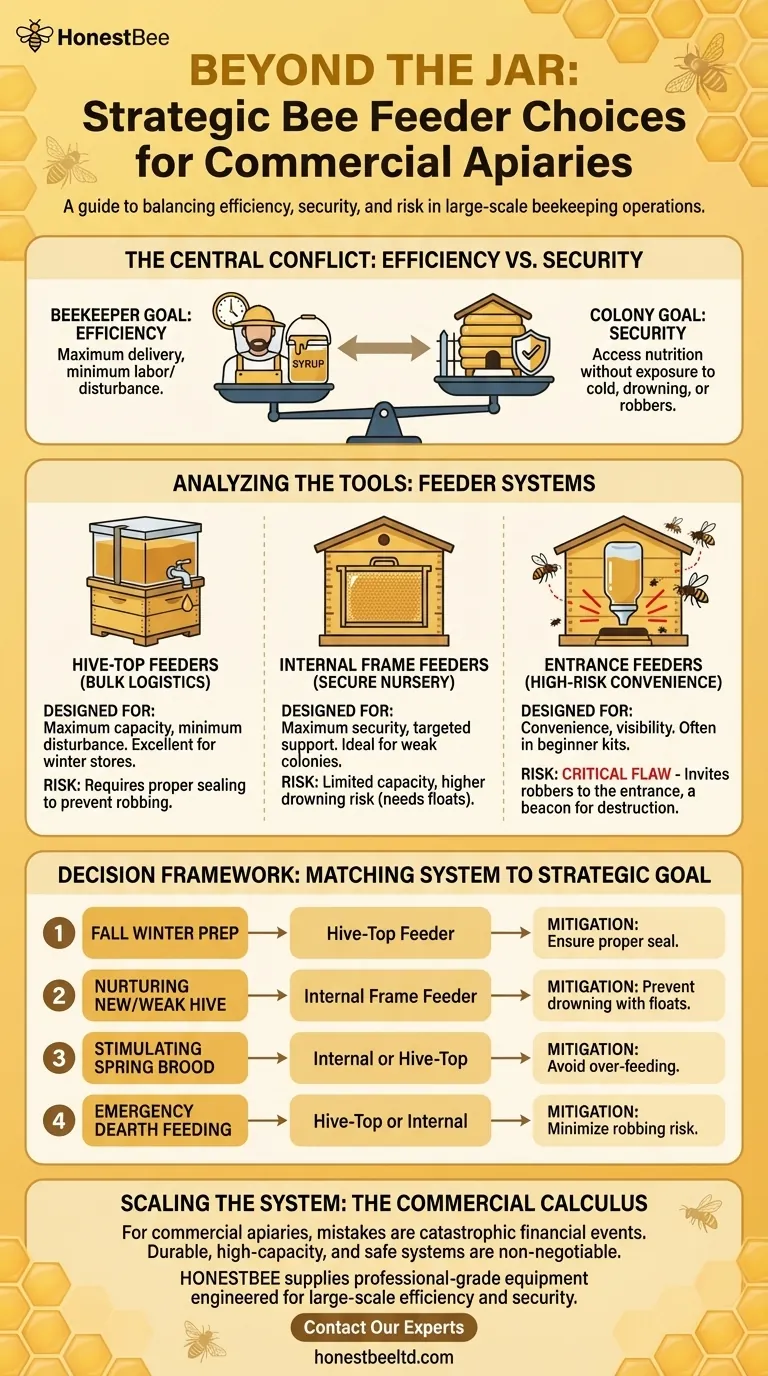
The central challenge of feeding bees isn't about delivering sugar. It's about managing risk. Every feeding method introduces variables—exposure to outsiders, risk of drowning, changes in hive temperature. The choice of a feeder is a strategic decision that weighs the beekeeper's convenience against the colony's security.
The Central Conflict: Efficiency vs. Security
From a human perspective, the goal is efficiency: deliver the most food with the least amount of work and disturbance.
From the colony's perspective, the goal is security: access nutrition without exposing the brood to chilling temperatures, drowning the forager force, or advertising the hive's location to opportunistic robbers.
These two goals are often in direct conflict. Understanding this tension is the first step toward making a sound decision for your apiary. The "best" feeder is the one that best resolves this conflict for your specific situation.
Analyzing the Tools: A Guide to Feeder Systems
Each feeder type is not just a product, but a complete system with its own operational logic, benefits, and inherent risks.
H3: Hive-Top Feeders: The Bulk Logistics System
Placed above the hive boxes, these are the heavy-duty solution for serious feeding. Miller-style troughs and large inverted buckets can hold gallons of syrup, making them the tool of choice for building up winter stores.
This system is designed for maximum capacity and minimum disturbance. By providing a massive food reserve at once, you reduce the number of times you must open the hive, saving labor and reducing stress on the colony. When properly enclosed, they offer excellent protection from robbers.
H3: Internal "Frame" Feeders: The Secure Nursery
These feeders are the opposite of a bulk system. Shaped like a frame, they sit inside the hive, taking the place of one or two frames next to the brood.
This system is designed for maximum security and targeted support. The food is kept warm by the cluster's heat and is completely inaccessible to outsiders. This makes it the ideal choice for nurturing small, vulnerable colonies that lack the population to defend a large entrance. The trade-off is limited capacity and a higher risk of drowning if the feeder lacks proper floats or ladders.
H3: Entrance Feeders: The High-Risk Convenience
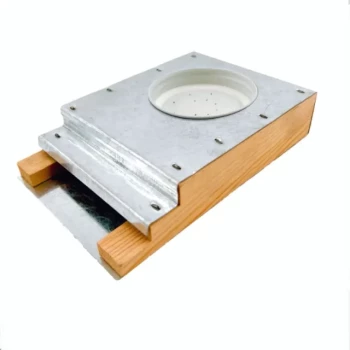
These small, jar-based feeders are easy to see, easy to fill, and often included in beginner kits. Their convenience is undeniable.
However, this system is designed with a critical, often fatal, flaw. Placing a food source at the hive entrance is like hanging a neon sign that says "Free Food Here" for every wasp and robber bee in the area. It turns the hive's most defensible point into its greatest vulnerability, actively inviting the very threat that can lead to colony collapse.
A Framework for Decision-Making
Your choice should not be based on the feeder itself, but on the job you need to accomplish. No single tool is perfect for every task. The right choice requires matching the system to your strategic goal.
| Scenario | Primary Goal | Recommended System | Critical Risk to Mitigate |
|---|---|---|---|
| Fall Winter Preparation | Rapidly build massive stores | Hive-Top Feeder | Ensuring a proper, robber-proof seal. |
| Nurturing a New/Weak Hive | Provide safe, accessible food | Internal Frame Feeder | Bee drowning; ensure floats are present. |
| Stimulating Spring Brood | Small, steady feeding | Internal or Hive-Top | Chilling the brood; avoid over-feeding. |
| Emergency Dearth Feeding | Quick, temporary support | Hive-Top or Internal | Attracting robbers to a stressed colony. |
Scaling the System: The Commercial Beekeeper's Calculus
For a hobbyist with two hives, a feeder mistake is a learning experience. For a commercial apiary with two thousand, it's a catastrophic financial event. At scale, the risks of robbing, disease transmission, and inefficiency are magnified exponentially.
Convenient but insecure methods like entrance feeders are non-starters. The operational imperative is for durable, high-capacity, and safe systems that minimize labor and maximize colony health across the entire operation. This is where professional-grade equipment becomes non-negotiable. The cost of a failed colony far outweighs the investment in a proper feeding system.
At HONESTBEE, we supply the robust, wholesale beekeeping equipment that commercial apiaries and distributors rely on. Our high-capacity hive-top and secure internal frame feeders are engineered to meet the demands of large-scale operations where efficiency and security are paramount.
For operations focused on building resilient, productive feeding systems, having the right equipment is the foundation of success. Contact Our Experts
Visual Guide
Related Products
- Rapid Bee Feeder White Plastic 2L Round Top Feeder for 8 or 10-Frame Bee Hives
- HONESTBEE Entrance Bee Feeder Professional Hive Nutrition Solution for Beekeeping
- White Plastic 0.5L Beekeeping Entrance Feeder for Bees
- HONESTBEE Professional Entrance Bee Feeder Hive Nutrition Solution
- HONESTBEE Entrance Bee Feeder Efficient Hive Front Liquid Feeding Solution for Beekeeping
Related Articles
- How to Choose Between Frame and Gravity Feeders for Healthy Honey Bee Colonies
- How to Choose the Right Bee Feeder for Your Hive’s Health and Efficiency
- Design, Drowning, and the Deceptively Simple Bee Feeder
- The Weight of Winter: A Systems Approach to Pre-Season Bee Feeding
- Beyond the Jar: The Hidden Engineering of Bee Feeder Safety