The Manager's Dilemma
A beehive is a self-regulating superorganism. But it has one critical interface with the outside world that it cannot manage on its own: the size of its front door.
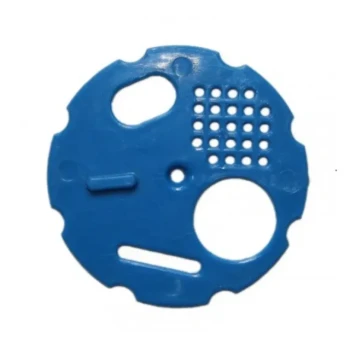
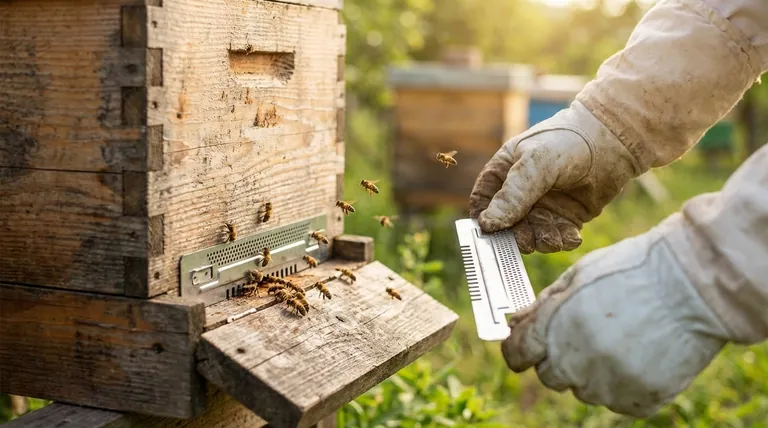
The beekeeper’s job is not to micromanage the bees. It is to manage the systems that allow the bees to thrive. The entrance reducer—a simple block of wood—is the primary control panel for this system.
Choosing the entrance size is not a trivial decision. It is a constant calibration between two opposing forces: the need for security and the drive for efficiency. Get it right, and the colony flourishes. Get it wrong, and the system collapses.
The Physics and Psychology of a Doorway
The entrance is the hive's firewall, its thermal regulator, and its logistical hub. A beekeeper must think like a systems engineer, understanding the trade-offs inherent in its design.
A Lesson in Threat Modeling
A hive entrance is an attack surface. For a small or developing colony, a wide-open entrance is a critical vulnerability.
Robbing bees from stronger hives, predatory yellow jackets, or an opportunistic mouse in autumn can quickly overwhelm a colony with a defense perimeter too large for its population to guard.
Restricting the entrance is a direct application of risk management. You shrink the gateway to a size your guard bees can realistically defend, creating a fortified chokepoint that concentrates their defensive power.
The Thermodynamics of Survival
A colony's primary energy expenditure, after foraging, is climate control. The brood nest must be kept at a stable 95°F (35°C), regardless of the weather outside.
A large entrance in cool weather is like leaving a window open in winter. The colony bleeds heat, forcing bees to consume precious honey reserves just to stay warm—resources that should be fueling population growth.
A smaller entrance reduces this thermodynamic burden, allowing a young colony to allocate its energy budget toward raising the next generation of workers.
The Economics of Nectar Flow
During a peak nectar flow, the hive becomes a high-traffic port. Thousands of foragers are operating per hour, importing raw materials for the colony's economy.
A restricted entrance at this stage becomes a logistical bottleneck. It creates congestion, slows down the rate of import, and can even trigger swarming impulses as the colony feels overcrowded.
Opening the entrance fully is like opening all lanes on a highway during rush hour. It maximizes throughput, ensuring the colony can capitalize on periods of abundance.
Two Modes of Operation: A Strategic Framework
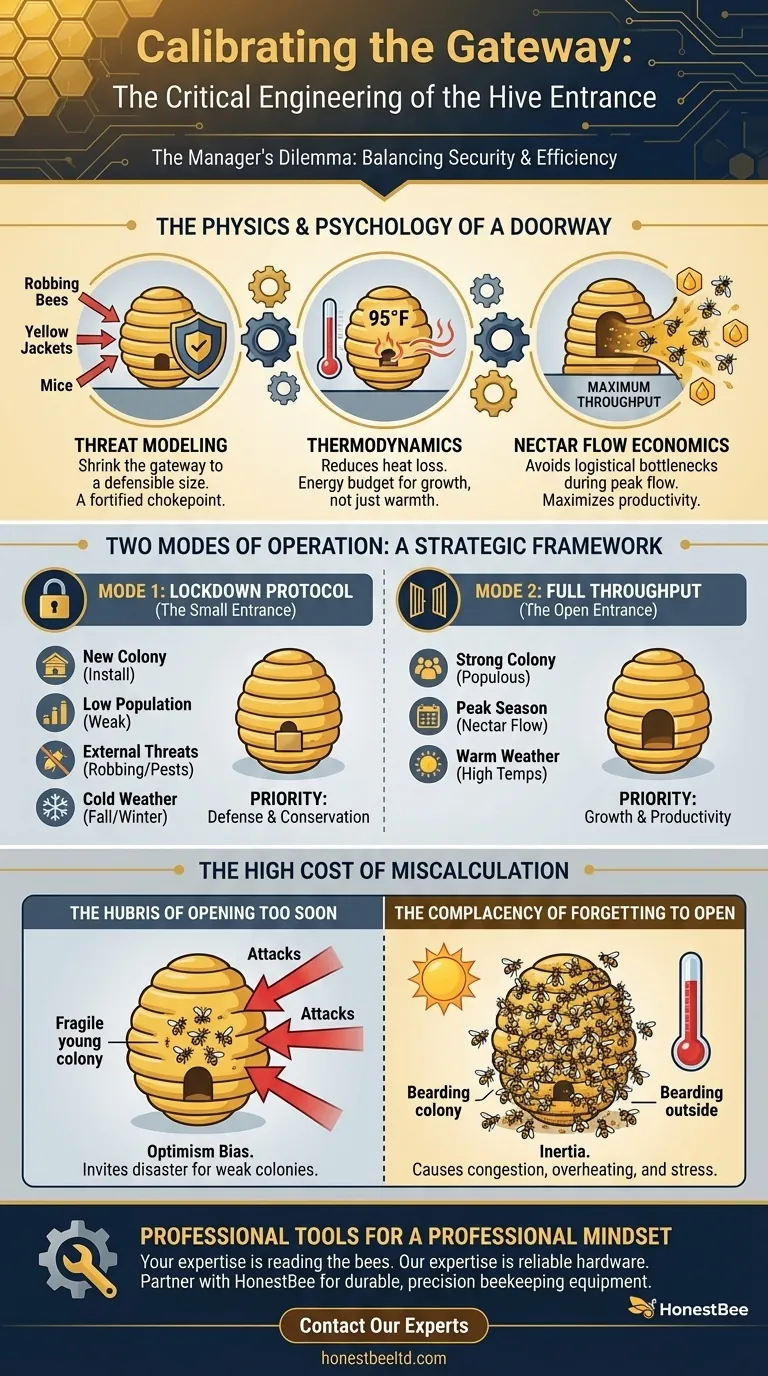
Your entrance reducer offers two settings. Think of them not as "small" and "large," but as two distinct operational modes for the colony.
Mode 1: Lockdown Protocol (The Small Entrance)
This is the maximum security setting. It prioritizes defense and conservation above all else.
Engage this mode under the following conditions:
- New Colony: When installing a new package or nucleus hive.
- Low Population: For any weak or small colony, regardless of season.
- External Threats: When you observe robbing behavior or high pest pressure.
- Cold Weather: During fall and winter to conserve heat and block pests like mice.
Mode 2: Full Throughput (The Open Entrance)
This is the maximum efficiency setting. It prioritizes growth and productivity.
This mode is only safe to engage when all of the following conditions are met:
- Strong Colony: The hive is populous, with bees covering most frames.
- Peak Season: It's late spring or summer with a strong nectar flow.
- Warm Weather: Daytime temperatures are consistently high, requiring ventilation.
The High Cost of Miscalculation
The most common mistakes in beekeeping are often failures of judgment, rooted in psychology. Mismanaging the entrance is a classic example.
The Hubris of Opening Too Soon
A new beekeeper, eager to see their colony grow, might open the entrance wide on a warm spring day. This is an optimism bias—projecting strength onto a colony that is still fragile.
They fail to see the world from the colony's perspective. The hive is a small band in a vast and dangerous territory. Leaving the gate wide open is an invitation for disaster, making it an easy target for stronger, more established neighbors.
The Complacency of Forgetting to Open
The opposite failure is inertia. A beekeeper who successfully protected their colony through its vulnerable stage may forget to adapt as it becomes a powerhouse.
Leaving the reducer on during a heatwave creates immense internal stress. The colony chokes on its own productivity, bees are forced to beard outside, and the system overheats. It is a failure to recognize that the colony's needs have fundamentally changed.
Professional Tools for a Professional Mindset
Managing a hive is an exercise in dynamic risk assessment. Your decisions are only as good as the reliability of your tools. A warped entrance reducer or a poorly constructed hive body undermines your strategy.
For commercial apiaries and distributors, this isn't a hobby; it's an operation. Every component must be dependable. HONESTBEE specializes in supplying high-quality, durable beekeeping equipment designed for the rigors of commercial use. We provide the reliable hardware that allows you to execute your management strategy with precision.
Your expertise lies in reading the bees and the environment. Our expertise lies in ensuring the equipment you depend on never fails. To build a resilient and productive apiary, you need a partner who understands the demands of your operation.
Ready to equip your apiary for success? Contact Our Experts
Visual Guide
Related Products
- Multi-Functional Sliding Hive Entrance for Beekeeping
- Multi-Functional Rotary Hive Entrance Disc for Beekeeping
- Professional Reversible Beehive Hive Entrance
- Beehive Entrance Reducer Guardian Metal Hive Entrance for Bees
- Steel Round Disc Entrance Reducer for Flexzion Bee Hive Nuc Box Gate
Related Articles
- How Hive Entrance Size Shapes Bee Health: Balancing Ventilation and Security
- The Choke Point and the Superhighway: A Systems Approach to Hive Entrance Management
- The Unseen Flaw in Your Apiary: Why Hive Entrance Placement Dictates Your Profit
- The Hive Entrance: A Masterclass in Engineering and Risk Management
- A Single Point of Failure: The Critical Importance of a Clear Hive Entrance in Winter