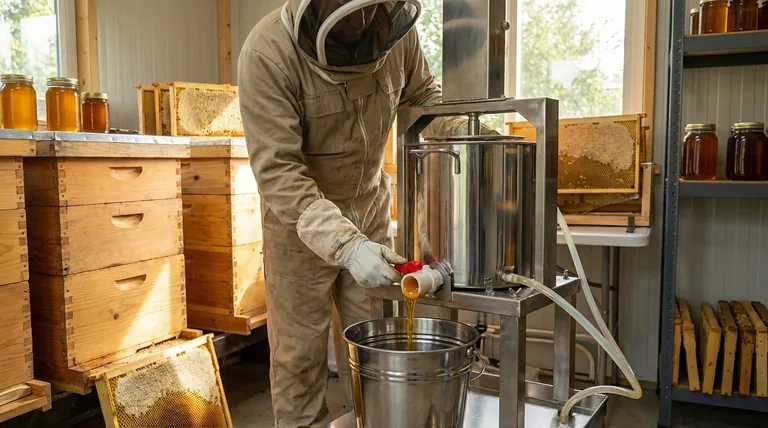
For commercial beekeepers and honey producers, maintaining honey quality while scaling production is a constant challenge. Honey pumps bridge this gap—their specialized designs prevent degradation while offering flexible flow rates for diverse operations. Here’s how they achieve both.
How Honey Pumps Preserve Honey Integrity
Honey’s nutritional value and flavor depend on minimizing exposure to heat, air, and agitation during processing. Modern honey pumps address these risks through two key mechanisms:
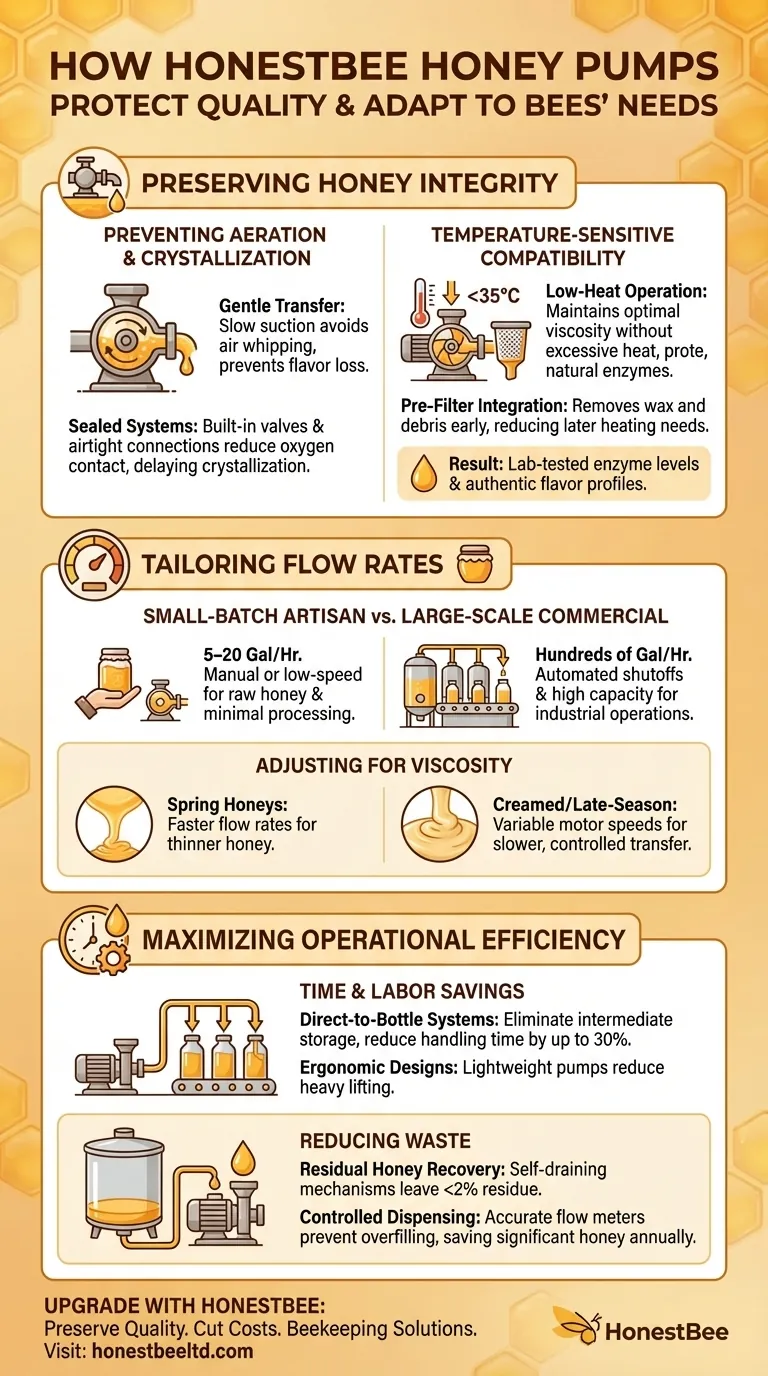
1. Mechanisms Preventing Aeration and Crystallization
- Gentle Transfer: Unlike standard pumps, honey-specific models use slow, consistent suction to avoid whipping air into the honey (a common cause of oxidation and flavor loss).
- Sealed Systems: Built-in valves and airtight connections reduce contact with oxygen, which can accelerate crystallization and degrade enzymes.
2. Compatibility with Temperature-Sensitive Honey
- Low-Heat Operation: Research shows excessive heat (above 95°F/35°C) breaks down honey’s natural enzymes. Pumps with thermal-regulated components maintain optimal viscosity without external heating.
- Pre-Filter Integration: Some units include fine mesh filters (like those in The Honey Press) to remove wax and debris before transfer, reducing later heating needs.
Why does this matter? For distributors selling premium honey, these features ensure lab-tested enzyme levels and flavor profiles meet consumer expectations.
Tailoring Flow Rates to Production Demands
From artisan micro-batches to industrial bottling lines, honey pumps adjust to varying workloads without compromising quality.
Small-Batch Artisan vs. Large-Scale Commercial Use Cases
- Artisan Beekeepers: Manual or low-speed pumps handle 5–20 gallons per hour, ideal for raw honey producers prioritizing minimal processing.
- Commercial Operations: High-capacity models move hundreds of gallons hourly, with automated shutoffs to prevent overflows during tank transfers.
Adjusting for Different Honey Viscosities
- Spring Honeys (Thinner): Faster flow rates work well for early-season harvests.
- Late-Season or Creamed Honey (Thicker): Pumps with variable motor speeds allow slower, controlled transfers to avoid clogging.
Pro Tip: Matching pump settings to honey type reduces wear on equipment and energy use—key for wholesalers managing tight margins.
Maximizing Operational Efficiency
Beyond quality, honey pumps cut costs by streamlining two critical areas:
1. Time and Labor Savings in Bottling Processes
- Direct-to-Bottle Systems: Eliminate intermediate storage steps, reducing handling time by up to 30% in large facilities.
- Ergonomic Designs: Lightweight, portable pumps let small-scale beekeepers bottle without heavy lifting.
2. Reducing Waste Through Precision Transfer
- Residual Honey Recovery: Pumps with self-draining mechanisms leave less than 2% residue in tanks compared to traditional pouring.
- Controlled Dispensing: Accurate flow meters prevent overfilling bottles, saving hundreds of pounds of honey annually per facility.
Upgrade Your Honey Processing with HONESTBEE
Whether you’re a commercial apiary scaling production or a distributor supplying beekeepers, HONESTBEE’s honey pumps combine quality protection with adaptable performance. Our wholesale-focused equipment helps you:
- Preserve honey’s natural quality with gentle, low-aeration transfer.
- Cut operational costs through efficient, waste-reducing designs.
Ready to optimize your honey workflow? Explore HONESTBEE’s durable, beekeeper-tested solutions today.
Visual Guide
Related Products
- Honey Convey Pump Screw Honey Pump for Viscous Liquid
- Honey Convey Pump Economy Gear Pump for Viscous Liquid
- Automatic Honey Filling and Filtering Machine for Beekeeping Bottle Filling
- Economy Small Honey Filling Machine Honey Bottle Filler Packaging Machine
- Manual Honey Filling Machine Bottling Machine for Honey
Related Articles
- How Honey Screw Presses Deliver Higher Yields With Less Waste
- Preserving the Golden Harvest: The Gentle Engineering of Honey Pumps
- The Two Meanings of a Honey Pump: A Guide to Flow, Precision, and Profit
- How Honey Screw Presses Solve Hygiene, Durability, and Efficiency Challenges for Small Beekeepers
- Is Your Honey Pump Holding Your Business Back? The Voltage Mistake You Can't Afford