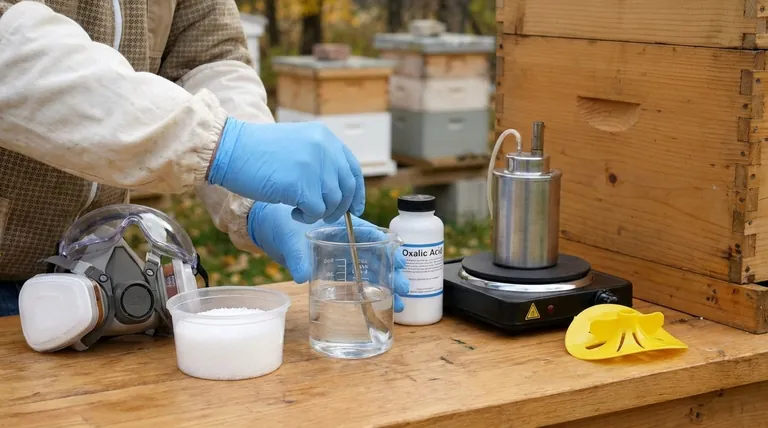
Varroa mites threaten honey bee colonies worldwide, but oxalic acid (OA) offers a proven, residue-free solution. When prepared and applied correctly, OA achieves over 90% mite mortality without harming bees. This guide combines scientific principles with practical safety protocols to help beekeepers protect their hives effectively.
Oxalic Acid in Beekeeping: A Scientific Foundation
The Chemistry of Varroa Mite Elimination
Oxalic acid disrupts mite cell metabolism upon contact. Research suggests OA penetrates the mite’s exoskeleton—likely through its feet—and enters its circulatory system, causing fatal metabolic interference. Bees, however, tolerate OA well due to their thicker cuticle and efficient detoxification.
Key advantages of OA:
- No residue: Unlike synthetic miticides, OA leaves no harmful traces in honey.
- Low resistance risk: Mites show minimal resistance development after decades of use.
- Brood-free efficacy: OA works best when applied during broodless periods (e.g., early spring/late fall), as mites exposed on adult bees are vulnerable.
Why 8.75g: Concentration Thresholds for Efficacy
The standard 3.2% OA solution (8.75g OA dihydrate per 1L sugar water) balances:
- Effectiveness: Delivers lethal doses to mites while staying below bee toxicity thresholds.
- Sugar’s role: Sugar water acts as a carrier, ensuring even distribution and encouraging bees to groom mites off each other.
Studies show this concentration achieves:
- 93–97% mite mortality via sublimation (vaporization).
- 85–90% efficacy in dribble applications.
Preparing Your Mixture Safely
Essential Protective Equipment for Acid Handling
OSHA-recommended gear minimizes exposure risks:
- Gloves: Nitrile or rubber (OA corrodes latex).
- Goggles: Splash-proof to prevent eye contact.
- Apron/long sleeves: Acid-resistant fabric.
- Respirator: Needed for sublimation to avoid inhaling crystals.
Step-by-Step Mixing Protocol (with Hazard Mitigation)
- Work outdoors or in a ventilated area.
- Pre-mix sugar water (1:1 ratio by weight) and let cool.
- Add OA crystals slowly while stirring—avoid splashing.
- Store unused solution in labeled, airtight containers away from children/pets.
Safety Note: Never heat OA crystals directly—sublimation requires specialized vaporizers to prevent toxic fumes.
Application Mastery
Seasonal Timing for Maximum Impact
- Late fall/early spring: Ideal for dribble applications when brood is minimal.
- Winter sublimation: Effective if outdoor temperatures exceed 37°F (3°C) for 2+ hours post-treatment.
Hive-Specific Dosage Adjustments
- Dribble method: 5mL per seam (space between frames) for Langstroth hives.
- Sublimation: 1–2g OA per 10-frame hive, vaporized at the entrance.
Pro Tip: Monitor mite drops post-treatment. Repeat after 7 days if mite counts remain high.
Protect Your Hives with Confidence
Oxalic acid, backed by decades of research, remains a beekeeper’s safest weapon against Varroa. By mastering its science and safety protocols, you sustain healthier colonies—and honey harvests.
Ready to equip your apiary? HONESTBEE supplies commercial beekeepers and distributors with industry-trusted OA vaporizers, protective gear, and mixing kits—wholesale solutions for large-scale mite control. [Contact us] to learn how our products simplify your Varroa management.
"The quiet hero of hive health, oxalic acid bridges lab-proven efficacy and beekeeping practicality."
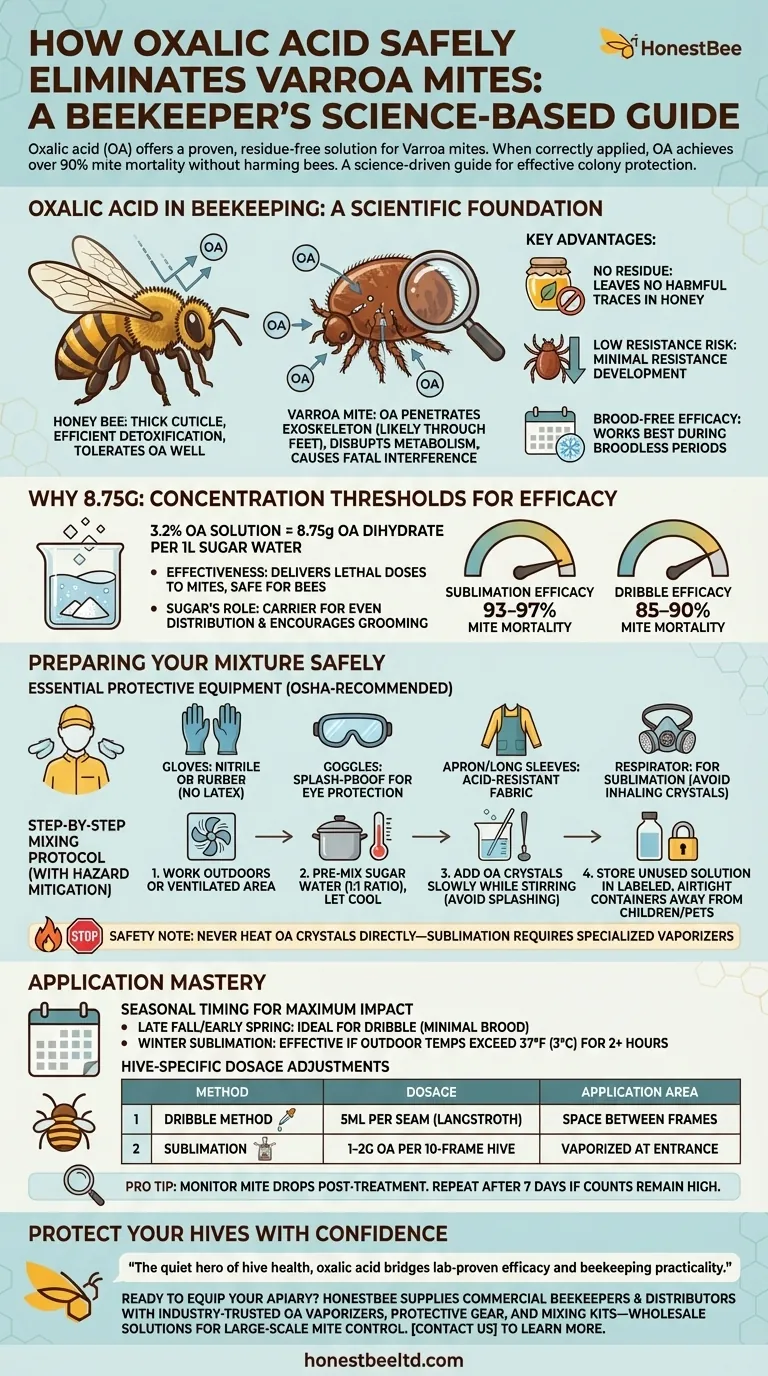
Visual Guide
Related Products
- Oxalic Acid Vaporizer 12V for Bee Varroa Mite Treatment
- Heavy Duty 12V Oxalic Acid Evaporator Vaporizer for Bee Varroa Mite Treatment Beekeeping Fumigator Atomizer
- Durable 12V Oxalic Acid Vaporizer for Varroa Mite Treatment Beehive Beekeeping Tool
- 12V Bee Mite Removal Evaporator Oxalic Acid Vaporizer for Bee Fumigation Treatment 180W Atomization
- Adjustable Formic and Acetic Acid Dispenser for Bee Mite Treatment
Related Articles
- How Broodless Timing Unlocks Oxalic Acid's Full Potential Against Varroa Mites
- How to Master Oxalic Acid Vaporization for Safe and Effective Varroa Mite Control
- Optimizing Varroa Control: A Science-Backed Rotation Guide for Beekeepers
- How to Detect and Defeat Varroa Mite Syndrome in Your Beehives
- How Beekeepers Can Control Varroa Mites Without Harming Their Colonies



