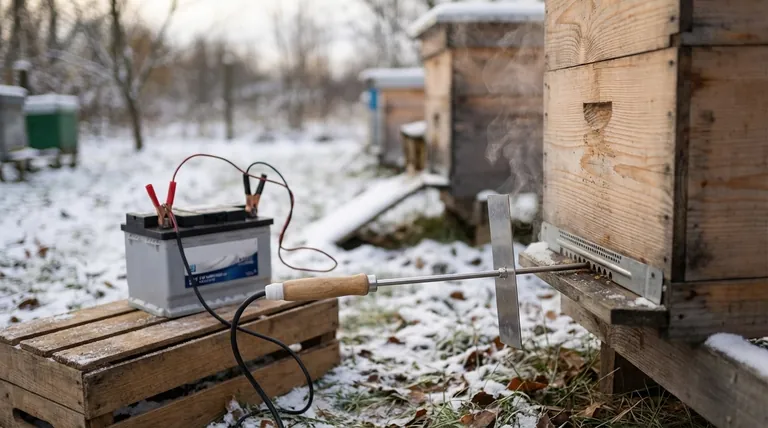
The Beekeeper's Gambit
For a beekeeper, the quiet hum of a healthy hive in summer is a fragile peace. The real test of skill, strategy, and foresight comes as the days shorten and the final nectar flows cease. Winter looms not just as a season of cold, but as a period of heightened vulnerability.
The central anxiety is not the cold itself; bees are remarkably adapted to survive it. The true, silent threat is a parasite that has spent the entire season multiplying unseen: the Varroa destructor mite. An unchecked infestation turning into a winter loss feels less like an act of nature and more like a personal failure of strategy.
Know Your Enemy's Stronghold
To defeat an enemy, you must first understand where it hides. The Varroa mite's strategic genius lies in its reproductive cycle. It doesn't just attack adult bees; it infiltrates the nursery.
A female mite slips into a brood cell just before it is capped. Inside this protected chamber, she reproduces, and her offspring emerge with the new bee. This turns the hive's own process of renewal into a vector for its destruction.
While inside these capped cells, the mites are shielded from nearly all forms of treatment. They are, in effect, in a fortress. This is the core tactical problem every beekeeper must solve.
The Counter-Maneuver: The Power of a Single Window
Oxalic acid is a simple organic compound, but its application is a masterclass in strategic timing. It works by direct contact, killing the mites that are physically attached to adult bees (phoretic mites).
Its primary limitation is also its greatest strategic key: it cannot penetrate capped brood cells.
This means that applying it when the queen is actively laying and brood is plentiful is like attacking a castle while most of the enemy army is safely behind the walls. You'll achieve little.
The Broodless Advantage
The moment of maximum leverage arrives in late fall or early winter when the queen naturally stops laying. The hive becomes, for a short period, entirely broodless.
Suddenly, the mites have no fortress. Every single mite in the colony is exposed, riding on the backs of adult bees.
A single, well-timed oxalic acid treatment during this brief window is not just another application—it is a decisive reset. It can eliminate the vast majority of the hive's mite population just before the bees cluster for winter, dramatically increasing their odds of survival.
The Mindset of Integrated Management
Relying on this one powerful move alone, however, is a rookie mistake. Mite populations build all season. True hive stewardship requires a mindset of Integrated Pest Management (IPM).
IPM is a philosophy of vigilance. It means monitoring mite levels throughout the year and rotating treatments to prevent the mites from developing resistance. Oxalic acid is a critical tool in this rotation because its mode of action is different from synthetic miticides.
It’s about seeing the whole board, not just the next move. It rejects the search for a single "silver bullet" and embraces a dynamic, adaptive strategy.
Execution is Everything
Strategy is nothing without execution. The difference between a successful winter reset and a damaged colony often comes down to precision.
Oxalic acid is safe and effective when used correctly, but it is a corrosive substance. Correct dosage, proper application methods (vaporization or dribble), and professional-grade Personal Protective Equipment (PPE) are non-negotiable.
For commercial apiaries and distributors, where outcomes are measured across hundreds or thousands of colonies, this margin for error disappears. Consistency and reliability in equipment are paramount. Your vaporizer must heat to the correct temperature, and your supplies must be of a known quality.
| Application Factor | Strategic Implication | Risk of Poor Execution |
|---|---|---|
| Timing | Align with the natural broodless period. | Ineffective; mites in brood survive. |
| Dosage | Apply precise, recommended amounts. | Overdosing can harm or kill bees and queen. |
| Method | Use approved vaporizers or dribble techniques. | Uneven distribution, reduced efficacy. |
| Equipment | Rely on professional, reliable tools. | Failure of equipment can derail the entire IPM plan. |
This is why a partnership with a supplier who understands the stakes is so important. HONESTBEE provides the wholesale beekeeping supplies that enable commercial operations to execute their Varroa management strategies with the precision they demand.
Ensuring your colonies are healthy and productive is the ultimate goal. The winter reset with oxalic acid is one of the most elegant and effective moves you can make. To do it right, you need the right tools for the job. If you are ready to equip your operation for success, Contact Our Experts.
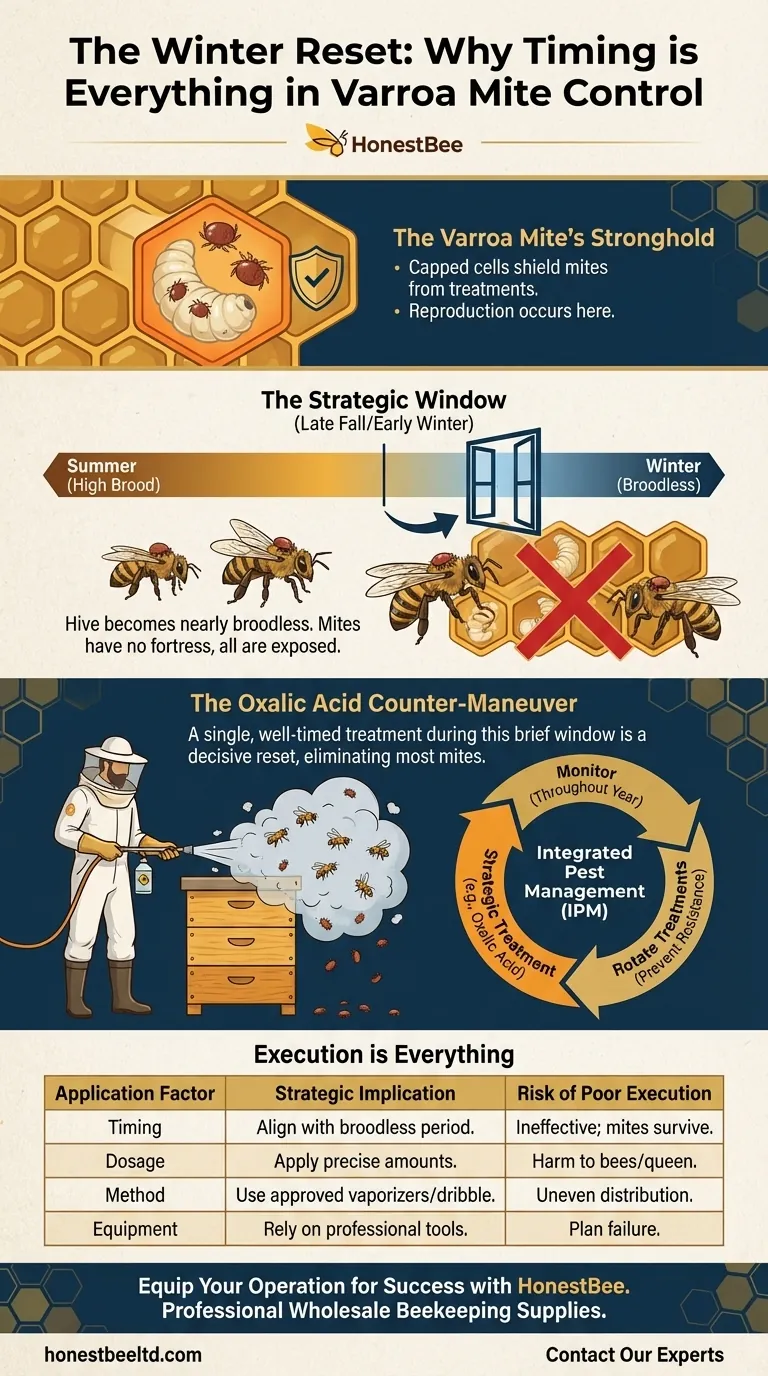
Visual Guide
Related Products
- Oxalic Acid Vaporizer 12V for Bee Varroa Mite Treatment
- Heavy Duty 12V Oxalic Acid Evaporator Vaporizer for Bee Varroa Mite Treatment Beekeeping Fumigator Atomizer
- Durable 12V Oxalic Acid Vaporizer for Varroa Mite Treatment Beehive Beekeeping Tool
- 12V Bee Mite Removal Evaporator Oxalic Acid Vaporizer for Bee Fumigation Treatment 180W Atomization
- Adjustable Formic and Acetic Acid Dispenser for Bee Mite Treatment
Related Articles
- How Broodless Timing Unlocks Oxalic Acid's Full Potential Against Varroa Mites
- How to Master Oxalic Acid Vaporization for Safe and Effective Varroa Mite Control
- Optimizing Varroa Control: A Science-Backed Rotation Guide for Beekeepers
- How to Detect and Defeat Varroa Mite Syndrome in Your Beehives
- How Beekeepers Can Control Varroa Mites Without Harming Their Colonies




