Varroa Mite Syndrome (VMS) is a silent threat that can decimate honeybee colonies if left unchecked. This guide equips beekeepers with actionable steps to identify early symptoms, implement effective treatments, and sustain long-term hive health—using proven Integrated Pest Management (IPM) strategies backed by entomological research.
Understanding Varroa Mite Syndrome
Key Symptoms and Their Implications
Varroa mites (Varroa destructor) wreak havoc through both visible and hidden damage:
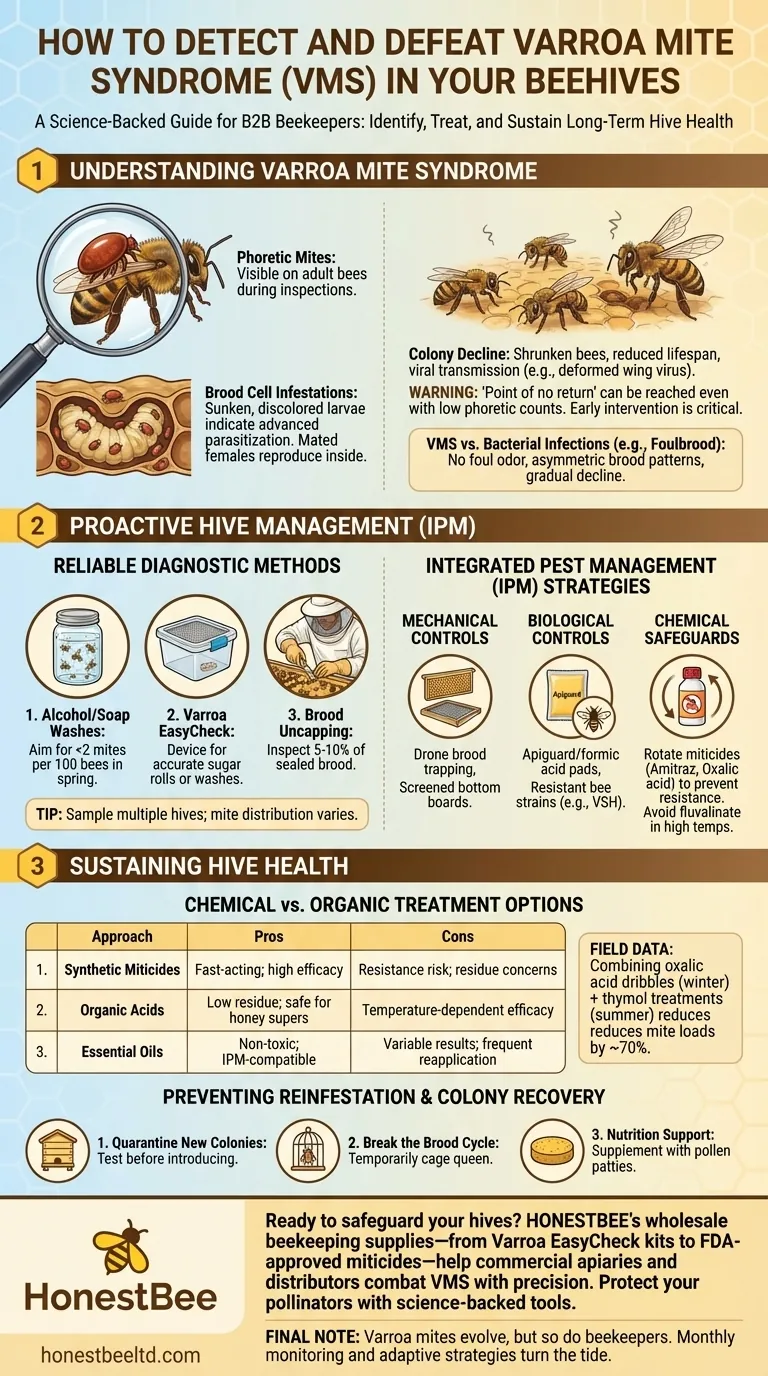
- Phoretic mites: Adult mites clinging to worker bees, visible during hive inspections.
- Brood cell infestations: Sunken or discolored larvae (a hallmark of VMS) indicate advanced parasitization. Mated female mites reproduce inside sealed brood cells, weakening pupae.
- Colony decline: Shrunken adult bees, reduced lifespan, and viral transmissions (e.g., deformed wing virus) signal chronic infestation.
Research shows: Colonies with VMS often reach a "point of no return" even if phoretic mite counts appear low. Early intervention is critical.
How VMS Differs from Other Brood Diseases
Unlike bacterial infections (e.g., American foulbrood), VMS:
- Leaves no foul odor.
- Shows asymmetric brood patterns (mites prefer drone brood but infest worker cells under heavy pressure).
- Correlates with gradual colony collapse rather than sudden die-offs.
Proactive Hive Management
Reliable Diagnostic Methods for Beekeepers
- Alcohol/soap washes: A 300-bee sample shaken in soapy water dislodges phoretic mites for counting. Aim for <2 mites per 100 bees in spring.
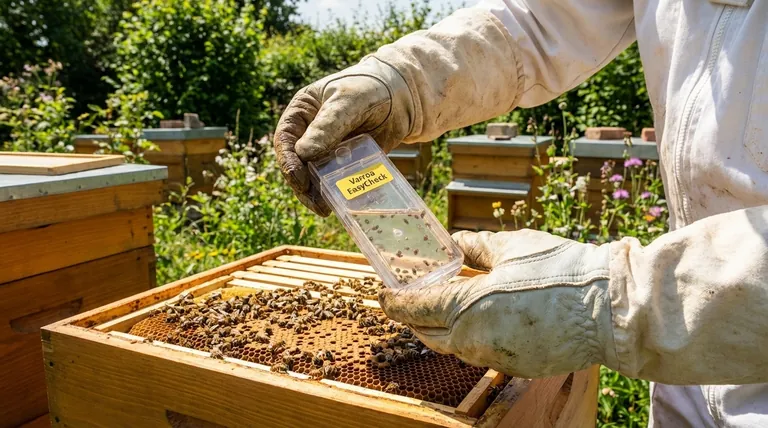
- Varroa EasyCheck: A reusable device that traps mites during sugar rolls or alcohol washes, improving accuracy.
- Brood uncapping: Inspect 5–10% of sealed brood for mites or sunken larvae.
Tip: Sample multiple hives—mite distribution varies even within apiaries.
Integrated Pest Management (IPM) Strategies
-
Mechanical controls:
- Drone brood trapping (mites prefer drone cells; remove and freeze combs).
- Screened bottom boards to disrupt mite reproduction cycles.
-
Biological controls:
- Apiguard (thymol gel) or formic acid pads during broodless periods.
- Resistant bee strains (e.g., Varroa-Sensitive Hygiene bees that detect infested brood).
-
Chemical safeguards:
- Rotate miticides (e.g., Amitraz, Oxalic acid) to prevent resistance. Avoid fluvalinate in high temperatures.
Sustaining Hive Health
Chemical vs. Organic Treatment Options
| Approach | Pros | Cons |
|---|---|---|
| Synthetic miticides | Fast-acting; high efficacy | Resistance risk; residue concerns |
| Organic acids | Low residue; safe for honey supers | Temperature-dependent efficacy |
| Essential oils | Non-toxic; IPM-compatible | Variable results; frequent reapplication |
Field data: Combining oxalic acid dribbles in winter with summer thymol treatments reduces mite loads by ~70%.
Preventing Reinfestation and Colony Recovery
- Quarantine new colonies: Test for mites before introducing bees.
- Break the brood cycle: Temporarily caging the queen disrupts mite reproduction.
- Nutrition support: Supplement with pollen patties to boost bee immunity post-treatment.
Ready to safeguard your hives? HONESTBEE’s wholesale beekeeping supplies—from Varroa EasyCheck kits to FDA-approved miticides—help commercial apiaries and distributors combat VMS with precision. Protect your pollinators with science-backed tools.
Final note: Varroa mites evolve, but so do beekeepers. Monthly monitoring and adaptive strategies turn the tide against these pervasive parasites.
Visual Guide
Related Products
- Oxalic Acid Vaporizer 12V for Bee Varroa Mite Treatment
- Durable 12V Oxalic Acid Vaporizer for Varroa Mite Treatment Beehive Beekeeping Tool
- Heavy Duty 12V Oxalic Acid Evaporator Vaporizer for Bee Varroa Mite Treatment Beekeeping Fumigator Atomizer
- Compact Circular Bee Mite Treatment Dispenser
- 12V Bee Mite Removal Evaporator Oxalic Acid Vaporizer for Bee Fumigation Treatment 180W Atomization
Related Articles
- How Broodless Timing Unlocks Oxalic Acid's Full Potential Against Varroa Mites
- How to Master Oxalic Acid Vaporization for Safe and Effective Varroa Mite Control
- Optimizing Varroa Control: A Science-Backed Rotation Guide for Beekeepers
- How Beekeepers Can Control Varroa Mites Without Harming Their Colonies
- How Varroa Mites Trigger Honeybee Collapse: Viral Pathways & Practical Solutions






