Understanding the relationship between queen supersedure and colony strength evaluations is critical for accurate apiculture research and hive management. This article examines the biological impacts of queen replacement, its effects on standard assessment protocols, and best practices for maintaining data integrity in apiary studies.
Colony Strength Grading Protocols
Beekeepers and researchers rely on standardized metrics to evaluate colony health, including brood patterns, honey stores, and population size. However, queen supersedure—the natural replacement of an existing queen—can significantly skew these assessments.
Queen Supersedure as a Disruptive Factor
Queen supersedure occurs when worker bees detect declining queen performance (e.g., reduced pheromone production or egg-laying capacity). The biological consequences include:
- Brood Pattern Disruption: A new queen requires time to mate and establish laying patterns, creating gaps in brood continuity.
- Temporary Population Decline: The interim period between queen loss and new queen productivity may reduce colony numbers.
- Behavioral Shifts: Worker bees may exhibit increased agitation or reduced foraging efficiency during the transition.
Research shows that colonies undergoing supersedure can appear weaker in short-term evaluations, even if long-term vitality improves with a more productive queen.
Standard Metrics for Colony Vitality Assessment
To minimize supersedure-related distortions, beekeepers should:
- Delay Assessments: Avoid grading colony strength during active supersedure (typically 2–4 weeks).
- Monitor Brood Recovery: Track brood pattern consistency after a new queen begins laying.
- Compare Pre/Post-Supersedure Data: Use longitudinal observations rather than single snapshots.
Research Data Integrity Management
Supersedure events introduce variability that can compromise study validity. Here’s how to maintain reliable data:
When and Why to Censor Apiary Data
Not all supersedure-affected colonies should be excluded from research—context matters. Consider censoring data if:
- The supersedure coincides with experimental treatments (e.g., pesticide exposure).
- Colony behavior deviates drastically from baseline metrics.
- The replacement queen fails to establish a viable brood pattern within a month.
Conversely, retain data if supersedure is the study focus (e.g., resilience research).
Best Practices for Treatment Group Observations
- Document Supersedure Timing: Note the date of queen replacement to contextualize productivity dips.
- Adjust Evaluation Windows: Extend observation periods for supersedure-affected hives.
- Use Control Groups: Compare supersedure rates between treated and untreated colonies to identify external stressors.
Studies suggest that locally bred queens often adapt faster post-supersedure than wild-caught queens, which may overproduce brood and require excluders. This variability underscores the need for tailored monitoring.
Linking Research to Practical Beekeeping
Supersedure isn’t just a research challenge—it’s a natural hive sustainability mechanism. Beekeepers can:
- Prevent Unplanned Supersedure: Regularly inspect queens for signs of decline (e.g., spotty brood).
- Optimize Hive Tools: Use queen excluders selectively based on colony behavior (e.g., for wild-caught bees prone to brood overproduction).
- Train Workers: Note how your bees react to excluders; some prefer upper entrances to reduce traffic congestion.
Upgrade Your Apiary Management with HONESTBEE
Commercial beekeepers and distributors trust HONESTBEE for durable, research-backed beekeeping supplies. From queen excluders to hive monitoring tools, our equipment helps you maintain colony strength assessments with precision. [Explore our wholesale solutions today.]
Key Takeaways:
- Queen supersedure temporarily disrupts standard strength metrics but can enhance long-term colony health.
- Adjust assessment timelines and methods during supersedure transitions.
- Data censorship decisions should balance study goals and biological realism.
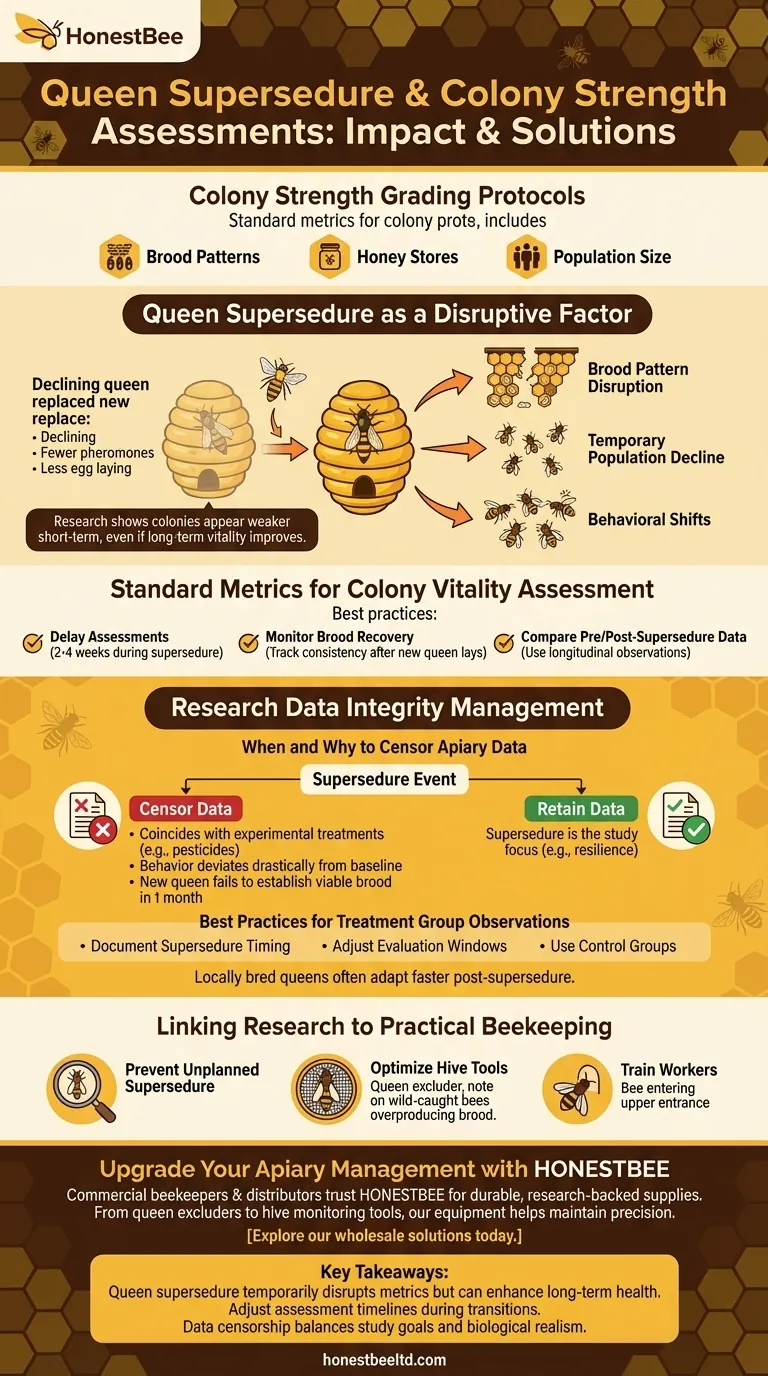
Visual Guide
Related Products
- JZBZ Langstroth Queen Rearing Frame for Beekeeping
- Durable Galvanized Steel Spring Queen Bee Cage
- Wooden Queen Bee Excluder for Beekeeping
- Clear Black Plain Polystyrene Queen Bee Grafting Cell Cups No Lug for Bee Queen Cup
- JZBZ Style Shipping Cell Protector for Queen Rearing Kit
Related Articles
- Assembled vs. Unassembled Frames: A Beekeeper’s Time-Value Analysis
- Are Your Beekeeping Frames Holding You Back? Unpacking the Hidden Trade-offs in Hive Management
- Tired of Sagging Comb? The Hidden Cost of "Cheap" Beekeeping Frames
- How Specialized Frames Revolutionize Queen Rearing Success
- How Beekeepers Can Maximize Queen-Rearing Success with the JZBZ System