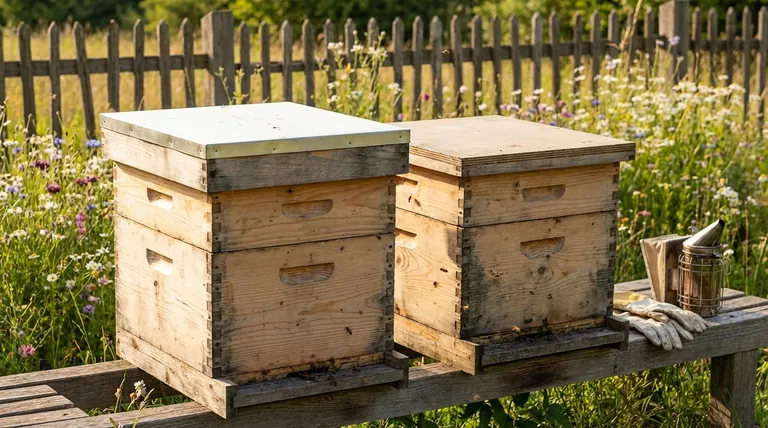
Beekeepers face a critical decision when selecting a lid for their Langstroth hive: telescoping outer covers or migratory lids. Each style serves distinct operational needs, from climate adaptability to hive mobility. This guide breaks down their key features, ideal use cases, and maintenance tips to help you optimize hive performance.
Choosing the Right Lid for Your Langstroth Hive
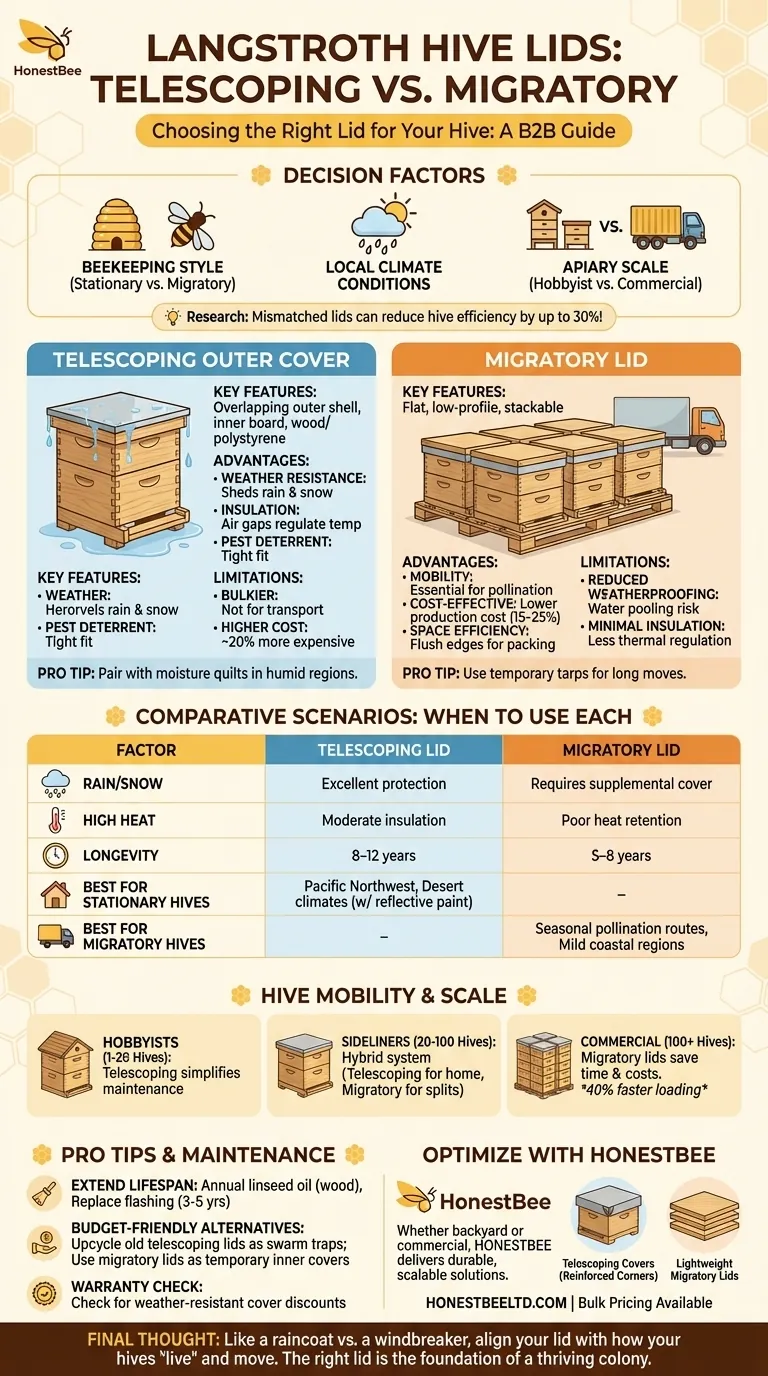
The telescoping outer cover and migratory lid are the two primary options for Langstroth hives. Your choice hinges on three factors:
- Beekeeping style (stationary vs. migratory)
- Local climate conditions
- Apiary scale (hobbyist vs. commercial)
Research shows that mismatched lids can reduce hive efficiency by up to 30%, making this decision pivotal for honey production and colony health.
Key Features of Telescoping Outer Covers
Telescoping lids consist of a flat inner board and a overlapping outer shell, typically made of wood or polystyrene.
Advantages:
- Weather resistance: The overhanging design sheds rain and snow, ideal for wet climates.
- Insulation: Air gaps between layers help regulate internal hive temperatures.
- Pest deterrent: Tight fits reduce entry points for small hive beetles and ants.
Limitations:
- Bulkier design: Not suitable for hive transport due to protruding edges.
- Higher cost: Materials and construction are ~20% more expensive than migratory lids.
Pro Tip: Pair telescoping covers with moisture quilts in humid regions to prevent condensation buildup.
Key Features of Migratory Lids
Migratory lids are flat, low-profile covers designed for stackability during hive transport.
Advantages:
- Mobility: Essential for commercial beekeepers moving hives seasonally for pollination.
- Cost-effective: Simplified construction lowers production costs by ~15–25%.
- Space efficiency: Flush edges allow tight packing during transit.
Limitations:
- Reduced weatherproofing: Prone to water pooling in heavy rain without added roofing.
- Minimal insulation: Less thermal regulation in extreme temperatures.
Pro Tip: Use migratory lids with temporary tarps during long-distance moves to shield hives from wind.
Comparative Scenarios: When to Use Each Style
Climate and Durability Considerations
| Factor | Telescoping Lid | Migratory Lid |
|---|---|---|
| Rain/Snow | Excellent protection | Requires supplemental cover |
| High Heat | Moderate insulation | Poor heat retention |
| Longevity | 8–12 years | 5–8 years |
Best for stationary hives in:
- Pacific Northwest (telescoping)
- Desert climates (telescoping with reflective paint)
Best for migratory hives in:
- Seasonal pollination routes (migratory)
- Mild coastal regions (migratory with ventilated inner covers)
Hive Mobility and Beekeeping Scale
- Hobbyists (1–20 hives): Telescoping lids simplify maintenance for fixed apiaries.
- Sideliners (20–100 hives): Hybrid systems work well—telescoping for home bases, migratory for seasonal splits.
- Commercial (100+ hives): Migratory lids save time and freight costs during large-scale moves.
Did you know? Commercial apiaries report 40% faster loading times when using standardized migratory lids.
Pro Tips for Maintenance and Cost Efficiency
-
Extend lid lifespan:
- Apply linseed oil to wooden lids annually.
- Replace corroded metal flashing every 3–5 years.
-
Budget-friendly alternatives:
- Upcycle old telescoping lids into swarm traps.
- Use migratory lids as temporary inner covers during honey extraction.
-
Warranty check: Some insurers offer discounts for hives with weather-resistant telescoping covers.
Optimize Your Beekeeping Operation with HONESTBEE
Whether you manage a backyard apiary or a commercial pollination fleet, HONESTBEE’s wholesale beekeeping supplies deliver durable, scalable solutions. Our telescoping covers with reinforced corners and lightweight migratory lids help beekeepers balance productivity and practicality.
Ready to upgrade? Contact our team for bulk pricing on hive components designed for your specific climate and operational needs.
Final Thought: Like choosing between a raincoat and a windbreaker, your lid selection should align with how your hives "live" and move. The right lid isn’t just protection—it’s the foundation of a thriving colony.*
Visual Guide
Related Products
- Telescopic Beehive Outer Cover Lid Roof with Galvanised Sheeting for Langstroth Hive and Beehive Outer Cover
- Solid Bottom Board Australian Pine Wood Langstroth Bottom Board for Wholesale
- Plastic Bee Hive Stand for Beekeeping
- Langstroth Solid Bottom Board for Beekeeping
- Langstroth Honey Bee Box Hive Boxes for Different Depths
Related Articles
- How Outer Telescoping Covers Protect Beehives: Materials and Design Explained
- How Telescoping Beehive Covers Outperform in Cold Climates: A Cost-Benefit Analysis
- How to Secure Beehive Covers: Weatherproof Strategies for Every Hive Type
- How to Strengthen Langstroth Hive Roofs Against Storms Without Compromising Functionality
- How Beehive Top Cover Design and Materials Protect Your Colony's Health