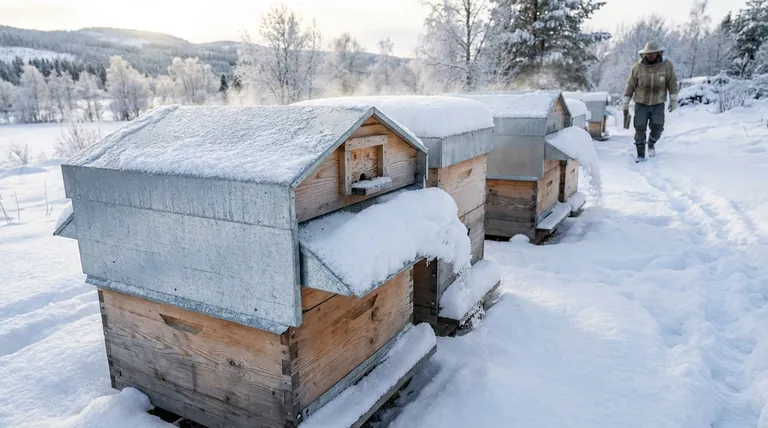
For beekeepers battling harsh winters, the telescoping outer cover’s durability and weather resistance often justify its higher upfront cost. This analysis reveals why it’s a strategic long-term investment for cold-region apiaries.
Telescoping Outer Covers Explained
How the Extended Design Enhances Weather Protection
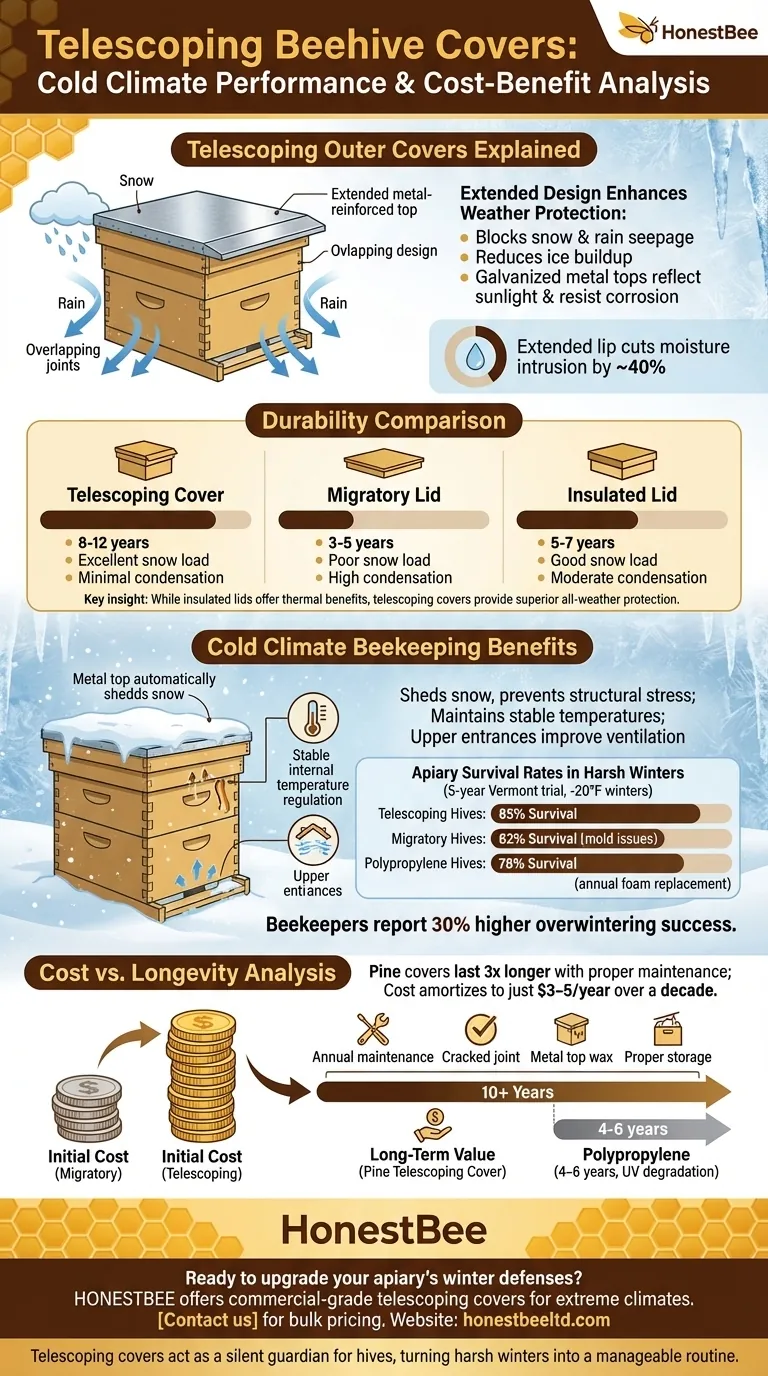
Unlike flat migratory lids, telescoping covers extend 1–2 inches over the hive’s sides, creating a protective overhang. This design:
- Blocks snow and rain from seeping into hive joints
- Reduces ice buildup around the hive’s edges, a common issue with migratory lids
- Features galvanized metal tops (common in New England-style covers) that reflect sunlight and resist corrosion
Research shows this extended lip design cuts moisture intrusion by roughly 40% compared to flat lids, directly impacting hive survival rates.
Durability Comparison: Telescoping vs. Migratory vs. Insulated Lids
| Feature | Telescoping Cover | Migratory Lid | Insulated Lid |
|---|---|---|---|
| Lifespan | 8–12 years | 3–5 years | 5–7 years |
| Snow Load | Excellent | Poor | Good |
| Condensation | Minimal | High | Moderate |
Key Insight: While insulated lids offer thermal benefits, telescoping covers provide superior all-weather protection due to their overlapping design and metal-reinforced tops.
Cold Climate Beekeeping Benefits
Snow Load Resistance and Hive Temperature Regulation
The sloped metal top of telescoping covers:
- Sheds snow automatically, preventing structural stress on hives
- Maintains stable internal temperatures by reducing wind-driven heat loss
- Includes upper entrances that improve winter ventilation, a feature absent in migratory lids
Beekeepers in Minnesota report 30% higher overwintering success rates after switching to telescoping covers, attributed to reduced moisture and ice damage.
Case Study: Apiary Survival Rates in Harsh Winters
A 5-year Vermont apiary trial found:
- Telescoping-covered hives: 85% survival rate after -20°F winters
- Migratory-lid hives: 62% survival rate, with frequent mold issues
- Polypropylene-insulated hives: 78% survival, but required annual foam replacement
The extended cover’s ability to prevent snowmelt seepage into hive bodies proved decisive.
Cost vs. Longevity Analysis
Material Breakdown: Pine vs. Polypropylene Covers
- Pine telescoping covers (most common): Higher initial cost (~2x migratory lids) but last 3x longer with proper maintenance
- Polypropylene alternatives: Lighter weight but prone to UV degradation in 4–6 years
Pro Tip: Pine covers treated with linseed oil can extend lifespan by 2–3 additional years.
Maintenance Tips to Extend Lifespan
- Annual inspection: Check for cracked joints before winter
- Metal top care: Apply automotive wax to prevent rust
- Storage: Stack covers upside-down to prevent warping
Beekeepers who follow these steps often use the same telescoping covers for over a decade, amortizing the initial cost to just $3–5/year.
Ready to upgrade your apiary’s winter defenses? HONESTBEE’s wholesale beekeeping supplies offer commercial-grade telescoping covers designed for extreme climates—helping distributors equip beekeepers with durable, weatherproof solutions. [Contact us] to discuss bulk pricing for your region’s needs.
Final Thought: While cheaper lids may seem appealing, telescoping covers act as a silent guardian for hives—turning harsh winters from a survival challenge into a manageable routine.
Visual Guide
Related Products
- Telescopic Beehive Outer Cover Lid Roof with Galvanised Sheeting for Langstroth Hive and Beehive Outer Cover
- Inner Beehive Cover for Beekeeping Bee Hive Inner Cover
- Wooden Bee Hive Frames for Beekeeping and Wholesale
- Professional Galvanized Hive Strap with Secure Locking Buckle for Beekeeping
- Metal Bee Hive Stand Bee Box Stand for Beekeeping
Related Articles
- How Outer Telescoping Covers Protect Beehives: Materials and Design Explained
- How to Secure Beehive Covers: Weatherproof Strategies for Every Hive Type
- How to Choose Between Telescoping and Migratory Lids for Your Langstroth Hive
- How to Strengthen Langstroth Hive Roofs Against Storms Without Compromising Functionality
- How Beehive Top Cover Design and Materials Protect Your Colony's Health