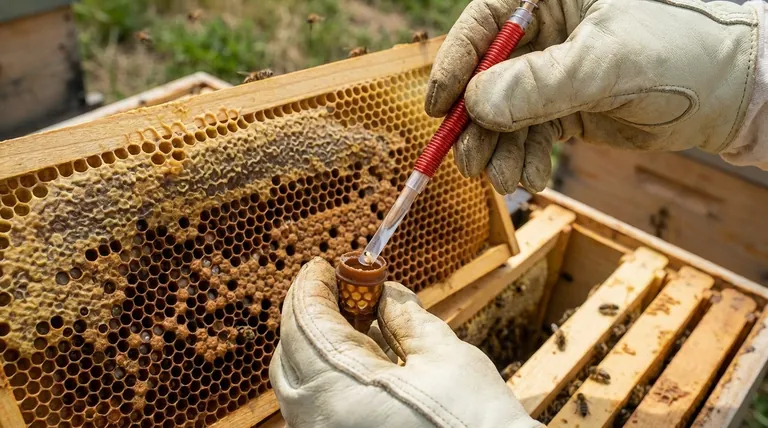
For beekeepers, few tasks are as critical—or as delicate—as queen grafting. The difference between thriving colonies and larval mortality often comes down to understanding larval biology and refining tool techniques. This guide distills science-backed methods to increase grafting success rates while addressing the hidden factors that undermine viability.
Mastering Queen Grafting Fundamentals
The Biology of Larval Selection: Age, Nutrition, and Developmental Cues
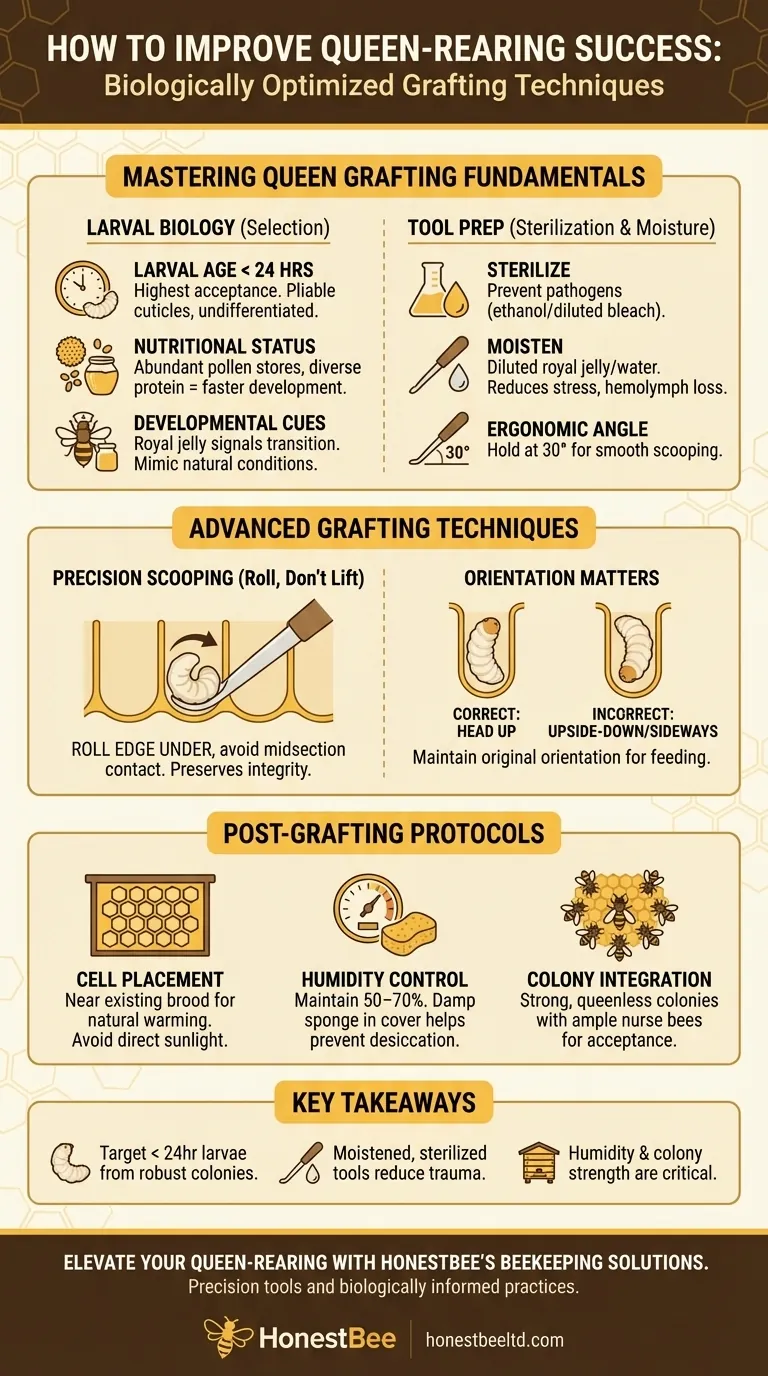
Larval age is the single greatest predictor of grafting success. Research shows larvae under 24 hours old have higher acceptance rates due to their pliable cuticles and undifferentiated physiology. But age alone isn’t enough—consider these biological factors:
- Nutritional Status: Larvae from colonies with abundant pollen stores (diverse protein sources) exhibit faster developmental rates. Prioritize grafting from hives with visible brood patterns and active nurse bees.
- Developmental Cues: Worker larvae transition to queen development when exposed to royal jelly in sufficient quantities. Grafted larvae placed in cups with existing royal jelly deposits mimic natural queen-rearing conditions.
Have you noticed higher success rates when grafting from certain colony segments? The outer comb edges often harbor younger larvae, while central cells may be older than visually estimated.
Tool Preparation: Sterilization, Moisture Dynamics, and Ergonomic Handling
A moistened grafting tool isn’t just a preference—it’s a biological necessity. Dry tools risk:
- Hemolymph loss (critical for larval hydration)
- Physical trauma from adhesion to the tool’s surface
Best practices for tool prep:
- Sterilize with ethanol or a weak bleach solution to prevent pathogen transfer.
- Moisten the tip with water or diluted royal jelly to create a non-stick surface. Studies suggest this reduces larval stress during transfer.
- Ergonomic alignment: Hold the tool at a 30° angle to the comb for smoother scooping motions.
Pro Tip: Test moisture levels by grafting dummy larvae (e.g., droplets of water). If they roll off the tool easily, your moisture balance is optimized.
Advanced Grafting Techniques
Precision Scooping: Minimizing Hemolymph Loss and Orientation Tips
The "roll, don’t lift" method preserves larval integrity:
- Roll the tool’s edge under the larva’s curved body, avoiding direct contact with its midsection.
- Maintain original orientation: Larvae positioned upside-down or sideways in queen cups struggle to feed. Align their heads toward the cell’s opening.
Common pitfalls:
- Over-penetration: Scooping too deep risks damaging the larval gut. The tool should barely skim the cell base.
- Speed matters: Slow, steady motions prevent fluid shear forces that destabilize larvae.
Post-Grafting Protocols: Cell Placement, Humidity Control, and Colony Integration
Grafted larvae need immediate environmental support:
- Humidity: Maintain 50–70% humidity in the nursery area to prevent desiccation. A damp sponge in the grafting frame’s cover can help.
- Colony integration: Introduce cells to strong, queenless colonies with ample nurse bees. Weak colonies often cannibalize grafts.
Placement strategy:
- Position cells near existing brood to exploit the colony’s natural warming behaviors.
- Avoid direct sunlight, which can overheat cells.
Did you know? Colonies with high pollen stores are more likely to accept grafts, as nurse bees interpret abundant food as a signal to rear new queens.
Elevate Your Queen-Rearing with HONESTBEE’s Beekeeping Solutions
For commercial apiaries and distributors, consistent queen production hinges on precision tools and biologically informed practices. HONESTBEE’s grafting equipment is designed to minimize larval stress, with ergonomic handles and sterilizable materials that align with these protocols.
Ready to refine your grafting success? Explore our wholesale-focused beekeeping supplies—where science meets practical beekeeping.
Key Takeaways:
- Target larvae under 24 hours old from nutritionally robust colonies.
- Moistened, sterilized tools reduce trauma and improve acceptance rates.
- Post-grafting humidity and colony strength are as critical as the grafting act itself.
Visual Guide
Related Products
- Plastic Chinese Queen Grafting Tool for Bee Queen Rearing
- Stainless Steel Beekeeping Queen Grafting Tool for Honey Bee Rearing
- Stainless Steel Queen Grafting Tool for Beekeeping and Bee Queen Grafting
- Black 2 Pack Beekeeper Queen Grafting Tool for Bee Queen Larva Transferring Needle
- Retractable Chinese Queen Rearing Grafting Tools Equipment
Related Articles
- How to Master Queen Rearing with Precision Grafting Tools
- Precision at Scale: The Operator's Guide to Queen Rearing Grafting Tools
- Microsurgery in the Apiary: The Unseen Power of the Queen Grafting Tool
- The Grafting Tool Dilemma: A Micro-Decision with Macro-Impact for Commercial Apiaries
- How to Mark Queen Bees Safely: Tools and Techniques for Hive Success