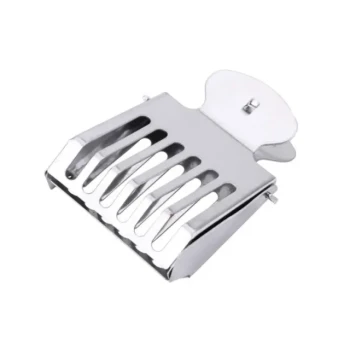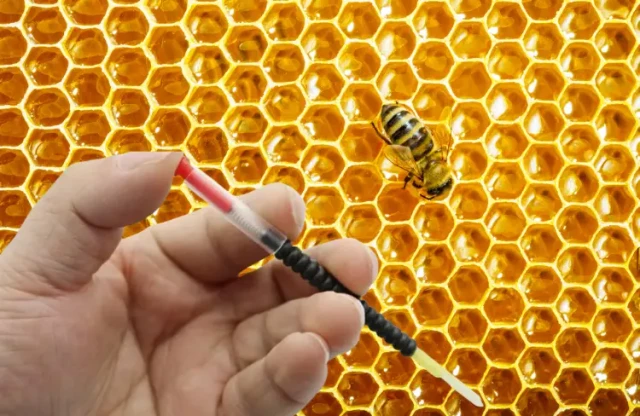
For beekeepers aiming to enhance their queen-rearing success, grafting tools offer unmatched precision in larval transfer—a critical factor in apiary productivity. This guide breaks down the anatomy, techniques, and evidence-backed advantages of grafting tools over manual methods, helping you avoid common pitfalls and elevate your beekeeping practice.
Mastering Queen Grafting Tools
Anatomy and Functionality of a Queen Grafting Tool
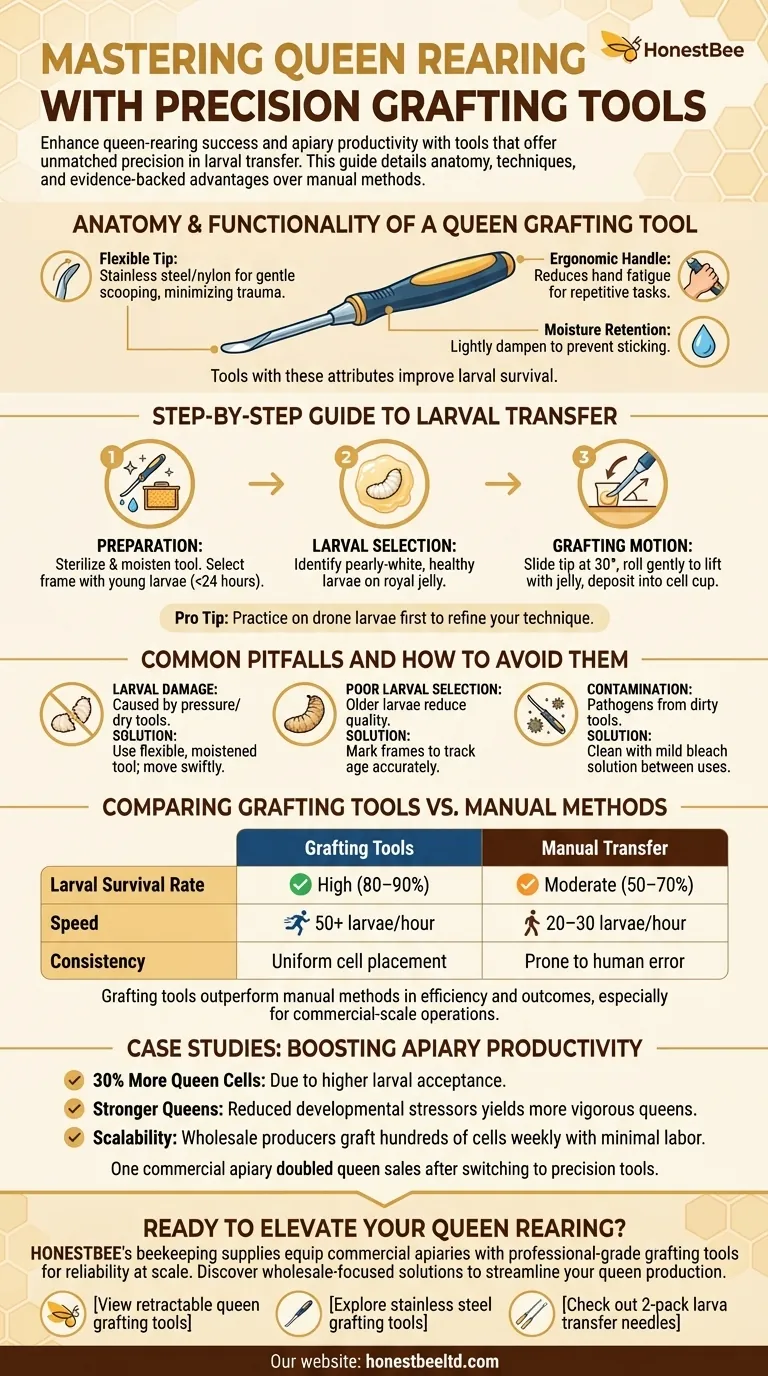
A queen grafting tool’s design directly impacts larval survival rates. Key features include:
- Flexible Tip: Often made of stainless steel or nylon, it bends to scoop larvae without damaging their delicate bodies.
- Ergonomic Handle: Reduces hand fatigue during repetitive grafting sessions.
- Moisture Retention: Some beekeepers lightly dampen the tool to prevent larvae from sticking.
Research shows that tools with these attributes improve grafting success by minimizing larval trauma, a common issue in manual transfers.
Step-by-Step Guide to Larval Transfer
- Preparation: Sterilize the tool and lightly moisten it if needed. Select a frame with young larvae (under 24 hours old) from a high-performing colony.
- Larval Selection: Identify healthy, pearly-white larvae floating on royal jelly—avoid discolored or misshapen ones.
-
Grafting Motion:
- Slide the tool’s tip beneath the larva at a 30-degree angle.
- Roll the tool gently to lift the larva with its royal jelly intact.
- Deposit it into a queen cell cup with a similar rolling motion.
Pro Tip: Practice on drone larvae first to refine your technique before working with queen-destined larvae.
Common Pitfalls and How to Avoid Them
- Larval Damage: Caused by excessive pressure or dry tools. Solution: Use a flexible, moistened tool and move swiftly.
- Poor Larval Selection: Older larvae reduce queen quality. Solution: Mark frames after egg-laying to track larval age accurately.
- Contamination: Dirty tools introduce pathogens. Solution: Clean tools with a mild bleach solution between uses.
Comparing Grafting Tools vs. Manual Methods
| Factor | Grafting Tools | Manual Transfer |
|---|---|---|
| Larval Survival Rate | High (80–90%) | Moderate (50–70%) |
| Speed | 50+ larvae/hour with practice | 20–30 larvae/hour |
| Consistency | Uniform cell placement | Prone to human error |
Grafting tools outperform manual methods in efficiency and outcomes, especially for commercial-scale operations.
Case Studies: Boosting Apiary Productivity with Effective Grafting
Beekeepers using specialized tools report:
- 30% More Queen Cells: Due to higher larval acceptance rates.
- Stronger Queens: Tools reduce developmental stressors, yielding more vigorous queens.
- Scalability: Wholesale producers graft hundreds of cells weekly with minimal labor.
One commercial apiary doubled its queen sales after switching to precision tools, citing fewer rejected cells and faster workflow.
Ready to Elevate Your Queen Rearing?
HONESTBEE’s beekeeping supplies equip commercial apiaries and distributors with professional-grade grafting tools designed for reliability at scale. Discover how our wholesale-focused solutions can streamline your queen production—because thriving hives start with precision.
Products You Might Be Looking For:
View retractable queen grafting tools
Explore stainless steel grafting tools for beekeeping
Check out 2-pack larva transfer needles
Visual Guide
Related Products
- Plastic Chinese Queen Grafting Tool for Bee Queen Rearing
- Stainless Steel Beekeeping Queen Grafting Tool for Honey Bee Rearing
- Stainless Steel Queen Grafting Tool for Beekeeping and Bee Queen Grafting
- Retractable Chinese Queen Rearing Grafting Tools Equipment
- Plastic Beekeeping Honey Bee Larvae Grafting Tools for Queen Rearing and Chinese Grafting
Related Articles
- Precision at Scale: The Operator's Guide to Queen Rearing Grafting Tools
- Microsurgery in the Apiary: The Unseen Power of the Queen Grafting Tool
- How to Improve Queen-Rearing Success: Biologically Optimized Grafting Techniques
- The Grafting Tool Dilemma: A Micro-Decision with Macro-Impact for Commercial Apiaries
- How to Mark Queen Bees Safely: Tools and Techniques for Hive Success