Beekeepers who master queen marking gain better hive control, swarm prevention, and breeding insights—but only when done correctly. This guide reveals standardized methods using non-toxic materials and precision tools to protect your queen’s health while ensuring long-term colony productivity.
Essential Equipment for Queen Marking
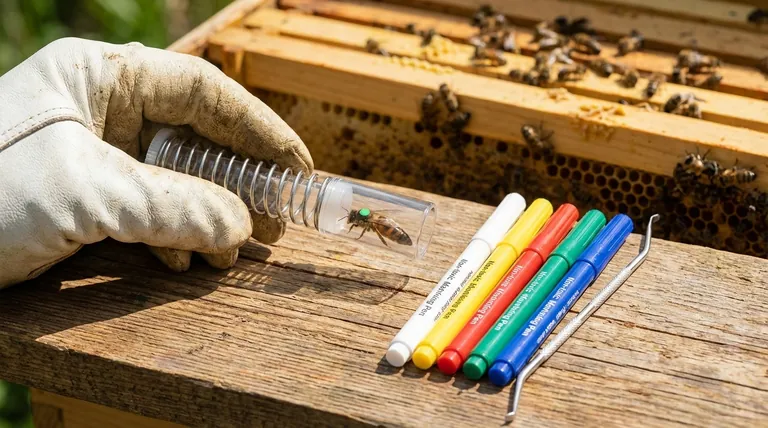
Why Non-Toxic, Water-Based Pens Are Critical
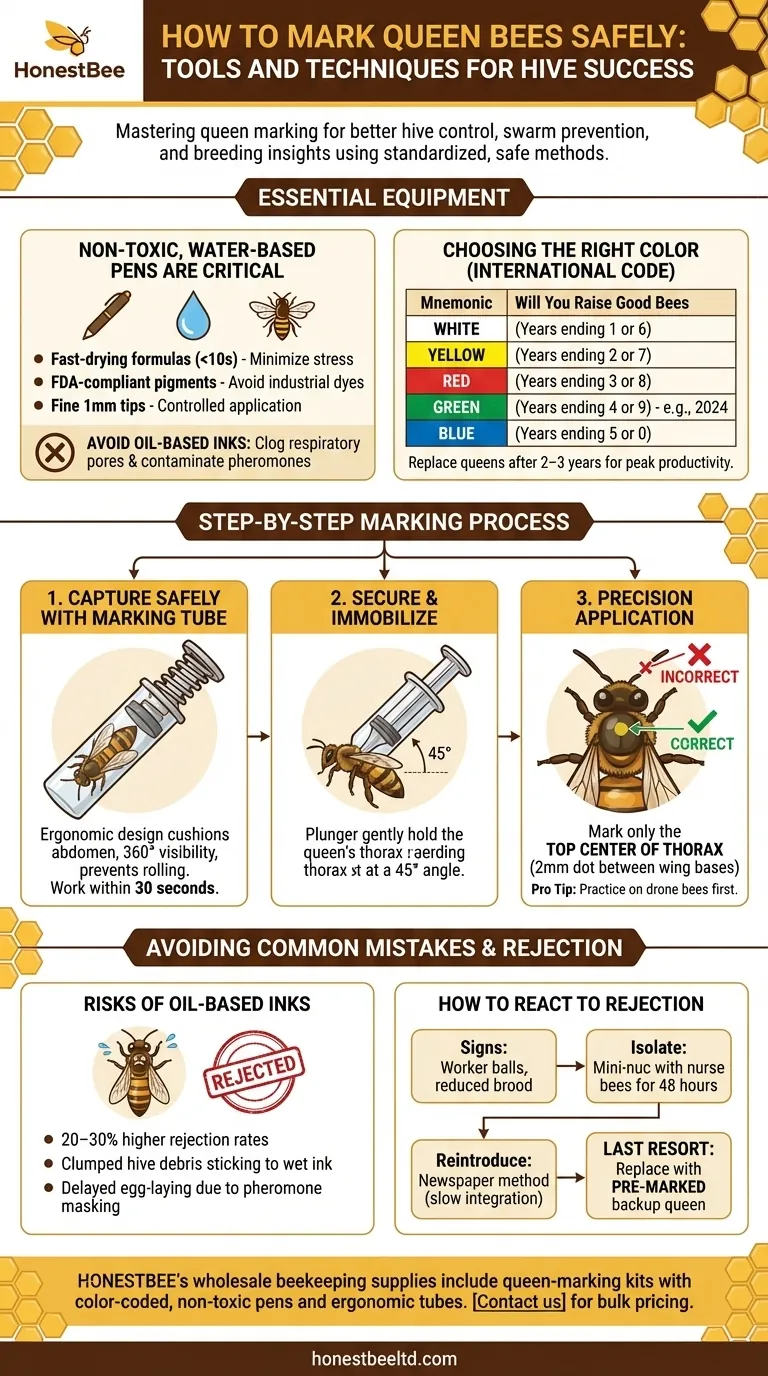
Queen bees are sensitive to chemical exposure. Oil-based inks can clog respiratory pores or contaminate hive pheromones, while water-based pens dry quickly and minimize interference with the queen’s delicate exoskeleton. Research shows colonies with queens marked using non-toxic inks exhibit normal brood patterns and foraging activity within hours post-marking.
Key features to prioritize:
- Fast-drying formulas (under 10 seconds)
- FDA-compliant pigments (avoid industrial dyes)
- Fine 1mm tips for controlled application
Choosing the Right Color for Annual Identification
The international color code (mnemonic: Will You Raise Good Bees) simplifies age tracking:
| Year Ending | Color |
|---|---|
| 1 or 6 | White |
| 2 or 7 | Yellow |
| 3 or 8 | Red |
| 4 or 9 | Green |
| 5 or 0 | Blue |
Example: A queen marked with green in 2024 indicates she was introduced in a year ending with 4 or 9. This system helps apiaries replace queens before productivity declines (typically after 2–3 years).
Step-by-Step Marking Process
Capturing the Queen Safely with a Marking Tube
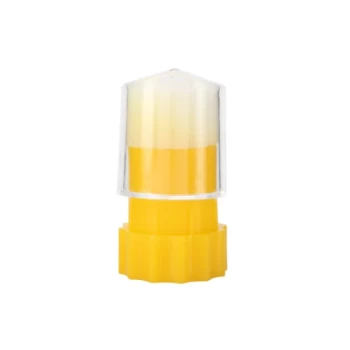
Spring-loaded queen tubes reduce injury risks compared to manual handling. The ergonomic design:
- Cushions the queen’s abdomen during confinement
- Allows 360° visibility for marking alignment
- Prevents accidental rolling (common with makeshift containers)
Technique:
- Gently herd the queen into the tube using a soft brush—avoid pinching legs or wings.
- Secure the plunger at a 45° angle to immobilize her thorax without pressure.
- Work within 30 seconds to minimize stress.
Precision Application to Avoid Obstructing Antennae
Mark only the top center of the thorax:
- ✅ Correct: A 2mm dot between wing bases
- ❌ Incorrect: Covering the head or antennae (disrupts pheromone distribution)
Pro tip: Practice on drone bees first—their similar size helps refine hand steadiness.
Avoiding Common Mistakes
Risks of Oil-Based Inks and Adhesive Interference
Field studies link oil-based markers to:
- 20–30% higher queen rejection rates (workers detect foreign substances)
- Clumped hive debris sticking to wet ink
- Delayed egg-laying due to pheromone masking
How to React if the Queen is Rejected Post-Marking
Signs of rejection include worker balls forming around the queen or reduced brood cells. If observed:
- Isolate the queen in a mini-nuc with young nurse bees for 48 hours.
- Reintroduce her using the newspaper method (slow colony reintegration).
- As a last resort, replace her with a pre-marked backup queen to maintain hive continuity.
Ready to upgrade your apiary’s efficiency? HONESTBEE’s wholesale beekeeping supplies include queen-marking kits with color-coded, non-toxic pens and ergonomic tubes—helping commercial beekeepers and distributors maintain healthy, traceable colonies. [Contact us] today for bulk pricing on hive management essentials.
By adopting these protocols, you’re not just marking a queen—you’re safeguarding the future of every hive under your care.
Visual Guide
Related Products
- One Hand Yellow Queen Marking Catcher Tube Cage Beekeeper Tool Accessory for Queen Bee
- Plastic Long Marker Device for Catching and Marking Bees Queen Bee Marking Tube and Cage
- Queen Bee Marking Pen UNI Medium Point for Queen and Bee Marking
- Queen Bee Marking Pen POSCA Queen Marking Pens for Beekeeping Bee Markers
- Queen Bee Marking Tube Cage Bottle Catcher Holder with Clear Plastic Plunger Marker
Related Articles
- How to Master Queen Bee Marking: A Beekeeper's Guide to Precision and Productivity
- How to Mark Queen Bees Safely: A Beekeeper’s Guide to Hive Health
- How Queen Marking Transforms Apiary Management: From Tracking to Strategic Beekeeping
- How to Mark Queen Bees Safely Using the 5-Year Color Code System
- The Signal in the Swarm: Queen Bee Marking as a System for Clarity