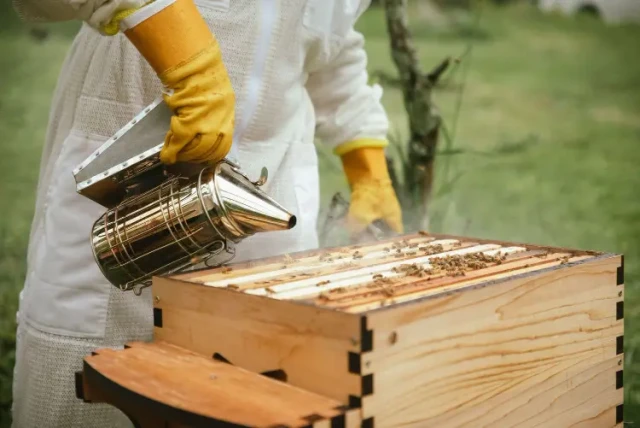
Beekeeping success hinges on understanding the delicate balance between colony inspection and bee comfort. This guide reveals the science behind smoke's calming effects and provides actionable techniques for commercial beekeepers to optimize hive inspections while minimizing stress on colonies.
The Role of Smoke in Bee Behavior
Smoke serves as the beekeeper's most powerful communication disruptor, temporarily overriding the colony's defense mechanisms through two primary pathways.
How Smoke Disrupts Alarm Pheromones
Research shows smoke particles physically interfere with bees' antennae receptors, preventing the spread of isopentyl acetate (the primary alarm pheromone). This creates a critical 15-30 minute window where:
- Guard bees cannot effectively signal threats
- Worker bees remain near honey stores instead of forming defensive clusters
- The colony maintains normal activity levels despite intrusion
Secondary Effects: Feeding Instincts and Colony Calming
The smoke triggers an evolutionary survival response where bees:
- Begin gorging on honey in preparation for potential hive abandonment
- Show reduced agility due to sensory overload
- Temporarily lose coordination of defensive maneuvers
This triple-effect makes smoke far more effective than physical barriers alone.
Step-by-Step Smoker Application
Preparing the Smoker: Fuel Selection and Ignition
Commercial operations should prioritize fuels that:
✔ Burn cleanly without toxic residues (avoid pine needles with high sap content)
✔ Produce cool, white smoke (aged burlap outperforms fresh wood chips)
✔ Maintain embers for 45+ minutes (critical for large-scale inspections)
Pro Tip: Light your smoker with a butane torch for consistent ignition, adding fuel gradually to establish a stable ember bed.
Timing and Puff Techniques During Inspections
-
Pre-Inspection Puffs (2-3 gentle clouds at the entrance)
- Allows smoke to permeate the brood chamber
- Gives bees time to react without panic
-
Maintenance Puffs (1/4-second bursts every 5-7 frames)
- Direct smoke across frame tops, not into cells
- Watch for bees lifting abdomens—this signals adequate smoke saturation
-
Defensive Colony Protocol (Double smoke application)
- Initial puffing at 10-foot distance
- Secondary application after 90 seconds
Post-Use Maintenance and Safety
-
Daily Care
- Empty all spent fuel to prevent acidic corrosion
- Hang smokers upside down to preserve bellows
-
Monthly Deep Cleaning
- Soak in vinegar solution to remove creosote buildup
- Inspect leather bellows for drying/cracking
Advanced Smoker Strategies
Adapting to Hive Types
| Hive Type | Smoke Technique | Frequency |
|---|---|---|
| Langstroth | Side-to-side wave motion | Every 8 frames |
| Top-Bar | Diagonal downward angling | Every 3 bars |
| Warre | Vertical column penetration | Every 2 boxes |
Managing Defensive Colonies
For Africanized hybrids or nucleus colonies:
- Use thicker smoke (add cotton fiber to fuel mix)
- Implement the "3-Stage Retreat Method":
- Smoke from downwind at 45° angle
- Wait for audible buzz reduction (typically 2 minutes)
- Approach slowly while maintaining smoke barrier
Common Mistakes and Troubleshooting
Over-Smoking Risks and Mitigation
Excessive smoke causes:
➔ Honey contamination (smoke taint in supers)
➔ Queen abandonment (especially in new colonies)
➔ Brood chilling (bees leave temperature regulation posts)
Solution: The "Hand Test" - if you can't see your fingers through the smoke cloud at 12 inches, it's too dense.
Fuel Alternatives for Sustainable Beekeeping
-
Agricultural Byproducts
- Pistachio shells (high BTU, low spark)
- Dried citrus peels (pleasant scent, short burn)
-
Recycled Materials
- Corrugated cardboard (layer with wood chips)
- Cotton burlap (produces ideal smoke density)
Ready to Transform Your Apiary Operations?
HONESTBEE's commercial-grade smokers and fuel systems help wholesale beekeepers conduct faster, safer inspections while keeping colonies productive. Discover how our USDA-compliant equipment supports large-scale hive management—request your wholesale catalog today.
Remember: The difference between adequate smoke and harmful over-smoking often comes down to just 2-3 seconds of puff duration. Master this timing, and you'll see immediate improvements in inspection efficiency and colony temperament.
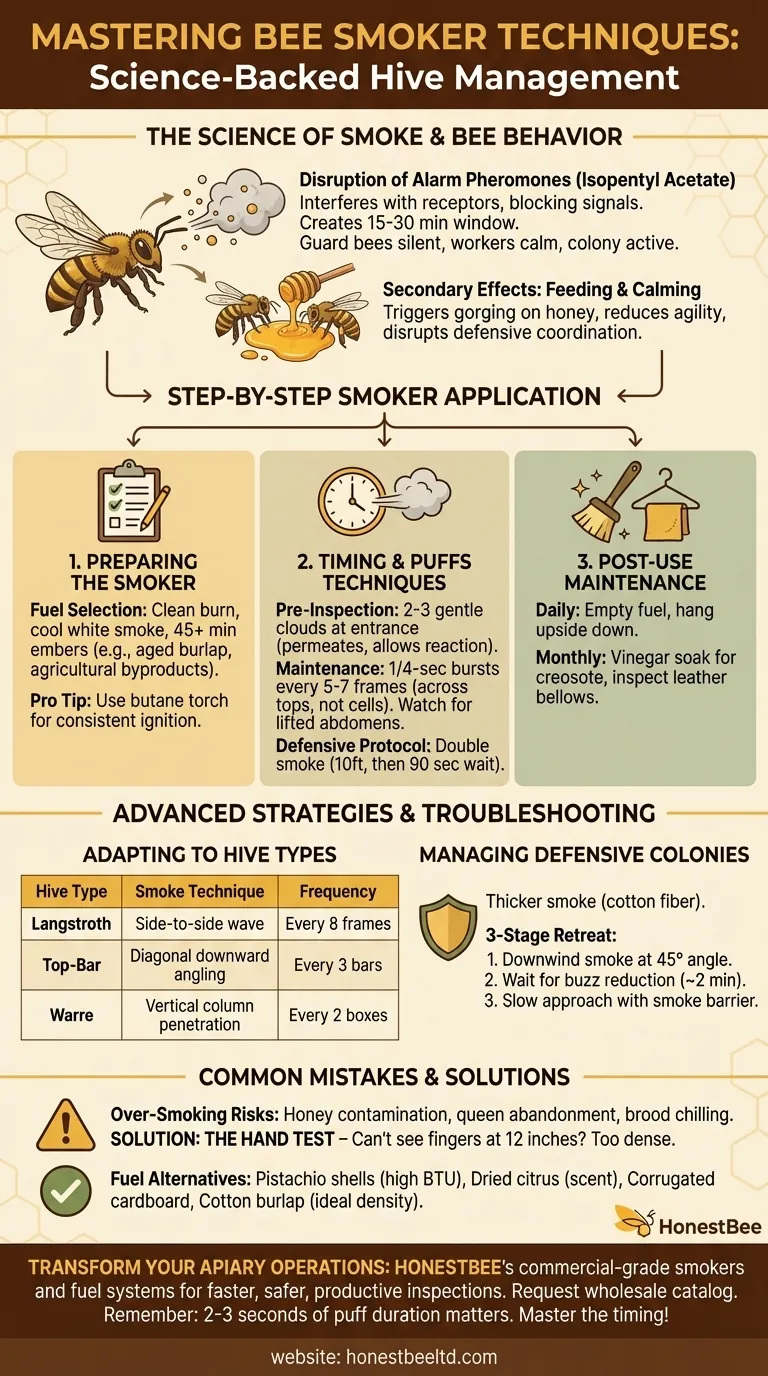
Visual Guide
Related Products
- Stainless Steel Honey Bee Smoker Hive and Honeycomb Smoker for Beekeeping
- Professional Bee Smoker with Elongated Spout and Durable Bellows for Beekeeping
- Premium Traditional Copper Bee Smoker with Bellows
- Heavy Duty Manual Bee Smoker Blower for Beekeeping
- European Stainless Steel Bee Smoker for Honey Bee Hive
Related Articles
- The End of 'Hot Hives': Why Your Bee Smoker Is More Important Than Your Suit
- Why Your Bee Smoker Might Be Making Your Hives More Aggressive—And How to Fix It
- Why Your Bee Smoker Keeps Going Out—And the 3-Layer Fix
- How to Operate a Bee Smoker Safely: Expert Techniques for Calmer Hives
- How to Choose the Right Bee Smoker Size for Your Beekeeping Operation