Introduction: The Silent Threat to Global Pollinators
Honeybee colonies are collapsing at alarming rates, with Varroa mites (Varroa destructor) identified as a primary culprit. These parasites don’t just weaken bees physically—they act as viral vectors, spreading deadly pathogens like Deformed Wing Virus (DWV) that decimate entire colonies. For commercial apiaries and distributors, understanding this mite-virus synergy is critical to safeguarding bee populations.
Here’s what we’ll uncover:
- How Varroa mites transmit viruses while feeding on bees
- The immune-suppressing effects of mite infestations
- Field-tested strategies to detect and mitigate outbreaks
Varroa Mites as Viral Vectors in Honeybee Decline
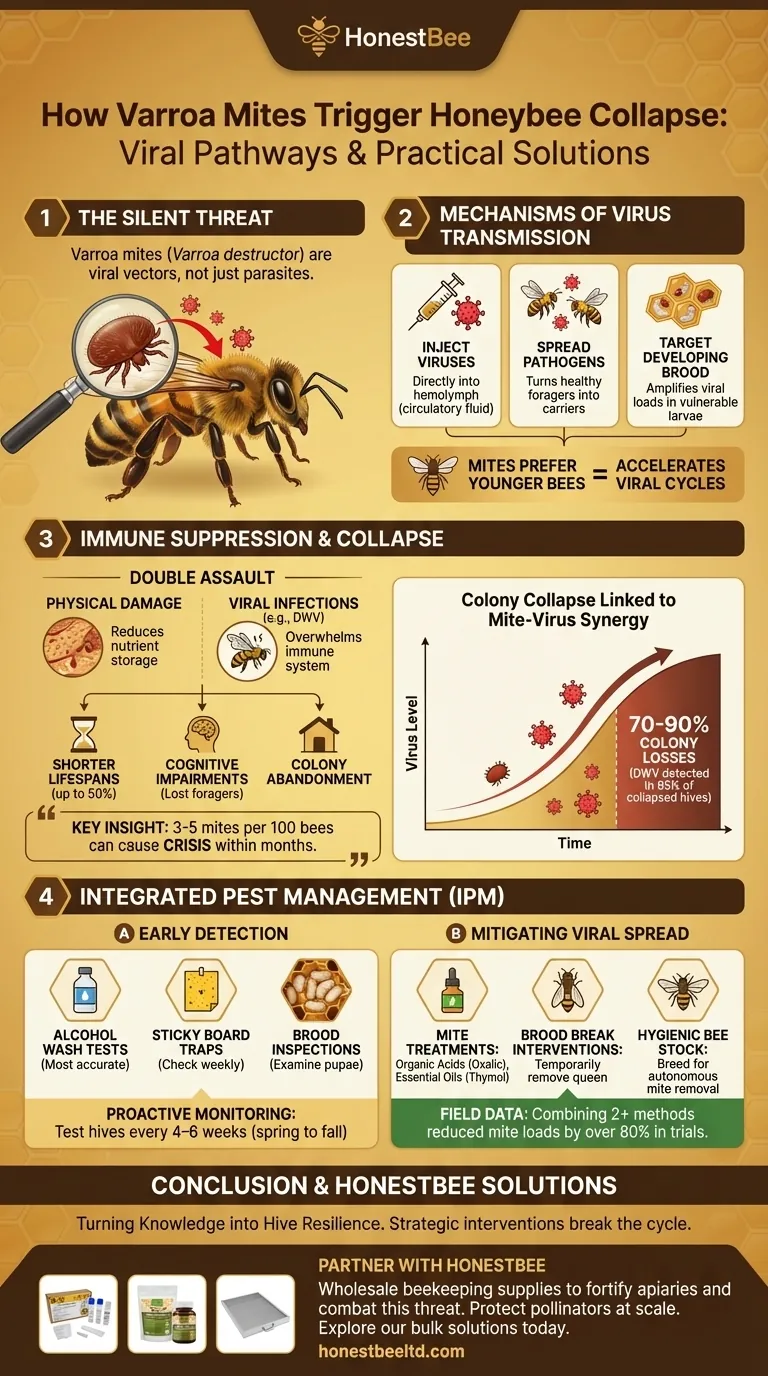
Mechanisms of Virus Transmission by Varroa destructor
Varroa mites are more than bloodsuckers; they’re disease couriers. When mites pierce a bee’s exoskeleton to feed on fat bodies, they:
- Inject viruses directly into the bee’s hemolymph (circulatory fluid).
- Spread pathogens between bees, turning healthy foragers into carriers.
- Target developing brood, where hidden mites amplify viral loads in vulnerable larvae.
Research shows that mites preferentially feed on younger bees, which accelerates viral replication cycles.
Immune System Suppression in Infected Bees
Mite-infested bees face a double assault:
- Physical damage from feeding reduces their ability to store nutrients.
-
Viral infections like DWV overwhelm their immune systems, leading to:
- Shorter lifespans (by up to 50% in severe cases)
- Cognitive impairments, causing bees to get lost during foraging
- Colony abandonment as sick bees are expelled to protect the hive
Key Insight: A hive with just 3–5 mites per 100 bees can reach crisis levels within months if unchecked.
Case Studies of Colony Collapse Linked to Mite-Virus Synergy
- DWV Outbreaks in Europe: Apiaries with uncontrolled mite populations saw 70–90% colony losses, with DWV detected in 95% of collapsed hives.
- U.S. Winter Losses: Mite-infested hives were 3x more likely to perish before spring, even with adequate food stores.
Integrated Pest Management Strategies
Early Detection Techniques for Mite Infestations
Proactive monitoring is the first line of defense:
- Alcohol Wash Tests: Submerge 100–300 bees in alcohol to dislodge and count mites (most accurate method).
- Sticky Board Traps: Place adhesive boards under hives to catch fallen mites; check weekly.
- Brood Inspections: Use a capping scratcher to examine pupae for mites hiding in cells.
Tip: Test hives every 4–6 weeks during peak season (spring to fall).
Mitigating Viral Spread in Apiaries
-
Mite Treatments:
- Organic Acids (e.g., oxalic acid): Effective in cooler temperatures but require precise dosing.
- Essential Oils (e.g., thymol): Disrupt mite reproduction but may need repeated applications.
-
Brood Break Interventions:
- Temporarily remove the queen to halt brood production, starving mites of reproductive hosts.
-
Hygienic Bee Stock:
- Breed bees that detect and remove mite-infested pupae autonomously (e.g., Varroa-Sensitive Hygiene trait).
Field Data: Apiaries combining 2+ methods reduced mite loads by over 80% in trials.
Conclusion: Turning Knowledge into Hive Resilience
Varroa mites weaponize viruses to destabilize colonies, but strategic interventions can break this cycle. By prioritizing early detection and multi-pronged treatments, beekeepers can shield their hives from collapse.
Ready to fortify your apiaries? HONESTBEE’s wholesale beekeeping supplies—from mite testing kits to organic treatments—equip commercial operations with the tools to combat this threat. Partner with us to protect pollinators at scale.
Explore our bulk solutions today.
Visual Guide
Related Products
- Oxalic Acid Vaporizer 12V for Bee Varroa Mite Treatment
- Durable 12V Oxalic Acid Vaporizer for Varroa Mite Treatment Beehive Beekeeping Tool
- Heavy Duty 12V Oxalic Acid Evaporator Vaporizer for Bee Varroa Mite Treatment Beekeeping Fumigator Atomizer
- Compact Circular Bee Mite Treatment Dispenser
- 12V Bee Mite Removal Evaporator Oxalic Acid Vaporizer for Bee Fumigation Treatment 180W Atomization
Related Articles
- How Broodless Timing Unlocks Oxalic Acid's Full Potential Against Varroa Mites
- How to Master Oxalic Acid Vaporization for Safe and Effective Varroa Mite Control
- Optimizing Varroa Control: A Science-Backed Rotation Guide for Beekeepers
- How to Detect and Defeat Varroa Mite Syndrome in Your Beehives
- How Beekeepers Can Control Varroa Mites Without Harming Their Colonies






