Varroa mites remain one of the most devastating threats to honeybee colonies worldwide. As resistance to common treatments grows, beekeepers need a practical, evidence-based approach to rotate control methods effectively. This guide merges the latest resistance science with actionable rotation protocols tailored to real-world apiary operations—helping you sustain hive health while delaying acaricide resistance.
Understanding Varroa Resistance Dynamics
Biochemical Pathways of Acaricide Resistance
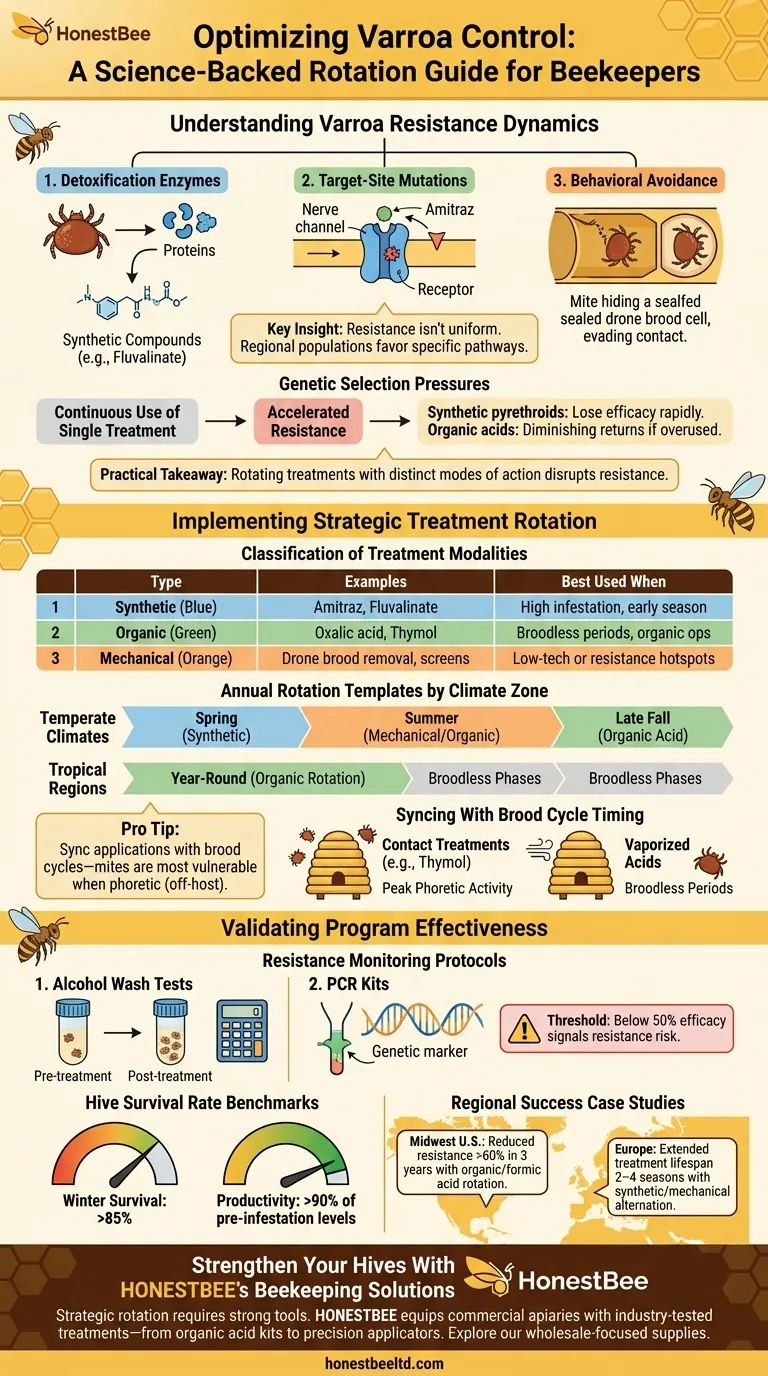
Varroa mites develop resistance through genetic mutations that neutralize treatments. Three primary mechanisms dominate:
- Detoxification Enzymes: Mites produce proteins (e.g., cytochrome P450) that break down synthetic compounds like fluvalinate.
- Target-Site Mutations: Changes in nerve sodium channels reduce sensitivity to miticides such as amitraz.
- Behavioral Avoidance: Some mites evade contact treatments by hiding in drone brood or altering movement patterns.
Key Insight: Resistance isn’t uniform. Regional mite populations may favor specific pathways, necessitating localized strategies.
Genetic Selection Pressures in Mite Populations
Repeated use of a single treatment accelerates resistance. For example:
- Synthetic pyrethroids lose efficacy after just a few seasons of continuous use.
- Organic acids (e.g., oxalic acid) impose different selection pressures but face diminishing returns if overused.
Practical Takeaway: Rotating treatments with distinct modes of action disrupts resistance development.
Implementing Strategic Treatment Rotation
Classification of Treatment Modalities
Diversify your approach using three categories:
| Type | Examples | Best Used When |
|---|---|---|
| Synthetic | Amitraz, Fluvalinate | High infestation, early season |
| Organic | Oxalic acid, Thymol | Broodless periods, organic ops |
| Mechanical | Drone brood removal, screens | Low-tech or resistance hotspots |
Annual Rotation Templates by Climate Zone
Tailor rotations to your region’s mite reproduction cycles:
- Temperate Climates: Pair synthetic miticides in spring with organic acids in late fall.
- Tropical Regions: Rotate organic treatments year-round, leveraging broodless phases.
Pro Tip: Sync applications with brood cycles—mites are most vulnerable when phoretic (off-host).
Syncing With Brood Cycle Timing
- Apply contact treatments (e.g., thymol) during peak phoretic activity.
- Use vaporized acids when colonies are broodless for maximum mite exposure.
Validating Program Effectiveness
Resistance Monitoring Protocols
Track efficacy with:
- Alcohol Wash Tests: Pre- and post-treatment mite counts.
- PCR Kits: Detect genetic markers for resistance (e.g., kdr mutations).
Threshold: A drop below 50% efficacy signals resistance risk.
Hive Survival Rate Benchmarks
Healthy apiaries maintain:
- Winter survival rates above 85% with proactive rotation.
- Productivity metrics (e.g., honey yield) within 10% of pre-infestation levels.
Regional Success Case Studies
- Midwest U.S. Apiaries: Combining oxalic acid dribbles in winter with summer formic acid pads reduced resistance by over 60% in 3 years.
- European Operations: Alternating synthetic and mechanical controls extended treatment lifespans by 2–4 seasons.
Strengthen Your Hives With HONESTBEE’s Beekeeping Solutions
A strategic rotation plan is only as strong as the tools behind it. HONESTBEE equips commercial apiaries and distributors with industry-tested treatments—from organic acid kits to precision applicators—ensuring you can execute rotations confidently.
Ready to refine your Varroa strategy? Explore HONESTBEE’s wholesale-focused supplies to build a resilient, science-backed defense for your colonies.
Visual Guide
Related Products
- Oxalic Acid Vaporizer 12V for Bee Varroa Mite Treatment
- Durable 12V Oxalic Acid Vaporizer for Varroa Mite Treatment Beehive Beekeeping Tool
- Heavy Duty 12V Oxalic Acid Evaporator Vaporizer for Bee Varroa Mite Treatment Beekeeping Fumigator Atomizer
- Compact Circular Bee Mite Treatment Dispenser
- 12V Bee Mite Removal Evaporator Oxalic Acid Vaporizer for Bee Fumigation Treatment 180W Atomization
Related Articles
- How Broodless Timing Unlocks Oxalic Acid's Full Potential Against Varroa Mites
- How to Master Oxalic Acid Vaporization for Safe and Effective Varroa Mite Control
- How to Detect and Defeat Varroa Mite Syndrome in Your Beehives
- How Beekeepers Can Control Varroa Mites Without Harming Their Colonies
- How Varroa Mites Trigger Honeybee Collapse: Viral Pathways & Practical Solutions






