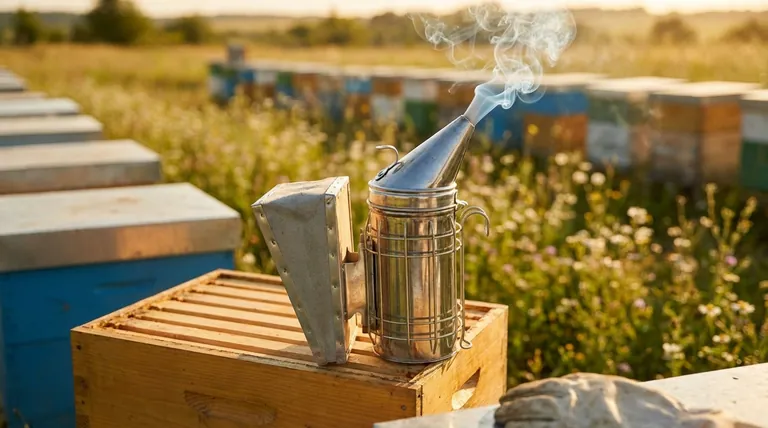
You’ve done everything right. You approach the hive, smoker puffing gently. The goal is a quick, calm inspection. But instead of the expected, low hum of a placid colony, the buzzing intensifies. The bees become defensive, agitated. What should have been a routine five-minute check turns into a stressful, rushed affair, potentially ending with more stings than necessary and an incomplete inspection. You walk away frustrated, wondering if it’s just a "bad day" for the hive.
If this scenario feels familiar, you are not alone.
The Cycle of Guesswork: Why Common Fixes Fail and What It Costs You
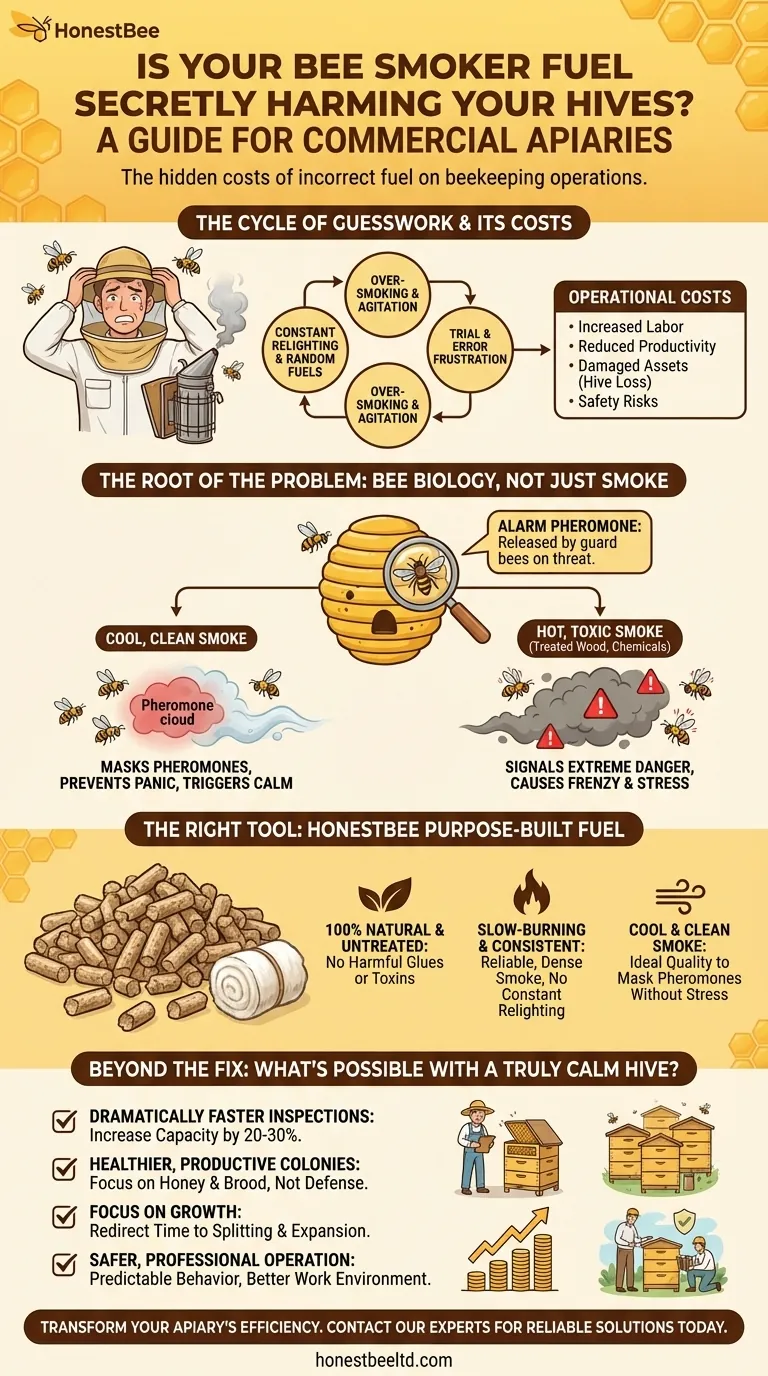
Across commercial apiaries, this inconsistency is a persistent and costly challenge. When hive inspections are difficult, the natural reaction is to blame the technique or the tools. Beekeepers find themselves in a frustrating loop of trial and error:
- Constantly relighting the smoker: Using whatever is on hand—damp pine needles, mystery wood scraps—that refuses to smolder properly.
- Trying different "free" fuels: Grabbing scraps of cardboard, paper from the office, or wood pellets from the barn, hoping one will finally work consistently.
- Over-smoking the hive: In a desperate attempt to force calm, you pump more and more smoke, only to find the bees becoming even more frantic.
This isn't just an annoyance; it's a direct drain on your operation's bottom line. Every minute spent fighting with a smoker or a defensive hive is a minute not spent on productive work. The consequences multiply quickly:
- Increased Labor Costs: Slower, inefficient inspections mean your team can manage fewer hives per day, driving up operational expenses.
- Reduced Productivity: Stressed bees are not productive bees. Agitation disrupts foraging, brood care, and honey production, directly impacting your yield.
- Damaged Assets: In the worst cases, using the wrong fuel can introduce toxins that weaken or even kill a colony, resulting in a total loss of that asset and its future revenue.
- Safety Risks: Aggressive hives increase the risk of stings for your staff, creating a hazardous and stressful work environment.
These common "solutions" fail because they are based on a fundamental misunderstanding of what the smoker is actually supposed to do.
The Root of the Problem: It's Not About Smoke, It's About Bee Biology
The problem isn't your technique. It's the fuel. We often think the smoker's job is to create a visual "smokescreen," but its true function is far more precise: it's a tool of chemical communication.
When a hive perceives a threat, guard bees release an alarm pheromone. This chemical signal instantly puts the entire colony on high alert, preparing them to attack. The purpose of cool, clean smoke is to gently mask these alarm pheromones. By interrupting their communication, the smoke prevents panic from spreading and triggers a secondary, ancient instinct: to gorge on honey in preparation for potentially abandoning the hive. A full, calm bee is a docile bee.
Here’s the crucial distinction:
- Cool, clean smoke tells the bees, "Pay no attention to that alarm signal."
- Hot, toxic smoke screams, "THE HIVE IS ON FIRE! WE ARE BEING POISONED!"
This is why your fuel choice is so critical. Burning materials not meant for a smoker—like pressure-treated wood, glossy paper with chemical inks, or synthetic fabrics—releases a cocktail of toxins and produces scorching heat. Instead of masking the alarm, this toxic smoke becomes a new, far more terrifying threat, sending the bees into a defensive frenzy. You thought you were calming them, but you were actually making the problem infinitely worse.
The Right Tool for the Job: Moving from Guesswork to Guaranteed Calm
To solve this problem permanently, you don't just need something that burns. You need a fuel source that is scientifically optimized to produce a large volume of cool, clean, and long-lasting smoke. You need to eliminate the guesswork entirely.
This is precisely why purpose-built smoker fuels are the non-negotiable standard for professional operations. At HONESTBEE, our smoker fuels are not just convenient; they are designed based on a deep understanding of bee biology. We ensure our fuel sources—whether compressed cotton, wood pellets, or other natural materials—are:
- 100% Natural and Untreated: Guaranteed free from the glues, chemicals, and toxins that agitate and harm your bees.
- Slow-Burning and Consistent: Engineered to smolder for long periods, providing reliable, dense smoke without constant relighting.
- Cool and Clean: Produces the ideal smoke quality to effectively mask pheromones without stressing the colony.
By using a fuel designed for the task, you transform the smoker from a source of frustration into a reliable, precision instrument. You are no longer gambling with your hive's health; you are ensuring a calm, safe, and productive inspection every single time.
Beyond the Fix: What's Possible with a Truly Calm Hive?
When you eliminate the variable of unpredictable smoker fuel, you unlock a new level of efficiency and strategic potential for your entire apiary. You move from reactive problem-solving to proactive management.
Imagine what becomes possible:
- Dramatically Faster Inspections: Your team can move smoothly and confidently from hive to hive, potentially increasing daily inspection capacity by 20-30%.
- Healthier, More Productive Colonies: Calm bees are focused bees. With less stress, your hives can dedicate their full energy to honey production, brood-rearing, and expansion.
- Focus on Growth, Not Firefighting: Instead of wrestling with agitated hives, your team's time and energy can be redirected toward higher-value activities like splitting colonies, raising queens, and executing your expansion strategy.
- A Safer, More Professional Operation: Predictable hive behavior creates a safer work environment for your staff, reducing liability and improving morale.
Solving the smoker fuel problem is a simple change that delivers cascading benefits, making your apiary more predictable, profitable, and scalable.
Your operation's success depends on the health of your bees and the efficiency of your team. Don't let something as fundamental as smoker fuel undermine your hard work. Our experts are ready to help you equip your apiary with the reliable, high-quality supplies you need to thrive. Let's discuss the specific challenges you're facing and how the right tools can make all the difference. Contact Our Experts to build a more efficient and productive apiary today.
Visual Guide
Related Products
- 54-Piece Smoker Fuel Pellets for Beekeeping Beehive Smoker Fuel
- Stainless Steel Honey Bee Smoker Hive and Honeycomb Smoker for Beekeeping
- Premium Traditional Copper Bee Smoker with Bellows
- Galvanized Beekeeping Smoker for Honey Bee and Apiculture
- Stainless Steel Electric Beehive Smoker for Beekeeping and Bee Keeper Use
Related Articles
- The Art of Persuasion: Why Your Bee Smoker Fuel is a Dialogue with the Hive
- How to Choose and Prepare Optimal Bee Smoker Fuels for Healthier Hives
- The Art of Cool Smoke: Why Bee Smoker Fuel is a System, Not Just a Substance
- How to Clean Your Beehive Smoker Safely: A Beekeeper’s Guide to Efficiency and Disease Prevention
- How to Choose the Right Beekeeping Smoker for Optimal Performance