The First Five Minutes
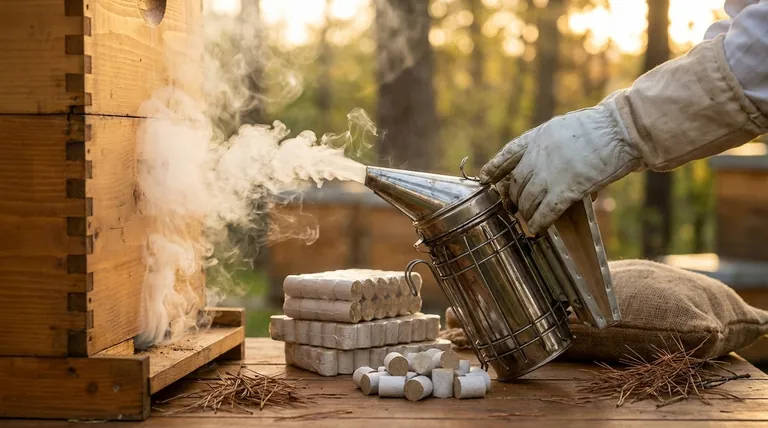
Imagine standing before a hive. The air hums with the energy of fifty thousand lives. In your hand is a bee smoker, a simple metal can with a bellows. It feels almost primitive, yet it’s one of the most sophisticated tools of diplomacy ever invented.
The smoke you puff into the entrance isn't an attack. It's a message. It's a conversation starter.
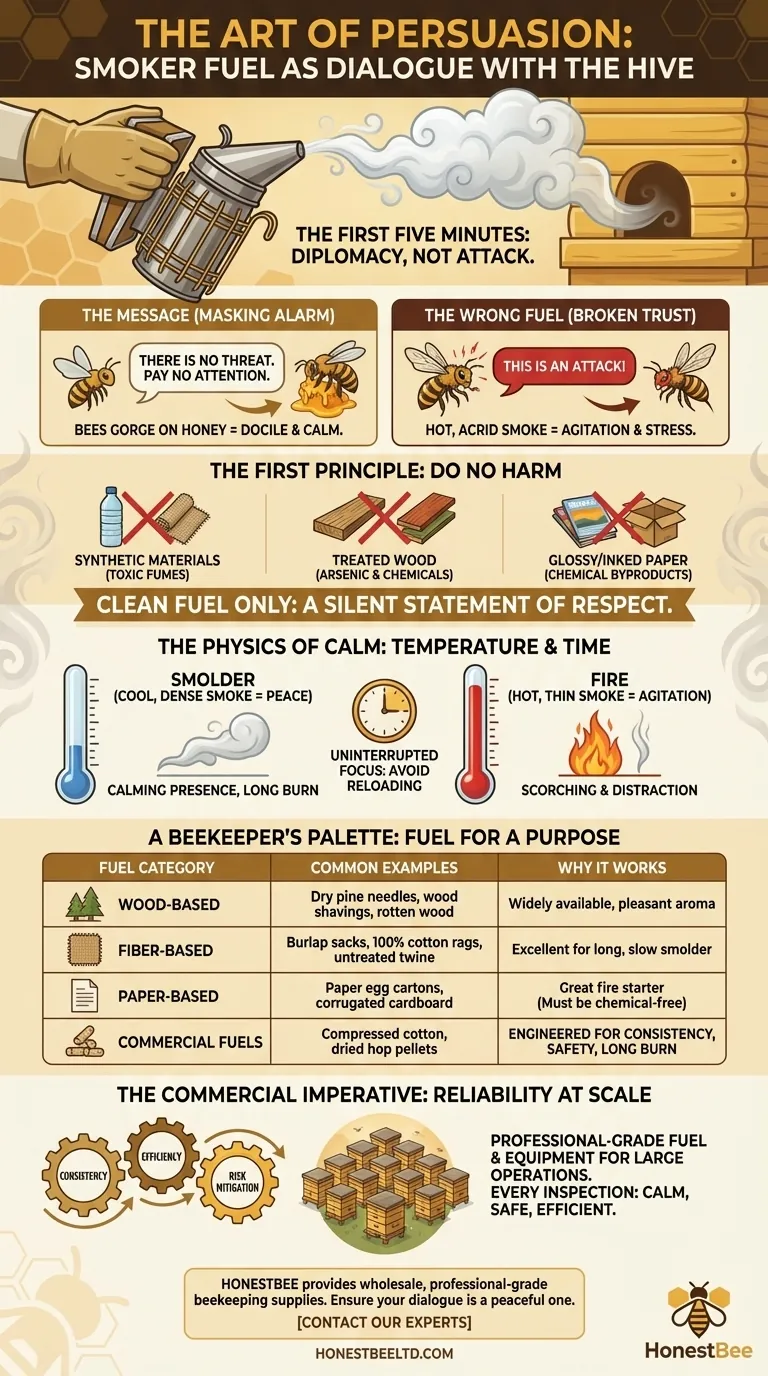
By masking the bees' alarm pheromones, the smoke gently says, "There is no threat here. Pay no attention to the giant opening your roof." The bees, in turn, default to a more primal instinct: they gorge on honey in preparation for a potential evacuation. This makes them docile, calm, and focused.
But this entire dialogue hinges on one thing: the quality of your smoke. The fuel you choose is not just a combustible material; it's the very language you're using.
The Psychological Contract
Using a smoker is a form of psychological manipulation, but it’s a benevolent one. You are overriding one instinct (defend the hive) with another (prepare for fire). This delicate negotiation requires trust.
The wrong smoke breaks that trust instantly.
A hot, acrid smoke doesn't say, "Calm down." It screams, "This is an attack!" It agitates the colony, invalidates your purpose, and turns a routine inspection into a chaotic and stressful event for both you and the bees.
The goal is always cool, white, and dense smoke. This is the universally understood signal for "peace."
The First Principle: Do No Harm
Before we even consider what works, we must be ruthlessly clear about what doesn't. The health of your colony is a non-negotiable axiom. Bees are exquisitely sensitive to their environment.
Burning the wrong substance is the equivalent of pumping poison into a city's water supply.
This means an absolute ban on:
- Synthetic Materials: Never burn plastics, nylon, or polyester. They release toxic fumes that are lethal to bees and harmful to you.
- Treated Wood: Pressure-treated, painted, or varnished wood contains arsenic, heavy metals, and chemical preservatives. Burning them aerosolizes these poisons.
- Glossy or Inked Paper: Magazines and printed cardboard contain chemical inks, clays, and glues. Their combustion byproducts have no place in a healthy hive.
Choosing a clean fuel isn’t a best practice; it is the only practice. It is a silent statement of your intent and respect for the lives in your care.
The Physics of Calm: Temperature and Time
An effective smoker fuel is defined by two physical properties: how it burns and for how long.
Heat is Agitation, Not Peace
You want a smolder, not a fire. Flames produce hot, thin smoke that rises too quickly and can scorch the bees. A slow, smoldering burn generates a high volume of cool, dense smoke that gently settles into the hive. This is the difference between a calming presence and an aggressive intrusion.
The Value of Uninterrupted Focus
A fuel that burns out in ten minutes is a liability. A hive inspection requires calm, deliberate focus. Having to stop mid-process to frantically reload and relight your smoker breaks your workflow, prolongs the disturbance to the hive, and increases the chance of mistakes. Good fuel should be a reliable, background presence, not a constant distraction.
A Beekeeper's Palette: Fuel for a Purpose
The right fuel often comes down to what is abundant, clean, and suits your workflow. Each has its own character.
| Fuel Category | Common Examples | Why It Works |
|---|---|---|
| Wood-Based | Dry pine needles, wood shavings, rotten wood | Widely available, easy to light, produces a pleasant aroma. |
| Fiber-Based | Burlap sacks, 100% cotton rags, untreated twine | Excellent for a long, slow smolder. Produces very consistent smoke. |
| Paper-Based | Paper egg cartons, corrugated cardboard | Great as a fire starter. Must be free of inks, glues, or tape. |
| Commercial Fuels | Compressed cotton, dried hop pellets | Engineered for consistency, long burn times, and ultimate safety. |
For the hobbyist, gathering pine needles can be a pleasant part of the ritual. But for a commercial operation, this calculus changes entirely.
The Commercial Imperative: Reliability at Scale
When you manage hundreds of hives, "what's available" is no longer the primary driver. The pillars of your operation become consistency, efficiency, and mitigating risk. You cannot afford a bad batch of fuel that harms a single colony, let alone dozens. You cannot afford the lost time of constantly relighting smokers across an entire bee yard.
This is where professional-grade equipment and supplies become essential. For commercial apiaries, using a standardized, long-burning commercial fuel isn't a luxury; it's a sound business decision. It ensures every hive inspection is calm, safe, and efficient.
At HONESTBEE, we understand that commercial beekeeping is a demanding enterprise. We provide wholesale, professional-grade beekeeping supplies designed for the rigors of large-scale operations. From the hive bodies to the smokers themselves, our equipment is built for reliability.
The smoker is a simple tool, but it embodies a complex truth: small details, executed with professional discipline, are the foundation of a successful and healthy apiary. The language you use to speak to your hives matters.
Ensure your dialogue is a peaceful one. Contact Our Experts
Visual Guide
Related Products
- 54-Piece Smoker Fuel Pellets for Beekeeping Beehive Smoker Fuel
- Stainless Steel Honey Bee Smoker Hive and Honeycomb Smoker for Beekeeping
- Premium Traditional Copper Bee Smoker with Bellows
- Galvanized Beekeeping Smoker for Honey Bee and Apiculture
- Stainless Steel Electric Beehive Smoker for Beekeeping and Bee Keeper Use
Related Articles
- Is Your Bee Smoker Fuel Secretly Harming Your Hives? A Guide for Commercial Apiaries
- How to Choose and Prepare Optimal Bee Smoker Fuels for Healthier Hives
- The Art of Cool Smoke: Why Bee Smoker Fuel is a System, Not Just a Substance
- How to Clean Your Beehive Smoker Safely: A Beekeeper’s Guide to Efficiency and Disease Prevention
- How to Choose the Right Beekeeping Smoker for Optimal Performance