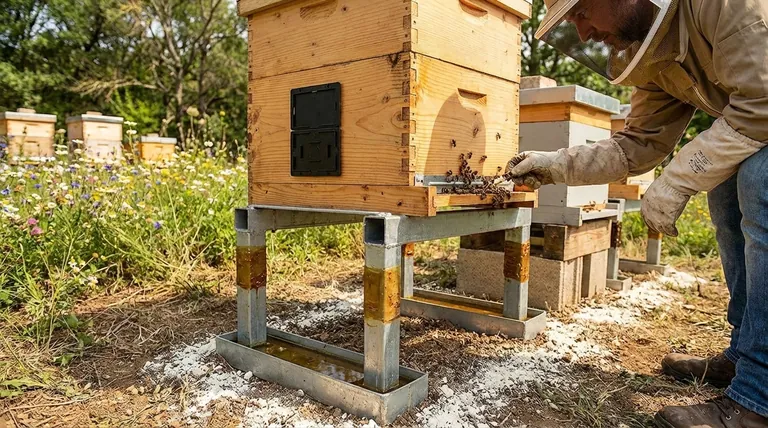
Ant infestations pose a serious threat to beehives, compromising colony health and honey production. For beekeepers, understanding how to prevent and manage these invasions is critical—especially when dealing with aggressive ant species. This guide covers proactive prevention methods, safe removal techniques, and post-infestation recovery strategies to safeguard your hives.
Understanding Ant Threats to Beehives
How Ant Infestations Impact Colony Health
Ants disrupt hive stability in multiple ways:
- Resource competition: They steal honey, pollen, and even bee larvae, depriving colonies of essential nutrients.
- Stress on bees: Constant ant presence weakens worker bees, reducing their ability to forage or defend the hive.
- Disease transmission: Ants can introduce pathogens or parasites, escalating colony collapse risks.
High-Risk Ant Species and Their Behaviors
Certain ants are particularly destructive:
- Argentine ants: Form large, persistent colonies that overwhelm hive defenses.
- Carpenter ants: Tunnel into hive woodwork, causing structural damage.
- Fire ants: Aggressive stingers that attack bees directly.
Recognizing these species helps tailor prevention strategies.
Proactive Prevention Methods
Physical Barrier Solutions for Hive Protection
- Hive stands with moats: Elevate hives on stands filled with water or oil to block climbing ants.
- Sticky barriers: Apply non-toxic adhesive tapes (e.g., Tanglefoot) to hive legs.
- Metal shields: Wrap hive legs with smooth metal sheeting to prevent ant access.
Natural Deterrents and Environmental Adjustments
- Diatomaceous earth: Sprinkle food-grade powder around hive bases to dehydrate ants.
- Essential oils: Peppermint or citrus oils repel ants without harming bees.
- Landscaping: Keep grass trimmed and remove debris near hives to eliminate ant nesting sites.
Responding to Active Infestations
Safe Removal Techniques for Beekeepers
- Relocate the hive: Temporarily move bees to disrupt ant trails.
- Bait stations: Place borax-based bait away from hives to lure ants without exposing bees.
- Manual removal: Brush off ants gently during cooler hours when bees are less active.
Restoring Hive Health Post-Infestation
- Monitor brood chambers: Check for damaged combs or weakened larvae.
- Supplemental feeding: Provide sugar syrup or pollen patties to help colonies recover.
- Reinforce defenses: Reapply barriers and inspect weekly for reinfestation signs.
Keep Your Hives Thriving with HONESTBEE
Ant infestations demand vigilance, but the right tools simplify hive protection. HONESTBEE equips commercial apiaries and distributors with durable beekeeping supplies—from moat-ready stands to non-toxic deterrents—helping you focus on nurturing healthy colonies. Explore our wholesale solutions today to defend your hives proactively.
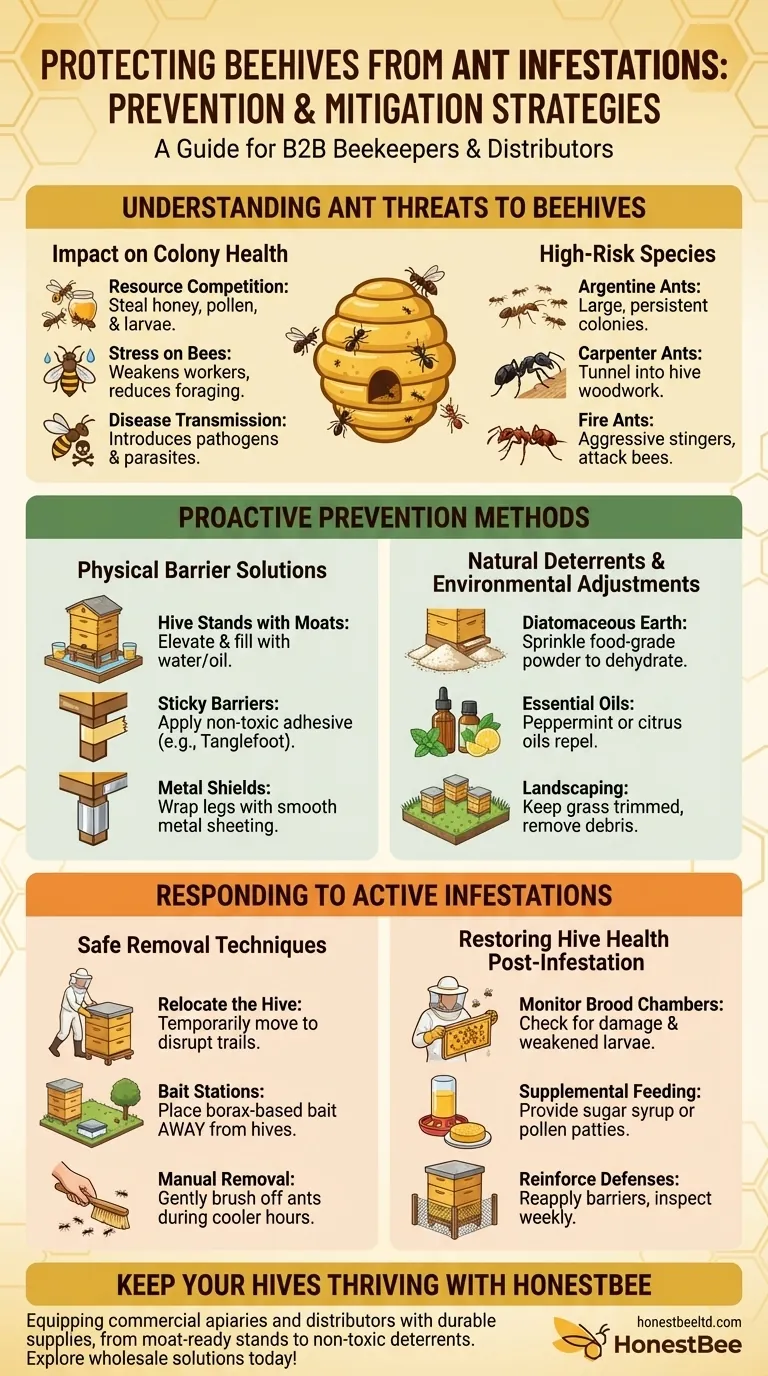
Visual Guide
Related Products
- Stainless Steel Round Beehive Air Vents for Ventilation
- Wholesales Dadant Size Wooden Bee Hives for Beekeeping
- Metal Hive Feet Bee Hive Stand for Ant Protection
- Metal Bee Hive Stand Bee Box Stand for Beekeeping
- Wooden Bee Hive Frames for Beekeeping and Wholesale
Related Articles
- How to Optimize Beehive Ventilation: Prevent Disease and Boost Colony Health
- The Silent Killer in the Hive: Why Moisture, Not Cold, Is Winter's Greatest Threat
- Beyond the Bee Box: Why Your First Apiary Investment Determines Your Success
- The Precision of Chaos: Navigating the Biological Risks of Commercial Beehive Transportation
- Beyond the Box: Why Hive Architecture Is Your Apiary's Core Operating System













