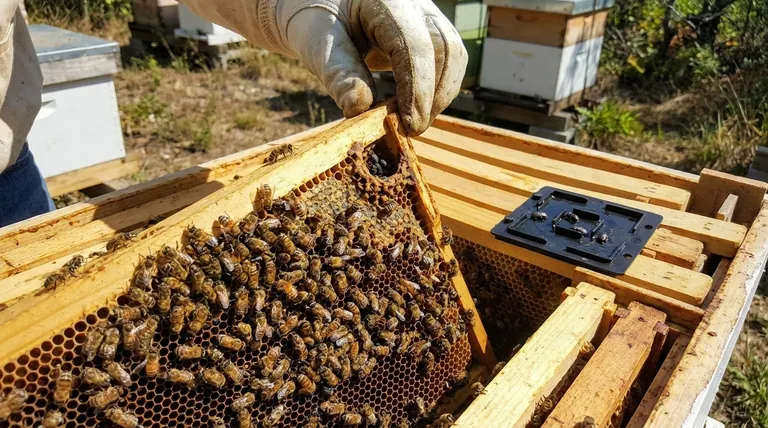
The Psychology of Pest Control
Opening a hive and seeing the dark, scurrying shapes of small hive beetles (SHB) triggers an immediate, visceral reaction: invasion. The impulse is to find a weapon—a trap, a chemical—to eliminate the threat.
This is a psychological trap.
The presence of beetles is rarely the core problem. It's a symptom. It signals that the hive's own complex, self-regulating "immune system" is compromised. The most effective beekeepers understand this shift in perspective. Their job is not to kill every beetle, but to architect a colony so strong that beetles become a manageable nuisance, not an existential threat.
The Hive as a Fortress
A honey bee colony is a superorganism. It has collective defenses that far exceed the sum of its parts. Against the small hive beetle, its primary defense is simple, brutal physics and relentless policing.
Density is Defense
A populous hive has a high ratio of bees to comb. This density isn't just for warmth; it's for security. In a crowded hive, there are no dark, undefended corners for beetles to hide and lay eggs. Every surface is patrolled.
Worker bees designated as guards will actively hunt down beetles. Their goal isn't necessarily to kill them on sight, but to harass and corral them.
Behavioral Policing
Bees will chase beetles into cracks, crevices, or—if you've provided them—into mechanical traps. They effectively imprison the invaders, preventing them from accessing brood or honey stores to lay their eggs. A strong colony acts as its own police force, confining criminals to designated jails. A weak colony is an undefended city.
The Beekeeper’s Role: Architect of Resilience
Your primary role is not pest exterminator; it is system architect. You create the conditions that allow the hive’s natural defenses to function at peak efficiency.
Foundational Strength
A colony's resilience is built on a few core fundamentals:
- A Young, Productive Queen: A strong queen lays prolifically, ensuring the workforce is constantly replenished.
- Varroa Mite Management: Varroa mites are a primary stressor that weakens a colony’s immune system, making it vulnerable to secondary pests like SHB.
- Consistent Nutrition: Providing supplemental feed during nectar dearths prevents nutritional stress, keeping the colony population strong.
The Physics of Defense
For a weak or growing colony, too much space is a liability. It creates undefended territory that beetles can exploit. Consolidating the hive—reducing the number of frames and boxes to match the colony's size—dramatically increases bee density. This simple act can be the most powerful pest control measure you take.
Intervention: Supporting the System, Not Replacing It
While a strong hive is the foundation, direct interventions have their place. However, they must be viewed as support tools, not the primary solution. They help an already robust system function better.
In-Hive Traps: A Tactical Tool
In-hive oil traps are excellent for reducing the adult beetle population. Bees chase the beetles into these traps, where they drown in the oil. They are a tool for monitoring beetle pressure and helping the bees’ "policing" efforts be more effective.
Breaking the Cycle Outside the Walls
The beetle life cycle extends beyond the hive. Larvae crawl out of the hive to pupate in the surrounding soil. Treating the ground interrupts this cycle.
Beneficial nematodes are microscopic worms that seek out and kill SHB pupae in the soil. This is a powerful, chemical-free way to reduce the number of new adult beetles emerging and re-infesting your apiaries. It’s an external defense that lowers the pressure on the hive’s internal security force.
| Control Method | Role in the System |
|---|---|
| Strong Colony | The primary, self-regulating defense mechanism. |
| In-Hive Oil Traps | A tactical aid to support the bees' policing. |
| Soil Nematodes | An external measure to break the pest life cycle. |
The Mindset That Fails
The most common failure in beetle control stems from a misunderstanding of the problem. Treating the symptom while ignoring the underlying cause creates a cycle of dependency on temporary fixes.
The Trap of... Traps
Relying solely on traps is a losing battle. If a colony is too weak to police itself, no number of traps will save it. The beetles will simply overwhelm the remaining bees and the traps. Traps manage numbers; they don't create resilience.
Apiary Hygiene: Preventing Unforced Errors
Leaving empty supers or frames with old comb lying around your apiary is an open invitation to beetles. These are perfect, undefended breeding grounds. Maintaining strict apiary hygiene is about controlling the environment and not giving the enemy free resources.
Ultimately, controlling small hive beetles is a paradigm shift. It requires moving from a reactive mindset of "killing pests" to a proactive one of "building strength." By focusing on the health and power of the colony itself, you create an apiary that is fundamentally more resilient, productive, and capable of managing its own challenges.
For commercial apiaries, this systems-based approach requires durable, high-quality equipment that can withstand the rigors of active management. At HONESTBEE, we provide wholesale beekeeping supplies designed for operators who prioritize colony health and long-term resilience. We equip you with the tools you need to build a stronger system.
Let us help you fortify your operation from the ground up. Contact Our Experts
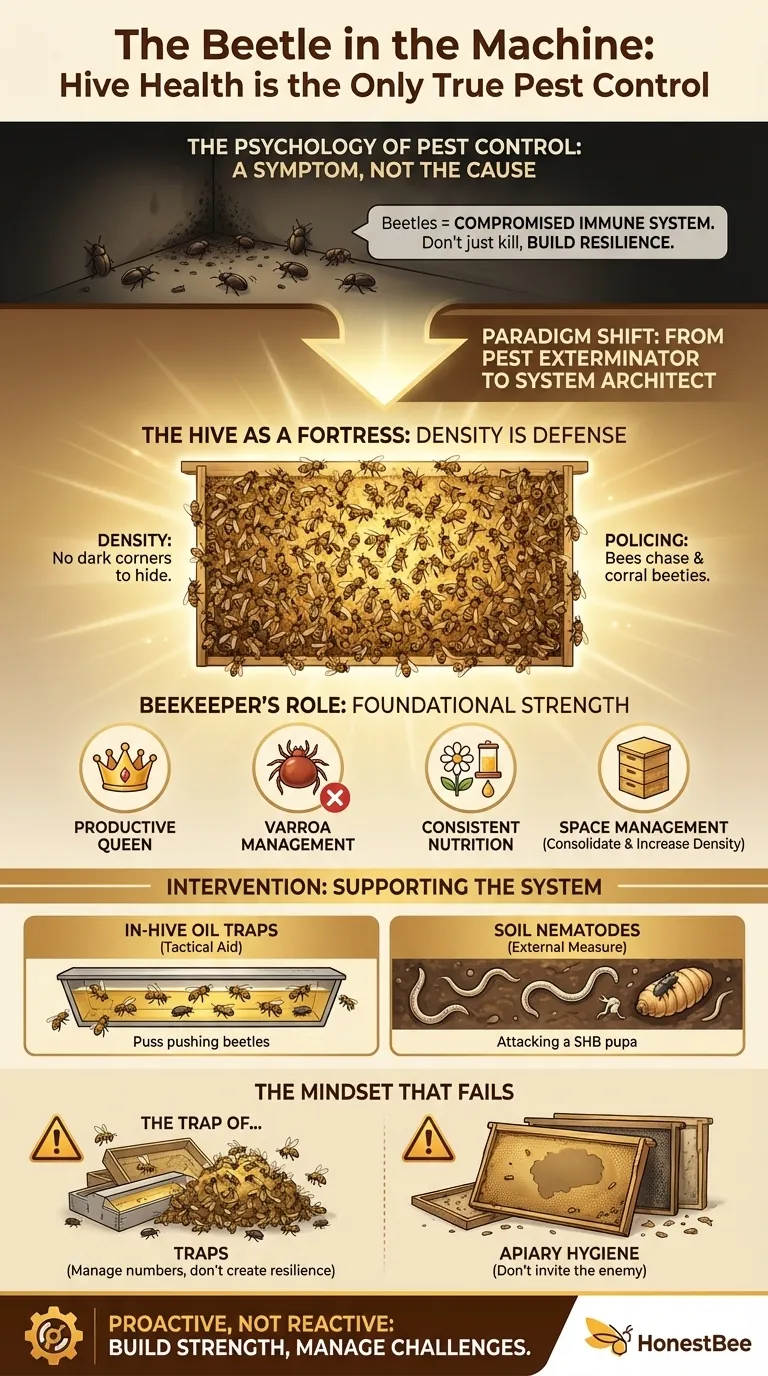
Visual Guide
Related Products
- Reusable Aluminium Beetle Trap for Small Hive Beetles Silver Bullet
- Reusable Clear Small Hive Beetle Traps for Beehives Beetle Trapping Tools
- Removable Washable Hive Beetle Trap Attractants for Small Hive Beetles
- Black Plastic Beetle Barn Hive Beetle Trap for Beehives
- Plastic Beetle Blaster Trap Beekeeping Tools and Supplies
Related Articles
- Anatomy of a Hive Collapse: The Small Hive Beetle's Numbers Game
- Precision Pest Control: The Paradox of In-Hive Beetle Traps
- The Scent Plume Protocol: A Strategic Guide to Swarm Capture
- Beyond Honey: The Strategic Calculus of the Pollen Trap
- How to Install Pollen Traps Without Stressing Your Hive: A Beekeeper’s Guide