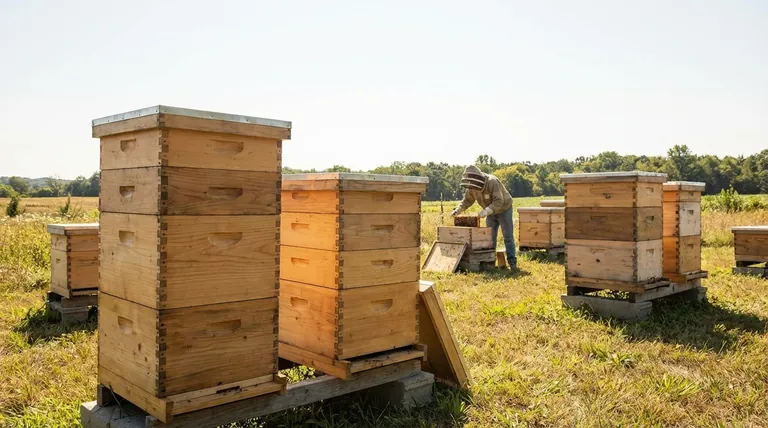
For beekeepers, selecting the right super sizes isn’t just about storage—it’s about creating an efficient, productive hive ecosystem. The right combination affects honey yield, colony health, and even the beekeeper’s physical strain. This guide breaks down standard super dimensions, practical selection criteria, and advanced layering techniques to help you make informed decisions.
Understanding Standard Super Sizes
Physical Dimensions and Weight Comparison
Beekeeping supers typically come in three standard sizes:
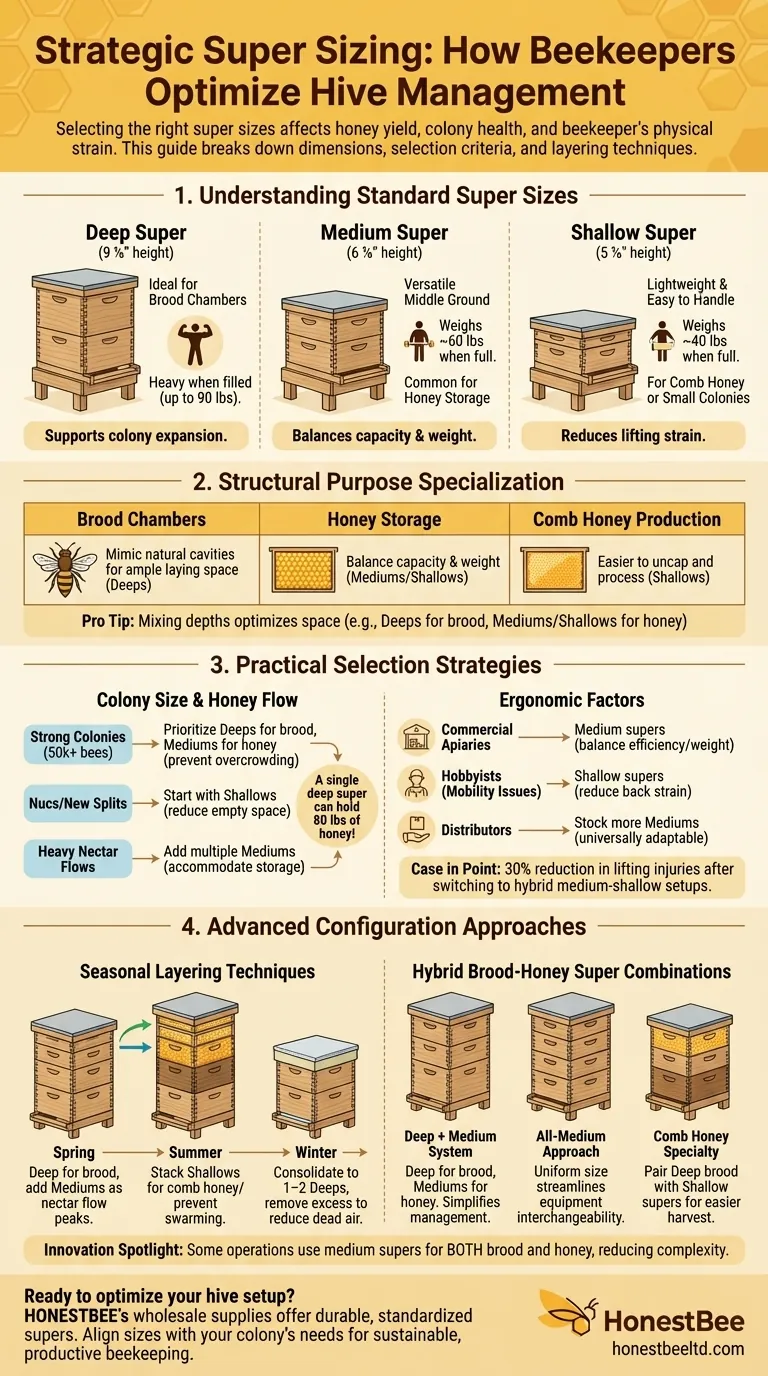
- Deep supers (9 ⅝" height): Ideal for brood chambers due to their spaciousness, but heavy when filled (up to 90 lbs).
- Medium supers (6 ⅝" height): A versatile middle ground, weighing ~60 lbs when full. Commonly used for honey storage.
- Shallow supers (5 ⅝" height): Lightweight (~40 lbs) and easier to handle, but limited capacity makes them better for comb honey or smaller colonies.
Key takeaway: Deeps support colony expansion, while shallows reduce lifting strain during harvests.
Structural Purpose Specialization
- Brood chambers: Deep supers mimic natural hive cavities, giving queens ample laying space.
- Honey storage: Mediums balance capacity and weight, while shallows minimize disruption during extraction.
- Comb honey production: Shallow frames are easier to uncap and process.
Pro tip: Mixing depths in a single hive can optimize space—e.g., deeps for brood and mediums/shallows for surplus honey.
Practical Selection Strategies
Colony Size and Honey Flow Considerations
- Strong colonies (50,000+ bees): Prioritize deeps for brood and mediums for honey to prevent overcrowding.
- Nucs or new splits: Start with shallows to reduce empty space, which workers can better defend.
- Heavy nectar flows: Add multiple medium supers to accommodate rapid honey storage without overburdening frames.
Did you know? A single deep super can hold up to 80 lbs of honey, but requires two beekeepers to lift safely.
Ergonomic Factors for Different Beekeepers
- Commercial apiaries: Medium supers strike a balance between efficiency (more supers per pallet) and weight.
- Hobbyists with mobility issues: Shallow supers reduce back strain during inspections.
- Distributors: Stock more mediums—they’re the most universally adaptable for resale.
Case in point: A study of apiaries showed a 30% reduction in lifting injuries after switching from deeps to hybrid medium-shallow setups.
Advanced Configuration Approaches
Seasonal Layering Techniques
- Spring: Use deeps for brood rearing, then add medium supers as nectar flow peaks.
- Summer: Stack shallows atop filled mediums for comb honey or to prevent swarming.
- Winter: Consolidate to 1–2 deeps with insulated covers, removing excess supers to reduce dead air space.
Example: A Minnesota beekeeper increased overwinter survival rates by 20% after downsizing to deeps-only in November.
Hybrid Brood-Honey Super Combinations
- "Deep + Medium" system: Deep for brood; mediums for honey. Simplifies management and harvest.
- "All-Medium" approach: Uniform frame size streamlines equipment interchangeability.
- Comb honey specialty: Pair deep brood chambers with shallow supers for easier harvesting.
Innovation spotlights: Some operations use medium supers for both brood and honey, reducing equipment complexity.
Ready to optimize your hive setup? HONESTBEE’s wholesale beekeeping supplies offer durable, standardized supers to match any operation—whether you’re a distributor stocking up or a commercial apiary refining your workflow. Explore our range to build a hive system that works as hard as you do.
By aligning super sizes with your colony’s needs and physical demands, you’ll create a more sustainable, productive beekeeping practice—one frame at a time.
Visual Guide
Related Products
- Australian Langstroth Beehive Boxes for Beekeeping Wholesales
- High-Efficiency Diamond Maze Bee Escape for Clearing Supers
- Durable 16 Way Circular Bee Escape for Efficient Honey Harvesting
- HONESTBEE Round Hive Top Bee Feeder for Syrup
- Wholesales Dadant Size Wooden Bee Hives for Beekeeping
Related Articles
- How to Choose Between 8-Frame and 10-Frame Langstroth Boxes for Optimal Beekeeping
- How to Choose Langstroth Hive Box Sizes for Ergonomics, Efficiency, and Bee Health
- The Essential Guide to Beehive Boxes: Maximizing Colony Health and Productivity
- Flow Hive vs. Langstroth: When Does the Premium Price Deliver Real Savings?
- Why Langstroth Hives Are the Best Choice for Beginner Beekeepers