The Tyranny of the Unpredictable
Imagine standing in an apiary with 300 hives on a hot July morning. The nectar flow is peaking, and every hour is a race against time. Your primary bottleneck isn't the strength of your bees or the speed of your extractor; it's the uncertainty lurking inside each hive.
In which box did the queen decide to lay last week? Is this frame of capped honeycomb pure profit, or is it a hidden nursery of developing brood? Inspecting each frame individually across hundreds of hives is an operational nightmare. It's a tax paid in time, labor, and potential damage to the colony.
This is the central tension of commercial beekeeping: managing a wild, biological system with the precision required for a profitable business. You can't control the weather or the bees, but you can control the architecture of their home.
Imposing Order on a Biological System
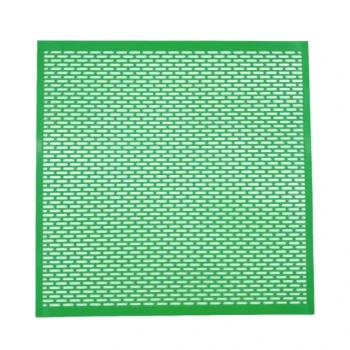
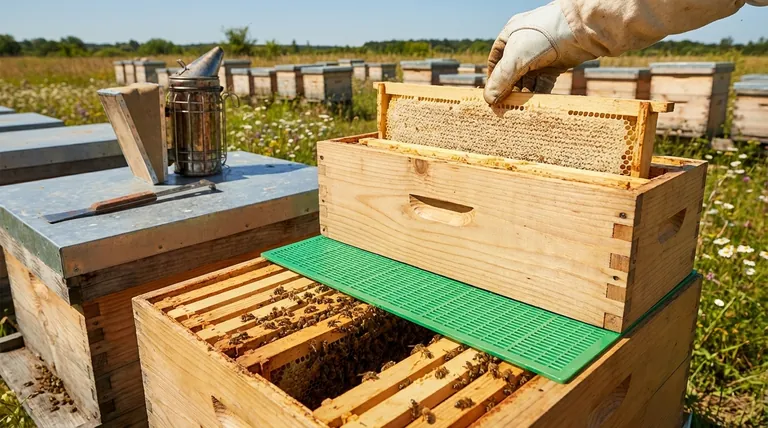
The queen excluder is often seen as a simple screen, a selective barrier. But its true function is far more profound. It is a tool for imposing a predictable, efficient order on the otherwise chaotic layout of a beehive.
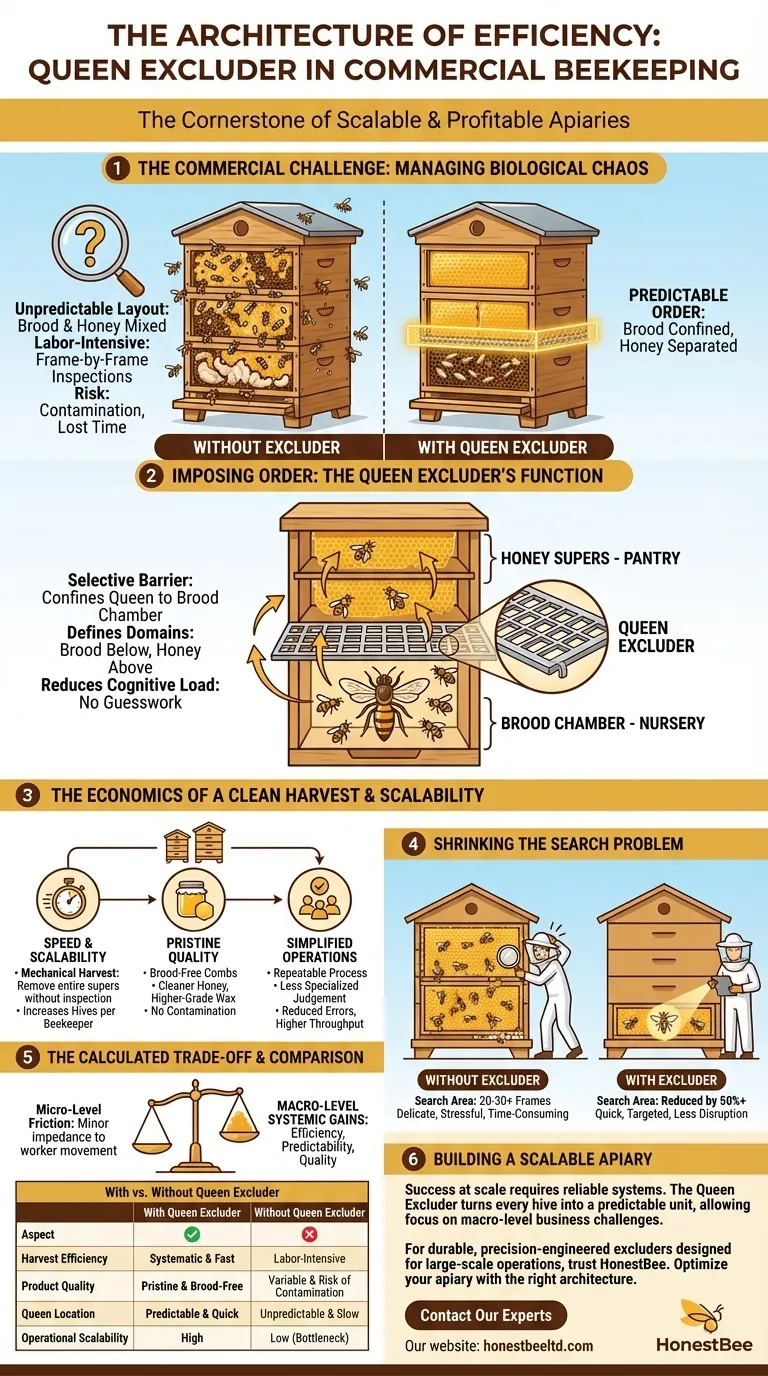
By confining the queen to the lower brood chambers, you create a clear, inviolable line. Below this line is the engine of the colony—the nursery. Above it is the pantry—the honey supers.
This isn't about restricting the queen; it's about defining her domain. This single decision reduces the cognitive load on the beekeeper exponentially. You no longer have to guess. You know that every frame in your honey supers is dedicated solely to honey.
The Economics of a Clean Harvest
This imposed order has direct, compounding financial benefits.
- Speed: Harvesting becomes a simple, mechanical process. Entire supers can be removed without frame-by-frame inspection. This dramatically increases the number of hives a single person can manage.
- Quality: Honey extracted from brood-free combs is fundamentally cleaner. There is no risk of contamination from larvae, pollen stores ("bee bread"), or shed skins. This results in purer honey and cleaner, higher-grade beeswax.
- Simplicity: The process is simplified for your entire team. The task is repeatable and requires less specialized judgment, reducing errors and increasing overall throughput.
Shrinking the Search Problem
Beyond the harvest, the excluder is an essential tool for hive management. One of the most time-consuming tasks is locating the queen for health inspections or requeening.
Without an excluder, a queen has an entire hive to roam—perhaps 20 or 30 large frames. The search is a delicate, stressful process.
With an excluder, you've already reduced the search area by at least half. You know exactly which one or two boxes she is in. This transforms a frustrating search into a quick, targeted inspection, saving valuable time and minimizing disruption to the colony.
The Calculated Trade-Off
Of course, no tool is without its compromises. Critics of queen excluders argue they are an unnatural barrier that can slightly impede worker bees, potentially slowing the movement of nectar into the supers. Some worry it can cause the brood nest to become "honey-bound."
These are valid considerations. The decision to use one is a classic engineering trade-off. You are choosing to accept a small amount of potential friction at a micro-level in exchange for enormous systemic gains in efficiency, predictability, and product quality.
For a hobbyist with two hives, the romance of a "natural" hive may outweigh the benefits of efficiency. For a commercial operation, the math is different.
| Aspect | With Queen Excluder | Without Queen Excluder |
|---|---|---|
| Harvest Efficiency | Systematic & Fast: Remove entire supers at once. | Labor-Intensive: Requires frame-by-frame inspection. |
| Product Quality | Pristine: Guarantees brood-free, cleaner honey & wax. | Variable: Risk of larval contamination and impurities. |
| Queen Location | Predictable: Confined to brood boxes for quick checks. | Unpredictable: Can be anywhere in the entire hive. |
| Operational Scalability | High: Enables management of hundreds of hives. | Low: Becomes a bottleneck at scale. |
Building a Scalable Apiary
At a professional scale, success is built on reliable systems. The queen excluder is the foundation of an efficient honey production system. It turns every hive into a predictable unit, allowing you to focus on the macro-level challenges of your business instead of the micro-chaos within each box.
For operations built on this principle of scalable efficiency, the reliability of the equipment itself is non-negotiable. A warped or poorly spaced excluder can damage bees or fail in its primary function. HONESTBEE supplies commercial apiaries with durable, precision-engineered queen excluders designed to withstand the rigors of large-scale operations, ensuring your system works flawlessly, every time.
To optimize your apiary for maximum efficiency and quality, you need the right architecture in place. We can help you build it. Contact Our Experts
Visual Guide
Related Products
- High Performance Plastic Queen Excluder for Beekeeping and Apiary Management
- Professional Plastic Queen Excluder for Modern Beekeeping
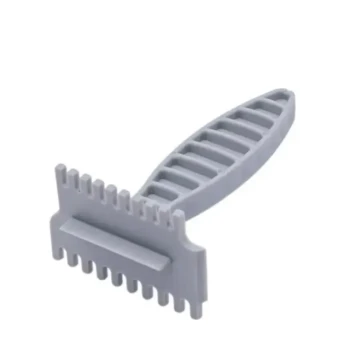
- Lightweight Durable Plastic Queen Excluder Scraper for Beekeeping
- Metal Queen Bee Excluder for Beekeeping
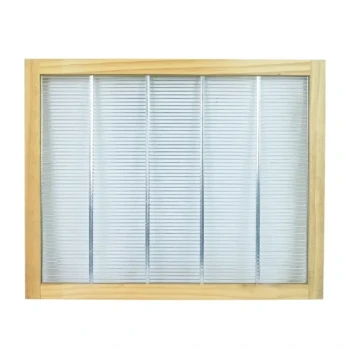
- Premium Wood Framed Metal Wire Queen Bee Excluder
Related Articles
- How Plastic Queen Excluders Improve Hive Longevity and Colony Health
- Plastic Queen Excluders vs. Alternatives: A Beekeeper’s Guide to Smarter Hive Management
- Why Plastic Queen Excluders Outperform Metal and Wood: Science, Savings, and Hive Protection
- How to Choose Queen Excluders Based on Colony Behavior and Queen Traits
- The Geometry of Order: Why the Queen Excluder is a Beekeeper's Most Strategic Tool