The Moment of Failure
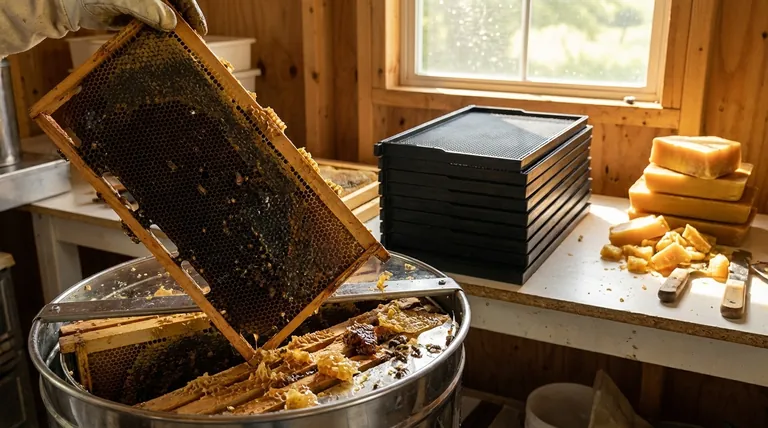
Picture a hot August afternoon in the honey house. The air is thick with the sweet smell of beeswax and curing honey. The extractor is humming, a centrifuge spinning at high G-forces to pull liquid gold from the comb.
Suddenly, there's a sickening crunch.
A frame of freshly-drawn comb, heavy with honey but built on a weak foundation, has disintegrated under the force. The result is a chaotic mess of smashed wax, drowned bees, and lost honey that gums up the machinery. The harvest grinds to a halt.
This isn't just bad luck; it's a failure of architecture. It’s a moment where the beekeeper's operational needs clash with the material limits of the hive. And it reveals the central dilemma in modern beekeeping: the constant trade-off between engineered efficiency and the biological instincts of the bee.
The Psychology of an Apiary's Core Component
At its heart, the decision between plastic and traditional wooden frames isn't about "good" or "bad." It's a strategic choice about how you manage complexity, risk, and labor at scale.
You are deciding where to invest your most valuable resources: time and attention. Do you invest them upfront, in the meticulous assembly of wooden frames? Or do you invest them in understanding and accommodating the bees' initial hesitation to an artificial material?
Every piece of equipment adds or removes friction from your operation. The frame, the most frequently handled component in the hive, has the most profound impact on that equation.
The Case for Engineered Resilience
Plastic frames were not created to be beautiful. They were engineered to solve a specific set of problems that plague beekeepers, especially those operating at a commercial level.
Eliminating Points of Failure
Durability is the primary design feature. A plastic frame provides a rigid, indestructible skeleton for the comb.
- Extraction Blowouts: The catastrophic failure described earlier becomes virtually impossible. This predictability is invaluable during the high-pressure harvest season.
- Pest Resistance: Pests like wax moths cannot burrow into or destroy solid plastic, extending the life of your equipment and protecting your investment.
- Structural Integrity: They do not warp in the heat or break during rough handling, ensuring a perfect fit and function year after year.
Reducing Operational Friction
For a commercial apiary, labor is a primary cost. Plastic frames are designed to minimize it.
They arrive ready to use, eliminating the thousands of hours spent assembling, wiring, and embedding foundations into wooden frames. This is not a minor convenience; it's a significant operational advantage that allows for faster deployment and expansion. Their lighter weight also reduces physical strain on beekeepers during long days of lifting and inspecting hives.
The Biological Imperative
While plastic solves the beekeeper's mechanical problems, it creates a biological one. To a bee, a smooth sheet of plastic is an alien landscape.
The Unfamiliar Canvas
Bees are master architects, but their craft is deeply instinctual, tied to the texture and scent of beeswax. They simply will not draw comb on a slick, uncoated plastic surface. If given a choice, they will always choose natural wax. Placing an unprepared plastic frame in a hive is like asking a master carpenter to build a cabinet out of glass—they lack the instinct and tools to begin.
The Mandatory Bridge: Beeswax
This is where human intervention becomes critical. Plastic frames must be coated in beeswax. This step is not optional.
Think of it as a necessary translation layer between human technology and bee biology. The wax provides the scent and texture cues the bees need to activate their building instincts. While most frames come with a light factory coating, seasoned operators understand that applying an additional, thicker layer of melted wax dramatically increases bee acceptance and the speed at which they draw out the comb.
A Framework for Your Decision
Your choice should be a cold, hard calculation based on your operational philosophy and goals.
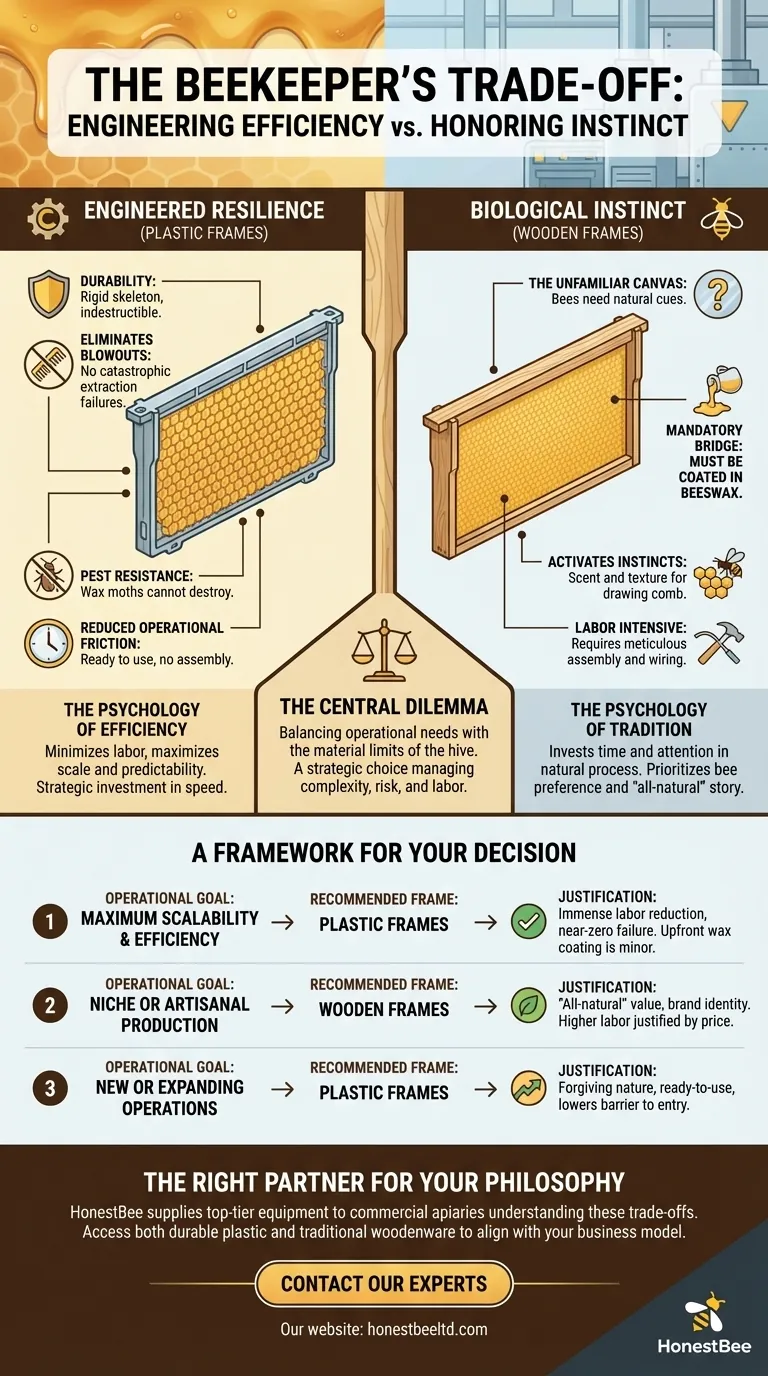
| Operational Goal | Recommended Frame | Justification |
|---|---|---|
| Maximum Scalability & Efficiency | Plastic Frames | The immense reduction in labor for assembly and the near-zero equipment failure during extraction are paramount. The upfront effort of wax coating is a small price for long-term operational speed. |
| Niche or Artisanal Production | Wooden Frames | The "all-natural" story is part of the product's value. The higher labor input is justified by brand identity and potentially higher price points. Bee preference is prioritized over handler convenience. |
| New or Expanding Operations | Plastic Frames | The forgiving nature of plastic during handling and extraction reduces the cost of beginner mistakes. The "ready-to-use" nature lowers the barrier to getting hives into the field quickly. |
The Right Partner for Your Philosophy
Ultimately, the most successful apiaries aren't dogmatic; they are strategic. They understand that every equipment choice is a lever that affects efficiency, cost, and yield. Choosing the right frame is about aligning your equipment with your business model.
At HONESTBEE, we supply top-tier beekeeping equipment to commercial apiaries and distributors who understand these trade-offs. We know that for a wholesale-focused operation, reliability and performance are not negotiable. We provide access to both durable, high-acceptance plastic frames and traditional woodenware, allowing you to build the system that best suits your goals.
Making the right choice at the outset prevents costly failures and unlocks new levels of efficiency. For guidance on selecting the right frames to scale your operation, Contact Our Experts.
Visual Guide
Related Products
- Wooden Bee Hive Frames for Beekeeping and Wholesale
- Assembled Wooden Bee Frames with Plastic Foundation for Durability and Convenience by HONESTBEE
- HONESTBEE Wired and Assembled Wooden Bee Frames Foundation for a Thriving Hive
- Heavy-Duty Stainless Steel Clip-On Frame Perch
- Professional Galvanized Steel Frame Rest for Beehives
Related Articles
- Wooden vs. Plastic Bee Hive Frames: Balancing Sustainability and Practicality
- Assembled vs. Unassembled Frames: A Beekeeper’s Time-Value Analysis
- How to Choose Beehive Frames: Balancing Bee Health, Honey Yield, and Beekeeper Convenience
- Beyond the Scrape: A Risk Management Framework for Cleaning Beehive Frames
- The Unseen Enemy: Why Mold on Beehive Frames Is a Symptom, Not the Disease