The Silent Warning
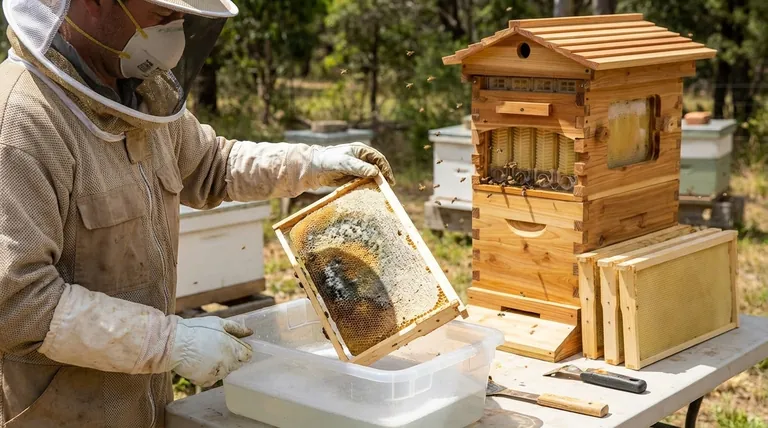
Opening a hive box to find the fuzzy, dark spread of mold can feel like a personal failure. It’s a disheartening sight for any beekeeper, from the hobbyist to the commercial operator.
Our first instinct is reactive: kill it, scrub it, get it out.
But this reaction mistakes the symptom for the disease. Mold isn't an invader that breaks in; it's a patient opportunist that flourishes when the internal environment of the hive—a complex, delicate system—is compromised. The true problem isn't the mold you see, but the unseen moisture that invited it in.
Cleaning is a necessary tactic. But winning the war requires a change in strategy.
Triage: The Workshop Protocol
Before any cleaning begins, you must contain the problem. When you bring moldy frames into your workshop, you risk contaminating your entire operation. The spores are microscopic and become airborne with the slightest disturbance.
First, Protect the Operator
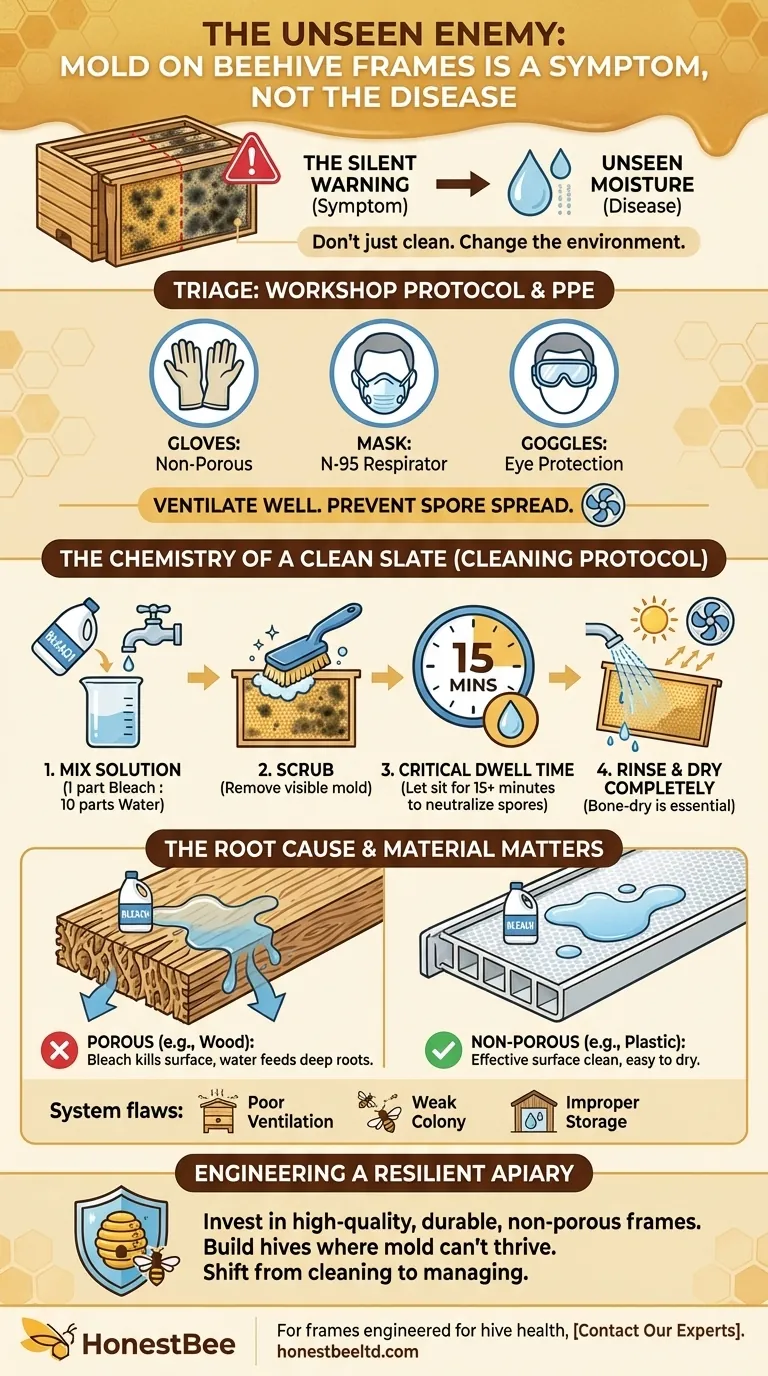
Always handle moldy equipment with the right personal protective equipment (PPE).
- Gloves: Non-porous gloves are non-negotiable.
- Mask: An N-95 respirator is essential. A simple dust mask won't stop microscopic spores.
- Goggles: Protect your eyes from splashes and airborne particles.
Second, Protect the Environment
Work in a well-ventilated area, preferably with fans creating a cross-draft that directs air outside. This prevents spores from settling on other equipment and creating a future outbreak.
The Chemistry of a Clean Slate
For surface-level mold on non-porous frames, a diluted bleach solution is a blunt but effective instrument. But its application requires precision.
Step 1: The Solution
Carefully mix 1 part household bleach to 9 or 10 parts water (roughly 1/2 cup of bleach per gallon of water). Never mix bleach with other cleaners, especially ammonia, as the combination can produce toxic chlorine gas.
Step 2: The Critical Dwell Time
After scrubbing the visible mold from the frame, the most important step begins. You must let the solution sit on the surface for at least 15 minutes. This is not a suggestion. This is the minimum time required for the bleach's hypochlorite ions to do their work: penetrating the cell walls of the spores and neutralizing them. Rinsing too early is the equivalent of scaring the enemy away only to let them regroup.
Step 3: The Tyranny of a Single Drop
After the dwell time, rinse the frame thoroughly with clean water. Then, dry it. And not just towel-dry—completely dry. Any lingering moisture is a welcome mat for the next generation of mold. Use fans or set the frames in the hot sun until they are bone-dry.
The Root Cause: A Flaw in the System
This cleaning protocol works. But if you find yourself doing it season after season, you're not solving a mold problem; you're just participating in it.
The real solution lies in understanding why the hive environment became hospitable to mold in the first place.
- Poor Ventilation: Is moisture being trapped inside the hive?
- Weak Colony: Is the bee population too small to manage and patrol all the frames?
- Improper Storage: Are you storing unused frames in a damp, dark shed?
The material of the frame itself is a critical variable in this system.
A Tale of Two Surfaces: Porous vs. Non-Porous
Bleach is highly effective on non-porous surfaces like plastic. But on porous materials like unfinished wood, it's a different story.
The chlorine in the bleach solution stays on the surface, killing the surface mold. The water component, however, soaks deeper into the wood's fibers. In a cruel irony, this can actually deliver moisture to the mold's deeper roots, setting the stage for a more resilient return.
For a commercial apiary, where time is inventory and hive health is the bottom line, relying on equipment that perpetually requires this level of reactive maintenance is a hidden tax on your efficiency.
Engineering a Resilient Apiary
The most effective way to manage mold is to design a system that is inhospitable to it from the start. This means managing hive moisture, ensuring strong colonies, and, most critically, choosing the right equipment.
This is a principle well understood in commercial operations. Investing in high-quality, durable, and non-porous frames isn't an expense; it's an investment in stability. Equipment that resists moisture and is easy to clean fundamentally changes the equation. It shifts your role from being a constant cleaner to a strategic manager of a healthy, productive apiary.
The most successful beekeepers don't just fight mold; they build hives where it can't thrive. This strategic depth is the difference between a constant battle and sustainable success.
| Remediation Stage | Key Action | Rationale: The "Why" |
|---|---|---|
| 1. Triage | Wear PPE and ensure ventilation. | Protect yourself and your workspace from spore contamination. |
| 2. Cleaning | Scrub with a 1:10 bleach solution. | Remove visible surface mold. |
| 3. Disinfecting | Allow the solution to dwell for 15+ minutes. | Give the bleach time to neutralize microscopic spores. |
| 4. Prevention | Dry completely and identify the moisture source. | Eliminate the conditions that allow mold to grow back. |
Building a resilient operation starts with a foundation of durable, reliable equipment designed for the realities of beekeeping. For frames and supplies engineered to minimize maintenance and maximize hive health, Contact Our Experts.
Visual Guide
Related Products
- Wooden Bee Hive Frames for Beekeeping and Wholesale
- Assembled Wooden Bee Frames with Plastic Foundation for Durability and Convenience by HONESTBEE
- HONESTBEE Wired and Assembled Wooden Bee Frames Foundation for a Thriving Hive
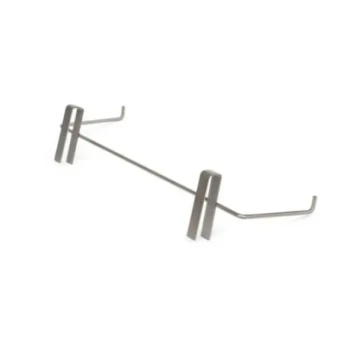
- Heavy-Duty Stainless Steel Clip-On Frame Perch
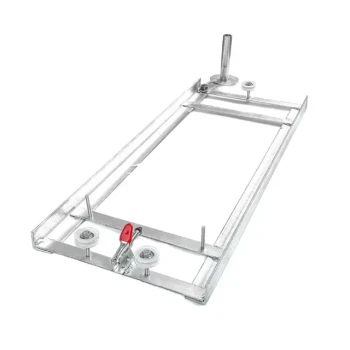
- Professional Galvanized Steel Frame Rest for Beehives
Related Articles
- Wooden vs. Plastic Bee Hive Frames: Balancing Sustainability and Practicality
- Assembled vs. Unassembled Frames: A Beekeeper’s Time-Value Analysis
- The Beekeeper's Trade-Off: Engineering Efficiency vs. Honoring Instinct
- How to Choose Beehive Frames: Balancing Bee Health, Honey Yield, and Beekeeper Convenience
- Beyond the Scrape: A Risk Management Framework for Cleaning Beehive Frames