The Workspace in a Cloud of Wings
The world of a beekeeper is often reduced to the rectangle of vision framed by a mesh screen. Inside that view is a superorganism—tens of thousands of individuals operating with a single purpose. Outside is a low, constant hum.
The single most important tool in this environment is not the hive tool or the smoker. It is the psychological state of calm confidence.
This state isn't achieved through bravery; it is engineered. The beekeeping veil, seemingly a simple piece of equipment, is a masterclass in applied physics and human psychology, designed to create a sanctuary for your head in the heart of the hive.
More Than a Net, It's a System
At first glance, a veil is just a net to keep bees out. But its true function is far more elegant. The safety it provides is not based on one feature, but on a system of principles working in concert.
The design solves a specific biological problem: a honeybee’s stinger is only a few millimeters long. The veil's entire geometry is engineered to exploit this simple limitation.
Principle 1: The Physics of Distance
A veil without structure is just fabric. If the mesh touches your nose, a bee can sting you straight through it. The real work is done by the air gap.
- The Impenetrable Mesh: This is the obvious first layer. The grid is woven fine enough that a bee cannot physically pass through. It's a simple, absolute barrier.
- The Structural Frame: This is the genius of the design. Hoops, hats, or integrated supports push the mesh away from your skin, creating a "safety zone." This distance, just a few centimeters, is a chasm a bee's stinger cannot cross. The veil is not just a wall; it's a force field defined by empty space.
When a beekeeper leans forward, the rigid structure maintains this critical gap. It is a constant, reliable buffer that makes the bee's primary weapon obsolete.
Principle 2: The Psychology of Vision
Why is the mesh almost always black? This isn't an aesthetic choice; it’s a neurological one.
White or light-colored mesh reflects ambient light, creating glare and visual noise. This forces your eyes and brain to work harder to filter out the screen and focus on the hive.
Black mesh absorbs light. It reduces reflections, increases contrast, and effectively disappears from your conscious view. This frees up mental bandwidth, allowing you to see the subtle details—the pearly glint of a newly laid egg, the twitch of a queen's abdomen.
Clear vision creates calm, precise movements. Calmness keeps the hive calm. It’s a feedback loop that starts with the color of the screen.
Principle 3: The Integrity of the Seal
A system is only as strong as its weakest point. A single bee inside your veil is psychologically more disruptive than a dozen stings outside it. The fear of a trapped, frantic bee induces panic, which is the beekeeper's greatest enemy.
This is why the seal—the point where the veil meets the suit—is so critical.
Modern suits use robust, overlapping zippers to create an unbroken barrier. This closure transforms disparate articles of clothing into a single, sealed environment. For commercial operations, where equipment is used daily and under demanding conditions, the reliability of this seal is non-negotiable. It's the difference between a productive workday and a preventable accident.
Choosing the Right System for the Workflow
The principles are universal, but their application varies. The choice of veil is a choice of system, tailored to a specific task.
| Veil Type | Primary Advantage | Best For |
|---|---|---|
| Round Veil | Unmatched 360° visibility and airflow. | Inspectors, hobbyists, or anyone prioritizing a wide field of view. |
| Folding (Square) Veil | Portability and ease of storage. | Beekeepers on the move or with limited space. |
| Integrated Hood | Maximum security and system integrity. | Commercial apiaries and high-frequency hive work. |
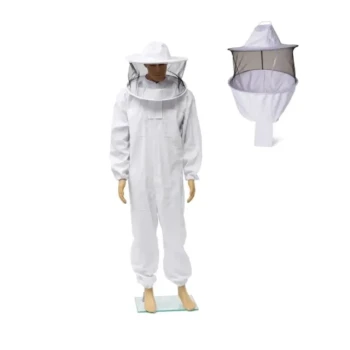
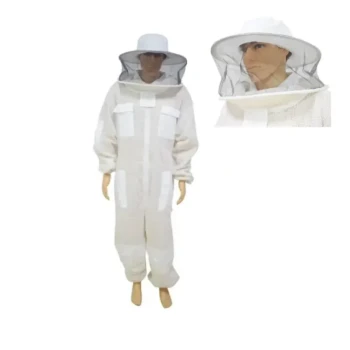
For serious beekeeping operations, the integrated hood found on full jackets and suits represents the pinnacle of this safety system. HONESTBEE specializes in supplying these professional-grade protective suits, designed for the rigorous demands of commercial apiaries. We understand that for a business, safety isn't a feature—it's the foundation of productivity.
The veil is the ultimate interface between two species. It’s a piece of technology that allows for a state of focused tranquility in a place that should, by all rights, be terrifying. Its thoughtful design is a quiet testament to understanding a problem completely before engineering the solution.
For wholesale protective gear that treats safety as the system it is, Contact Our Experts.
Visual Guide

Related Products
- White Cotton Beekeeping Jacket and Veil for Bee Keepers
- Beekeeper Cowboy Hat and Veil for Beekeeping
- Premium Cowboy Beekeeper Hat with Visibility Veil Outdoor Professional Beekeeping Protective Gear
- Professional Beekeeper Suit with Square Folding Cotton Veil
- Professional Cotton Beekeeper Suit with Round Veil Design for Commercial Apiaries
Related Articles
- How to Choose Beekeeping Protective Clothing That Fits Your Needs and Environment
- The Beekeeper's Blind Spot: The Cognitive Ergonomics of a Veil
- The Cognitive Burden of Poor Design: Why a Beekeeper's Veil Is More Than a Net
- Black Mesh, Clear Sight: The Unseen Engineering in a Beekeeper's Veil
- How to Wash a Beekeeping Suit: A Complete Guide to Safety and Durability