A Throne, A Foreigner, and a Death Sentence
Introducing a new queen to a honeybee colony is one of the most delicate operations in beekeeping. It’s not a coronation; it’s a high-stakes diplomatic mission where a single misstep results in regicide.
The colony's default response to a new queen is not acceptance. It is violence.
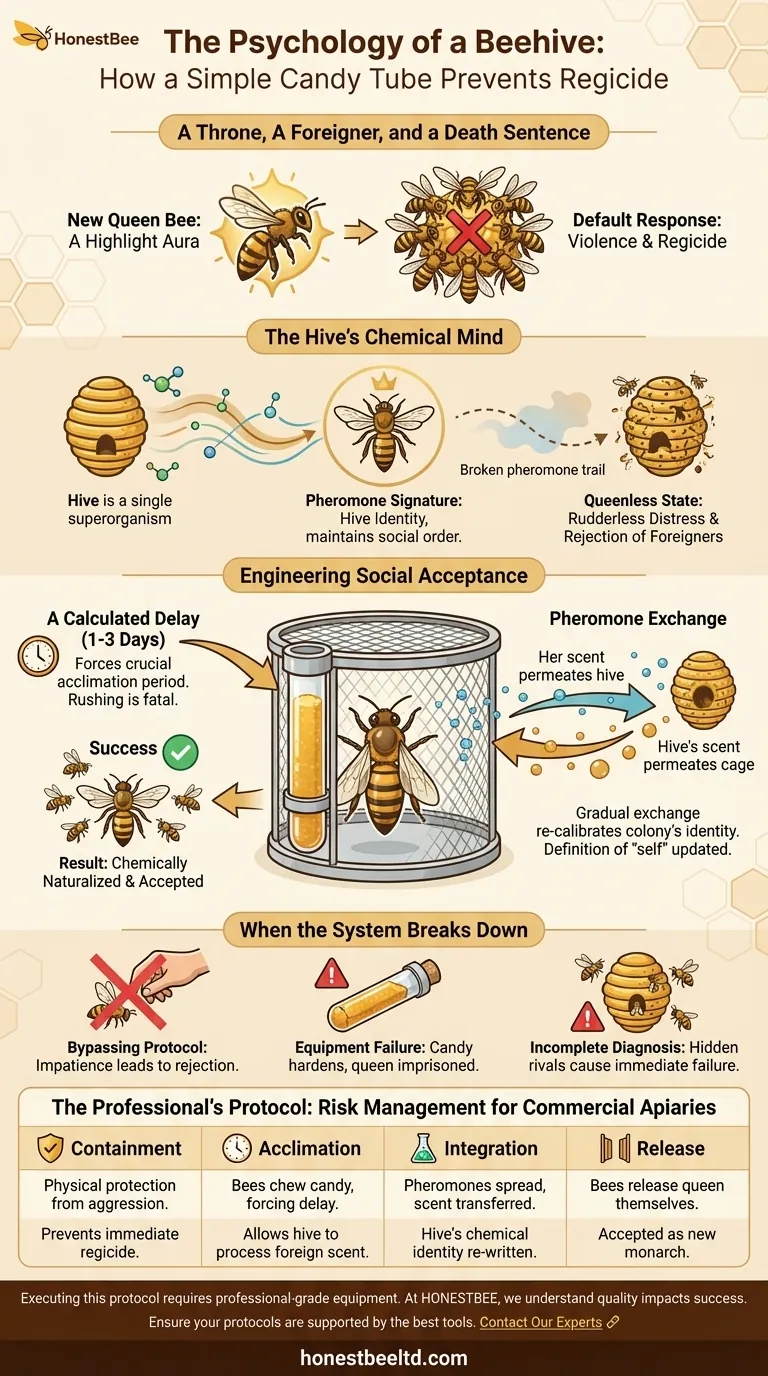
Their instinct is to perceive her as an intruder, a threat to the colony’s very identity. They will surround her in a tight, vibrating ball, raising their body temperature to a lethal fever pitch. This defensive execution is known as "balling."
The simple, often overlooked tool that prevents this is not a weapon or a shield, but a small plug of sugar candy.
The Hive's Chemical Mind
A honeybee colony is best understood not as a collection of individuals, but as a single superorganism. Its circulatory system is a constant, invisible flow of chemical messages called pheromones.
The queen is the heart of this system. Her unique pheromone signature is the hive’s identity. It signals her presence, her fertility, and maintains social order by suppressing the reproductive drive of worker bees.
When the queen is gone, her scent fades. The signal is lost. The hive mind descends into a state of rudderless distress. Dropping a new queen into this chaos is like introducing a foreign protein into a bloodstream. The hive’s immune system immediately identifies her scent as “not self” and mobilizes to destroy the invader.
Engineering Social Acceptance
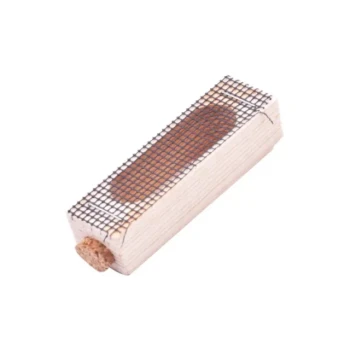
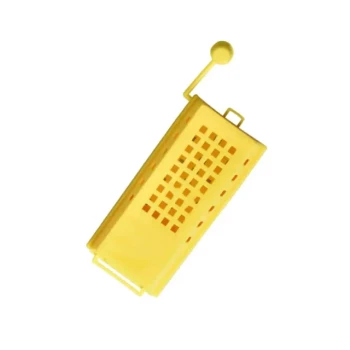
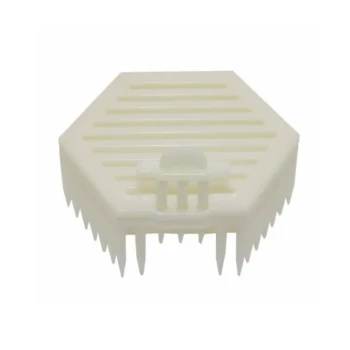
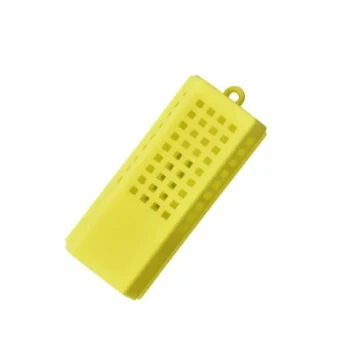
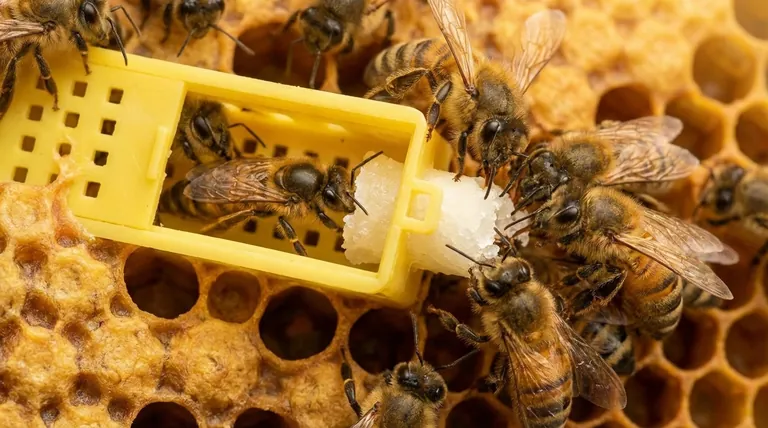
This is where the queen cage and its candy release tube demonstrate their quiet genius. The cage is a physical barrier, but the candy tube is a tool of social and chemical engineering.
A Calculated Delay
The candy doesn't just block the exit. It forces a crucial period of acclimation, typically lasting one to three days. Rushing this process is the single most common and fatal error in requeening.
By forcing the worker bees to chew through the candy to release her, the mechanism imposes a non-negotiable waiting period.
The Pheromone Exchange
During this delay, a two-way chemical dialogue begins.
- Her scent permeates the hive through the cage's screen. The colony slowly becomes accustomed to her new pheromonal signature.
- The hive’s scent permeates the cage, and the new queen begins to smell like the colony she is about to lead.
This gradual exchange re-calibrates the colony's sense of identity. The definition of "self" is updated to include her.
By the time the workers finally chew through the candy and breach the gate, she is no longer an intruder. She has been chemically naturalized. The diplomatic mission is a success.
When the System Breaks Down
While elegant, the process is not foolproof. Success depends on understanding the potential points of failure.
- Bypassing the Protocol: Manually releasing the queen too early is an act of impatience. It circumvents the entire chemical acclimation process and almost always results in her rejection and death.
- Equipment Failure: In some conditions, the candy can harden, becoming too difficult for the bees to chew through. The queen remains imprisoned, and the introduction fails.
- Incomplete Diagnosis: Introducing a new queen into a hive that isn't truly queenless is a guaranteed failure. If a hidden virgin queen or laying workers exist, the new queen is seen as a rival and will be killed immediately.
The Professional’s Protocol
For commercial apiaries, a failed queen introduction isn't just a setback; it's a direct loss of productivity and revenue. The candy tube method isn't just a helpful tip; it's a fundamental risk management protocol.
| Phase | System Function | Psychological Impact |
|---|---|---|
| Containment | The cage offers physical protection from initial aggression. | Prevents immediate regicide. |
| Acclimation | Bees chew the candy, forcing a 1-3 day time delay. | Allows the hive to process the new queen's foreign scent. |
| Integration | The queen's pheromones spread as the hive's scent is transferred to her. | The hive's chemical identity is re-written to include her. |
| Release | The bees release the queen themselves once the candy is gone. | She is accepted not as an intruder, but as their new monarch. |
Executing this protocol successfully, hive after hive, requires more than just knowledge. It requires reliable, professional-grade equipment designed for the rigors of commercial operations. At HONESTBEE, we understand that the quality of your tools directly impacts the success of your most critical tasks.
For commercial beekeepers and distributors where every queen's success impacts the bottom line, relying on expertly designed equipment is non-negotiable. Ensure your protocols are supported by the best tools. Contact Our Experts
Visual Guide
Related Products
- Plastic Queen Marking Tube Cage with Plunger for Beekeeping
- Plastic Long Marker Device for Catching and Marking Bees Queen Bee Marking Tube and Cage
- Queen Bee Marking Tube Cage Bottle Catcher Holder with Clear Plastic Plunger Marker
- One Hand Yellow Queen Marking Catcher Tube Cage Beekeeper Tool Accessory for Queen Bee
- Transparent Plastic Bee Catcher Queen Marker Tube Cage Beekeeping Tool Equipment
Related Articles
- Maximizing Queen Cage Value: A Beekeeper's Guide to Safe Reuse & Long-Term Savings
- An Engineered Truce: The Psychology of the Queen Cage
- How to Mark Queen Bees Safely Using the 5-Year Color Code System
- Engineering Acceptance: Why the JZ-BZ Queen Cage is More Than Just a Box
- The Queen Cage's Ledger: A Systems Approach to Apiary Biosecurity