A Single Anomaly in a System of 50,000
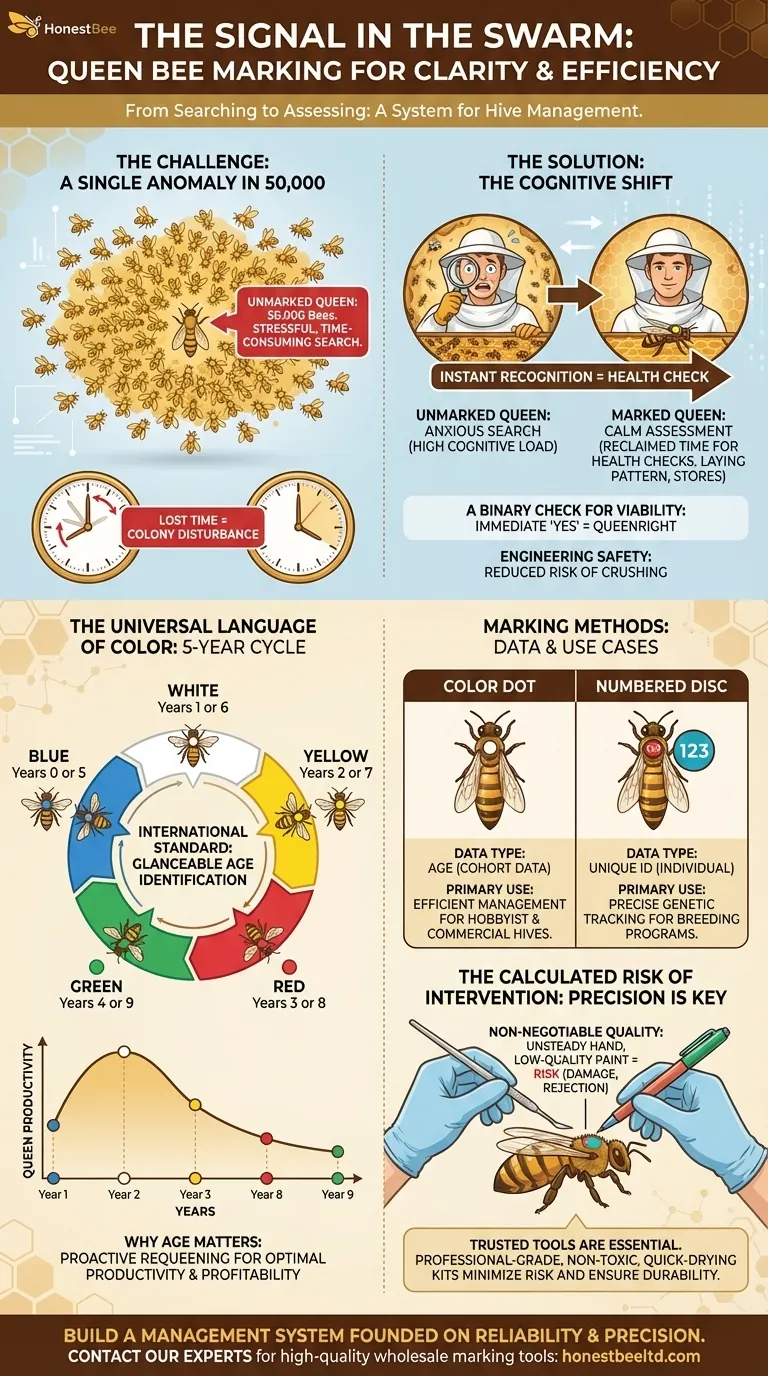
Imagine trying to find one specific person in a bustling stadium of 50,000, with no assigned seating. This is the challenge a beekeeper faces during every hive inspection. The queen is the biological and social center of the colony, yet she is visually just one bee among tens of thousands of her nearly identical daughters.
Searching for her is a high-stakes, time-consuming task. Every minute spent searching is a minute the colony is disturbed and a minute the beekeeper isn't assessing what truly matters: the hive's health, productivity, and future.
This isn’t a problem of effort; it's a problem of information design. The solution is to introduce a high-visibility signal into a low-visibility system.
From Searching to Assessing: The Cognitive Shift
Marking a queen with a small, colored dot fundamentally changes the psychology of a hive inspection. It shifts the beekeeper’s cognitive load from an anxious search to a calm assessment.
The Power of Instant Recognition
An unmarked queen can take long, stressful minutes to locate on a single frame. A marked queen often reveals herself in seconds.
This reclaimed time and mental energy can be redirected to evaluating her laying pattern, checking for signs of disease, or assessing honey and pollen stores. The simple act of marking turns a hunt into a health check.
A Binary Check for Hive Viability
The first and most critical question of any inspection is: "Is this hive queenright?" The presence of a marked queen provides an immediate "yes."
If she's not there, it’s an instant red flag. The beekeeper knows immediately to look for signs of supersedure, a recent swarm, or a queenless state that demands urgent intervention. The mark functions as a vital status indicator for the entire superorganism.
Engineering Safety into the System
During inspections, frames are moved and bees are brushed aside. The risk of accidentally rolling or crushing the single most important bee in the colony is always present. A brightly marked queen is far less likely to be overlooked, acting as a simple, elegant form of mistake-proofing that protects the hive's most critical asset.
The Universal Language of Color
The colors used for marking are not arbitrary. They are part of a standardized, international system—a universal language that allows any beekeeper, anywhere in the world, to know a queen's age at a glance.
This five-year cycle corresponds to the last digit of the year the queen was born or introduced to the hive.
- White: Years ending in 1 or 6
- Yellow: Years ending in 2 or 7
- Red: Years ending in 3 or 8
- Green: Years ending in 4 or 9
- Blue: Years ending in 0 or 5
Why Age is a Critical Metric
A queen’s egg-laying productivity peaks in her first two years and typically declines thereafter. Knowing her age allows a beekeeper to anticipate this decline and proactively requeen the hive before the colony's population and honey production suffer.
It transforms hive management from reactive problem-solving to proactive performance optimization. For commercial operations, this foresight is directly tied to profitability.
From Aggregate Data to Individual Identity
For queen breeders and large apiaries tracking specific genetic lines, the system can be elevated. Small, numbered discs provide the same age identification via color but add a unique serial number. This allows for granular record-keeping on the performance, lineage, and traits of individual high-value queens.
| Marking Method | Data Type | Primary Use Case |
|---|---|---|
| Color Dot | Age (Cohort Data) | Efficient management for hobbyist & commercial hives. |
| Numbered Disc | Unique ID (Individual) | Precise genetic tracking for queen breeding programs. |
The Calculated Risk of Intervention
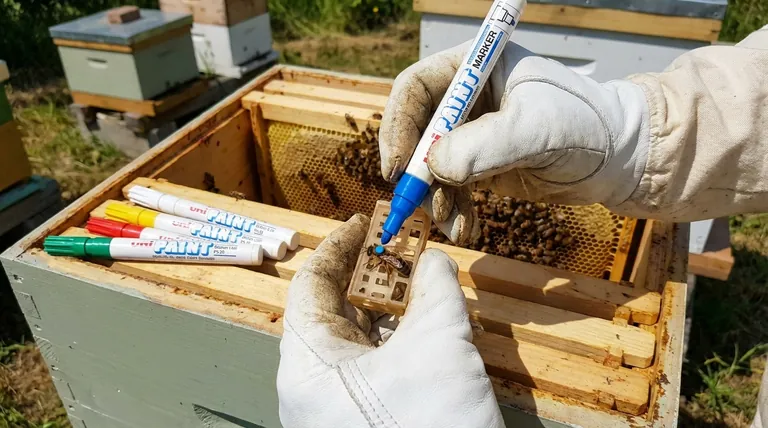
Marking a queen is a delicate procedure. The goal is to apply a permanent signal without harming the very asset you're trying to track. This is where the quality of both technique and tools becomes non-negotiable.
An unsteady hand can damage a leg or antenna. A low-quality paint can have a scent that causes the worker bees to reject their own queen upon her return.
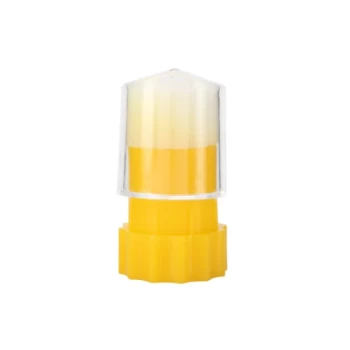
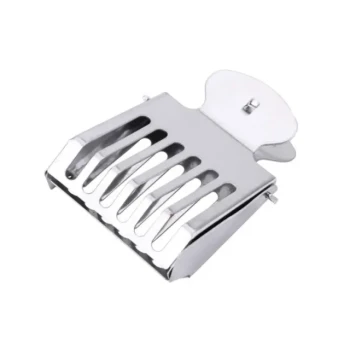
This is why commercial apiaries and distributors don't compromise on their equipment. The marking pen and queen-wrangling tools are precision instruments. Using professional-grade, non-toxic, and quick-drying marking kits, like those supplied by HONESTBEE, minimizes risk and ensures the mark is safe, clear, and durable. Our wholesale focus ensures that serious beekeepers have access to the reliable equipment necessary for scaling their operations confidently.
Ultimately, marking a queen is about imposing a simple, elegant order on a complex natural system. It is a fundamental practice that elevates beekeeping from a craft into a science, enabling decisions driven by clear data rather than hopeful guesswork.
To build a management system founded on reliability and precision, you need tools you can trust. Contact Our Experts
Visual Guide
Related Products
- Queen Bee Marking Pen POSCA Queen Marking Pens for Beekeeping Bee Markers
- Plastic Long Marker Device for Catching and Marking Bees Queen Bee Marking Tube and Cage
- Queen Bee Marking Tube Cage Bottle Catcher Holder with Clear Plastic Plunger Marker
- One Hand Yellow Queen Marking Catcher Tube Cage Beekeeper Tool Accessory for Queen Bee
- Queen Bee Marking Pen UNI Medium Point for Queen and Bee Marking
Related Articles
- The Hidden Risk in Your Marking Pen: How to Protect Your Queens and Your Profits
- How to Mark Queen Bees Safely: Tools and Techniques for Hive Success
- How to Mark Queen Bees Without Stressing Your Colony: Precision Techniques for Beekeepers
- How to Mark Queen Bees Safely: Balancing Efficiency and Colony Health
- How Queen Bee Marking Transforms Hive Management: A Beekeeper's Guide