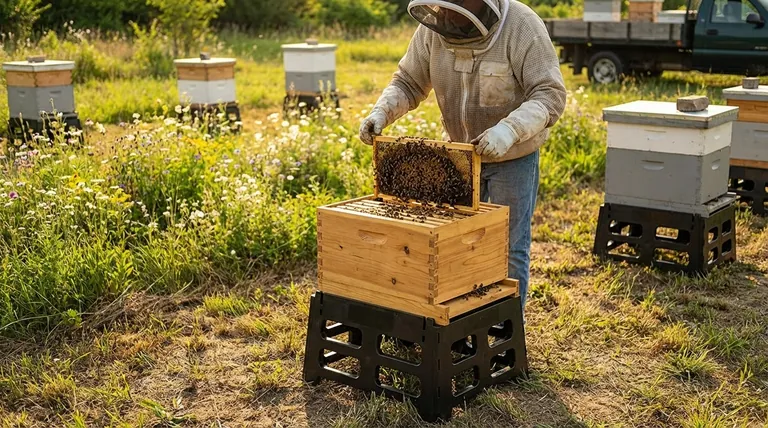
It’s the end of a long day in the bee yard. You’ve inspected dozens of hives, and as you load up the truck, the familiar ache in your lower back sets in. For many commercial beekeepers, this chronic pain is accepted as "part of the job." But what if it’s not? What if this physical toll is actually a symptom of a deeper, more costly operational flaw—one that starts with the very foundation your hives sit on?
This isn't just about comfort. The seemingly simple choice of a hive stand's height is a strategic decision that directly impacts your productivity, your colony health, and ultimately, your bottom line.
The Cinder Block Compromise: Why Common Setups Cost You Money
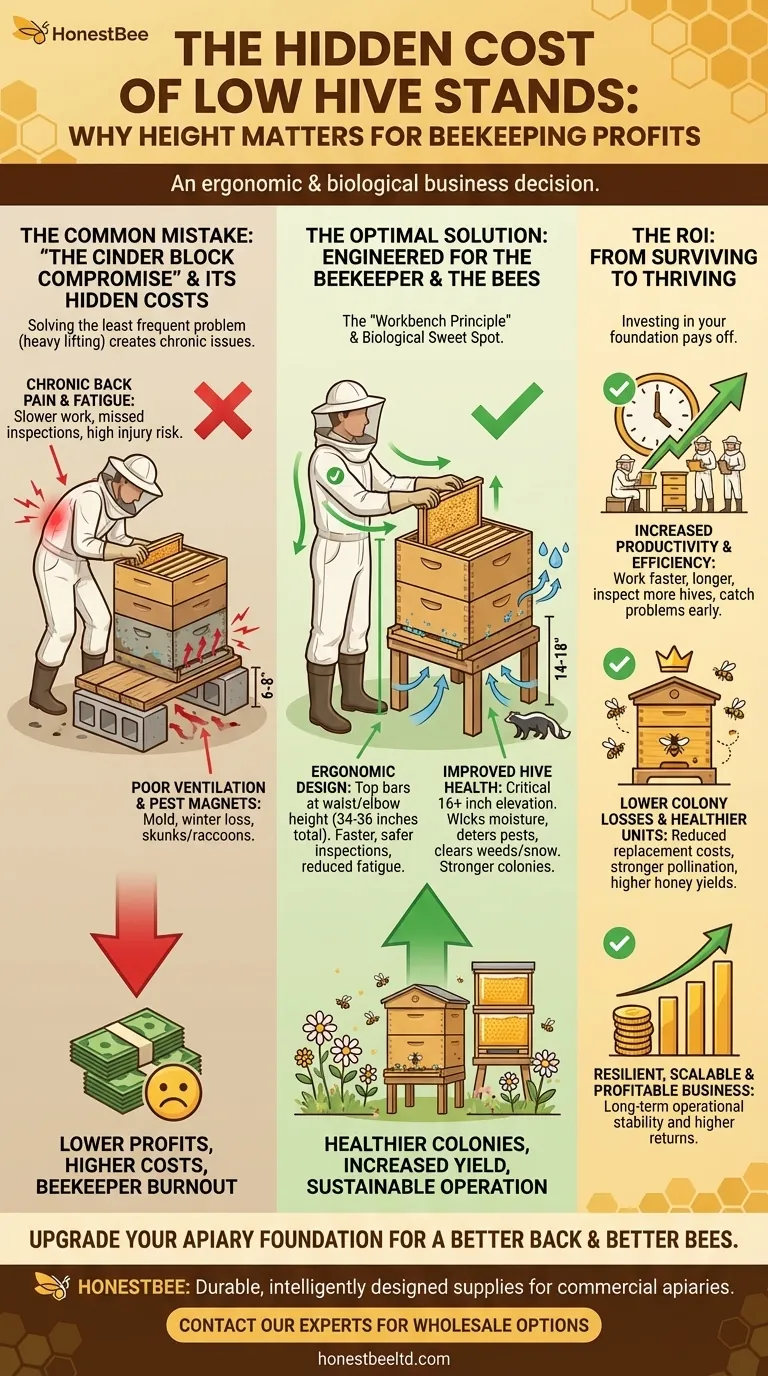
When setting up an apiary, the immediate focus is often on getting hives off the ground as cheaply as possible. This leads to common "solutions" like a few cinder blocks or a low-to-the-ground wooden pallet. The logic seems sound: it's inexpensive, and it makes lifting a heavy, 50-pound honey super onto the top of the stack a little easier.
But this approach solves the least frequent problem while creating several chronic, expensive ones:
- Productivity Loss: A stand that is too low forces you to hunch over for every single frame inspection. Multiply that repetitive spinal strain by hundreds of frames a day, and the result is physical fatigue, slower work, and a higher risk of long-term injury. A sore back means shorter days, rushed inspections, and missed signs of disease or queen failure.
- Colony Losses: Hives positioned too close to the ground are magnets for problems. They suffer from poor air circulation, leading to moisture and mold buildup—a primary cause of winter colony death. They are also easy targets for pests like skunks and raccoons, which can harass a colony to the point of absconding.
- Increased Labor Costs & Risk: For commercial operations, beekeeper burnout and injury are significant business risks. An ergonomic setup isn't a luxury; it's a core component of operational efficiency and employee retention. Sacrificing your team's physical health for a minor lifting convenience is a poor long-term trade.
In short, "saving" money on a proper stand is a classic case of being penny-wise and pound-foolish. The costs show up later in lost colonies, reduced honey yield, and the physical breakdown of your most valuable asset: you and your team.
The Root Cause: Optimizing for the Beekeeper AND the Bees
The fundamental mistake is viewing a hive stand as a passive piece of wood or metal. In reality, it's an active tool that must serve two distinct, equally important systems:
- The Beekeeper's Body (A Mechanical System): Your body is a machine. The ideal hive stand follows the "workbench principle," positioning the hive body so the top bars of the frames are at your waist or elbow height (around 34-36 inches from the ground). This allows you to lift frames straight up using your arms and shoulders, not your back, minimizing spinal compression and fatigue. A low stand forces you into a constant, damaging crouch.
- The Bee Colony (A Biological System): A colony is a living organism that needs a healthy environment. Elevating a hive 16 inches or more creates a critical buffer zone. It dramatically improves sub-hive ventilation, wicking away the moisture that fuels mold and disease. It also creates a formidable barrier against ground-based pests and keeps the hive entrance clear of grass, weeds, and snow.
The "cinder block compromise" fails because it ignores both of these systems. It prioritizes the one-time action of lifting a heavy super over the hundred-time action of inspecting frames, all while exposing the colony to unnecessary environmental stress.
The Foundation for a Productive Apiary
To solve this problem correctly, you don't just need a stand. You need an infrastructure solution engineered to find the strategic sweet spot between beekeeper ergonomics and colony health. This is precisely why a professionally designed hive stand is one of the highest-ROI investments you can make.
A proper commercial-grade hive stand is designed from the ground up to address these core issues:
- Ergonomic by Design: With a height of 14-18 inches, it raises the hive to the optimal "workbench" level, transforming daily inspections from a painful chore into an efficient task.
- Unshakeable Stability: Unlike wobbly blocks, a well-built stand with a wide footprint provides a solid, stable base that can support a top-heavy production hive full of honey, even on uneven ground.
- An Investment in Hive Health: The elevation is non-negotiable. It provides the essential airflow and pest defense that allows a strong colony to focus its energy on foraging and production, not just survival.
This isn't about adding another piece of equipment; it's about building a foundation for a more efficient, sustainable, and profitable operation.
From Surviving to Thriving: The ROI of an Ergonomic Apiary
Once you solve the chronic problems of back pain and environmental hive stress, you unlock new potential for your business.
With a standardized, ergonomic setup across your apiary, you and your team can work faster, longer, and more effectively. You can inspect more hives per day, catch problems earlier, and manage your operation with greater precision. Healthier colonies mean lower replacement costs, stronger pollination units, and higher honey yields.
This isn't just about feeling better at the end of the day. It’s about building a more resilient, scalable, and profitable beekeeping business for the long term.
At HONESTBEE, we equip commercial apiaries and distributors with the durable, intelligently designed supplies that form the backbone of a successful operation. We understand that the right equipment is an investment in your productivity and longevity. Let's discuss how upgrading your apiary's foundation can eliminate hidden costs and unlock new levels of efficiency for your business. To explore wholesale options that protect your back and your bees, Contact Our Experts.
Visual Guide
Related Products
- Metal Hive Feet Bee Hive Stand for Ant Protection
- Plastic Bee Hive Stand for Beekeeping
- Metal Bee Hive Stand Bee Box Stand for Beekeeping
- Professional Ant-Proof Beehive Stand with Integrated Moat for Beekeeping
- Plastic Bee Frame Beekeeping Hive Frames for Wholesale
Related Articles
- How to Stabilize Beehive Stands in Wet Soil: Proven Techniques for Beekeepers
- Beyond the Box: How a Simple Stand Prevents Compounding Failures in Beekeeping
- The Unseen Foundation: Why a Beehive Stand Dictates Your Apiary's Success
- The Unseen Architecture of a Productive Apiary: Why Your Beehive Stand Height is a System Design Choice
- How to Choose and Install a Beehive Stand for Pest Control and Colony Health