A sturdy beehive stand isn’t just a convenience—it’s your first line of defense against ants, skunks, and moisture damage. This guide combines field-tested criteria and installation techniques to help beekeepers safeguard hives through intentional stand selection and placement.
Beehive Stand Essentials for Healthy Colonies
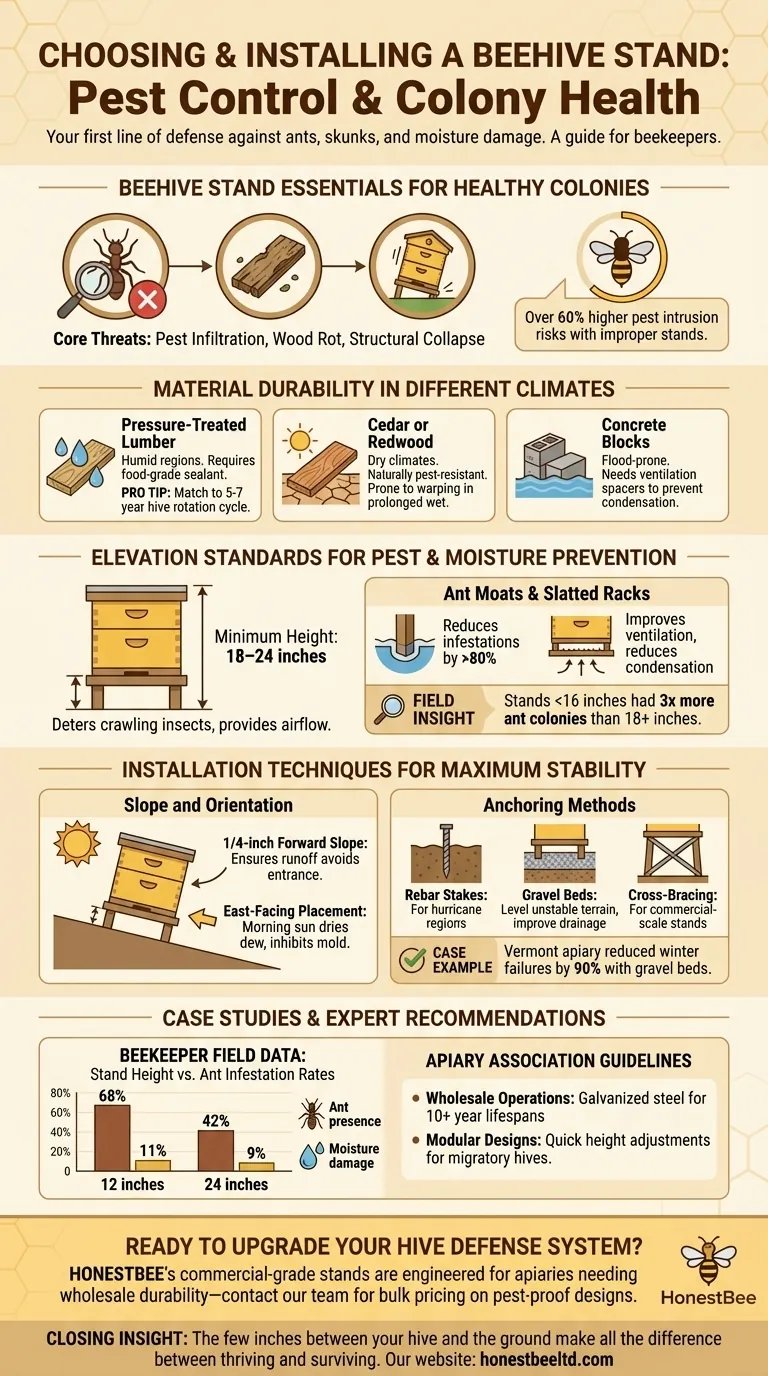
The right stand directly impacts hive survival rates by addressing three core threats: pest infiltration, wood rot, and structural collapse. Research shows colonies on improperly elevated stands face over 60% higher pest intrusion risks.
Material Durability in Different Climates
- Pressure-treated lumber: Resists moisture in humid regions but requires food-grade sealants to avoid chemical leaching.
- Cedar or redwood: Naturally pest-resistant and durable in dry climates, though prone to warping in prolonged wet conditions.
- Concrete blocks: Ideal for flood-prone areas but lack ventilation, requiring added spacers to prevent condensation buildup.
Pro Tip: Match material lifespan to your hive rotation cycle—commercial apiaries replacing stands every 5–7 years benefit from cost-effective treated pine, while hobbyists prefer cedar’s longevity.
Elevation Standards for Pest and Moisture Prevention
- Minimum height: 18–24 inches deters crawling insects and provides airflow under the hive.
- Ant moats: Stands with integrated water barriers reduce infestations by over 80% compared to basic designs.
- Slatted racks: Elevate the hive body an additional 2 inches to improve ventilation and reduce condensation.
Field Insight: A 2-year apiary study found stands under 16 inches tall had 3x more ant colonies than those meeting the 18-inch threshold.
Installation Techniques for Maximum Stability
Hive stands must counteract two destabilizing forces: wind shear and ground settling. Proper installation prevents costly hive topples during storms.
Slope and Orientation for Hive Drainage
- 1/4-inch forward slope: Ensures rainwater runoff avoids pooling around hive entrances.
- East-facing placement: Morning sun exposure helps dry dew from stand surfaces, inhibiting mold growth.
Anchoring Methods in Windy or Uneven Terrain
- Rebar stakes: Drive 12-inch stakes through stand legs into compact soil for hurricane-prone regions.
- Gravel beds: Level unstable terrain with 3 inches of crushed stone before placing stands, improving drainage and reducing shifting.
- Cross-bracing: Add diagonal supports between legs for commercial-scale stands holding multiple deep hives.
Case Example: A Vermont apiary reduced winter stand failures by 90% after switching from direct-ground contact to gravel-bed installations.
Case Studies and Expert Recommendations
Beekeeper Field Data: Stand Height vs. Ant Infestation Rates
A 150-hive trial comparing 12-inch vs. 24-inch stands revealed:
| Stand Height | Ant Presence | Moisture Damage |
|---|---|---|
| 12 inches | 68% of hives | 42% required wood replacement |
| 24 inches | 11% of hives | 9% showed minor moisture marks |
Apiary Association Guidelines for Commercial Operations
The North American Beekeeping Federation advises:
- Wholesale operations: Use galvanized steel stands for 10+ year lifespans in high-rotation apiaries.
- Modular designs: Allow quick height adjustment when moving hives between orchards with varying pest pressures.
Ready to upgrade your hive defense system? HONESTBEE’s commercial-grade beekeeping stands are engineered for apiaries needing wholesale durability—contact our team for bulk pricing on pest-proof designs.
Closing Insight: Like choosing the right foundation for a house, your stand investment today determines decades of colony productivity. The few inches between your hive and the ground make all the difference between thriving and surviving.
Visual Guide
Related Products
- Metal Hive Feet Bee Hive Stand for Ant Protection
- Metal Bee Hive Stand Bee Box Stand for Beekeeping
- Plastic Bee Hive Stand for Beekeeping
- Professional Ant-Proof Beehive Stand with Integrated Moat for Beekeeping
- Wooden Bee Hive Frames for Beekeeping and Wholesale
Related Articles
- How to Stabilize Beehive Stands in Wet Soil: Proven Techniques for Beekeepers
- The Unseen Architecture of a Productive Apiary: Why Your Beehive Stand Height is a System Design Choice
- The Unseen Foundation: Why a Beehive Stand Dictates Your Apiary's Success
- Beyond the Box: How a Simple Stand Prevents Compounding Failures in Beekeeping
- How to Determine the Optimal Beehive Stand Height for Comfort and Efficiency