You’ve done everything by the book. You sourced a strong queen, managed mites diligently, and ensured your colonies had ample food stores for the winter. Yet, you pull the lid off a hive in early spring to find a damp, moldy mess and a cluster that’s a fraction of its former size. Or maybe you arrive at an out-yard to find a top-heavy hive, rich with honey, tipped over and raided—a total loss.
You might blame a harsh winter, persistent pests, or just bad luck. But what if the real culprit is something you see every day but have never truly questioned? What if the problem is hiding in plain sight, right underneath the hive itself?
The Cycle of "Good Enough" Solutions and Mounting Losses
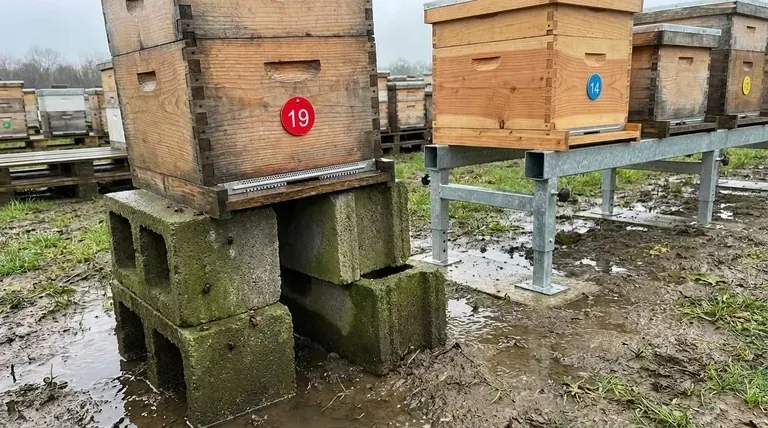
For many commercial beekeepers, the base for a hive is an afterthought. A stack of cinder blocks, a few old pallets, or some leftover lumber seems "good enough." It gets the hive off the ground, and that's what matters, right?
This mindset leads to a familiar, frustrating cycle of problems and temporary fixes:
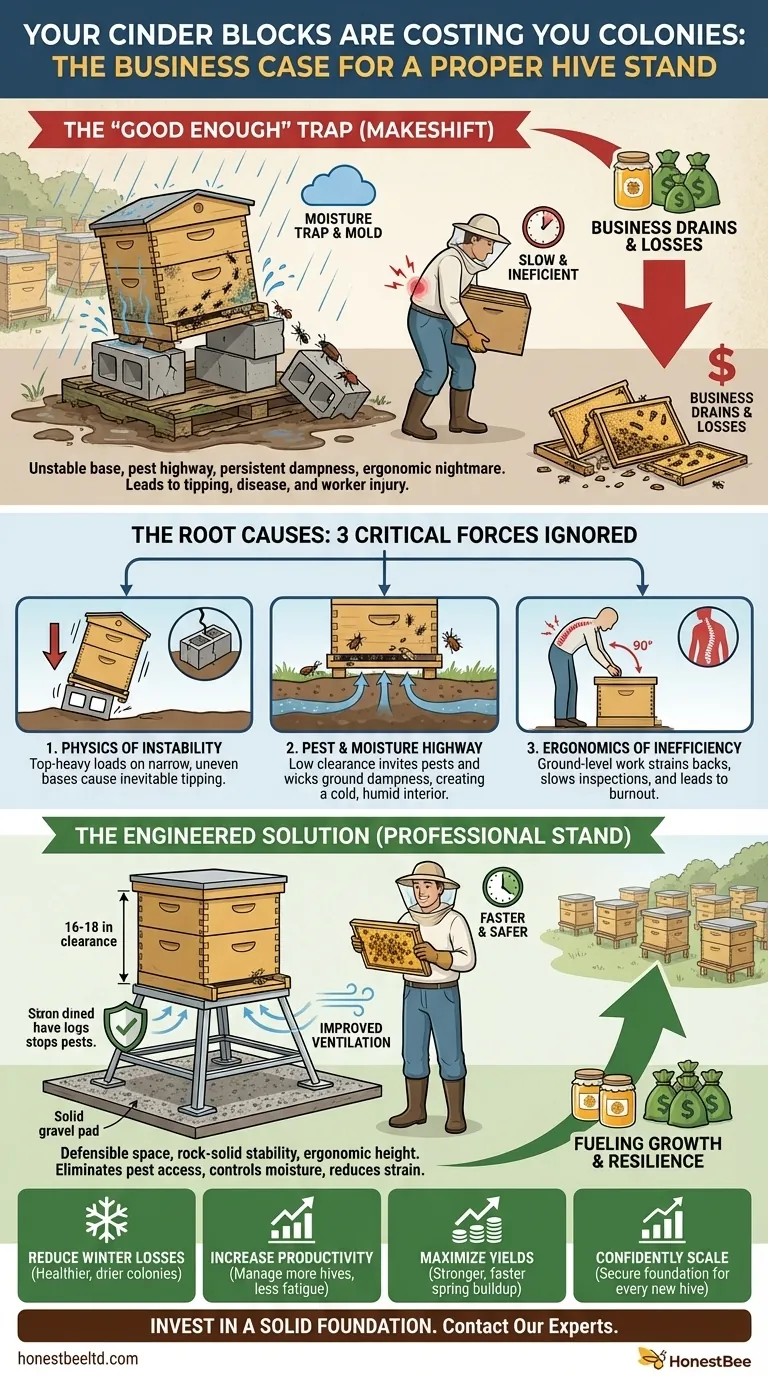
- The Wobble: You find a hive tilting on uneven ground. The quick fix is to jam a wooden shim under a corner, knowing you'll have to do it again after the next big rain.
- The Pest Invasion: Ants or hive beetles are constantly harassing a particular set of hives. You respond with more traps and diatomaceous earth, treating the symptom without ever questioning why those hives are such easy targets.
- The Moisture Trap: You battle persistent moisture and chalkbrood, adding ventilation rims and quilt boxes, unaware that the hive is constantly wicking dampness from the ground below.
These aren't just minor annoyances; they are significant business drains. Every lost colony is a direct hit to your bottom line—lost honey production, lost pollination contracts, lost nuc sales. Every hour spent shimming wobbly hives, clearing moldy frames, or resetting pest traps is time that could have been spent managing healthy colonies and growing your operation. And for your team, spending all day bent at the waist to work ground-level hives isn't just uncomfortable—it's a recipe for back strain, reduced efficiency, and burnout.
The Real Enemy: The Hive's Relationship with the Ground
The frustrating truth is that your band-aid solutions are failing because they don't address the fundamental issue. The problem isn't the pests, the moisture, or the wobbly hive in isolation. The root cause is the inadequate interface between the hive and the ground.
Makeshift stands fail because they ignore three critical forces:
1. The Physics of Instability
A mature hive full of honey can weigh hundreds of pounds. Placing it on cinder blocks creates a top-heavy structure on a narrow, unstable base. On soft ground, the blocks sink unevenly, causing the hive to tilt. Wooden pallets seem stable at first, but they rot from ground contact, becoming weak and unreliable precisely when the hive is at its heaviest. This isn't just a risk; it's an inevitability.
2. The Highway for Pests and Moisture
Placing a hive just a few inches off the ground on a pallet or block is like building a house without a foundation in a swamp. The low clearance provides a direct "highway" for ants, slugs, and small hive beetles to march right in. More critically, the proximity to the earth allows dampness to constantly wick upwards, creating a cold, humid interior that forces the colony to burn precious energy just to stay warm and dry, making them vulnerable to mold and disease.
3. The Ergonomics of Inefficiency
The human body is not a crane. Bending over to lift a 60-pound deep box from a ground-level hive is a blueprint for injury. This poor ergonomic setup makes every inspection slower and more physically taxing. For a commercial operation managing hundreds or thousands of hives, this inefficiency multiplies, slowing down the entire workflow and increasing the risk of costly worker injuries.
The Right Tool for the Job: Engineering a Better Foundation
To defeat these forces, you don't need more shims or traps. You need to change the hive's environment from the ground up. You need a tool specifically designed to provide elevation, stability, and ergonomic height.
This is precisely why a purpose-built hive stand isn't an accessory; it's a foundational piece of operational equipment. It is the direct solution engineered from a deep understanding of the problems that makeshift stands create.
A professional hive stand, like those supplied by HONESTBEE, directly counters the root causes of failure:
- It creates a defensible space: By elevating the hive a full 16-18 inches, it eliminates the pest highway. This height also creates a pocket of air that insulates the hive from the cold, damp ground, dramatically improving ventilation and moisture control.
- It delivers uncompromising stability: With a wide, solid footprint and construction from durable, weather-resistant materials, a proper stand provides a rock-solid platform. It’s designed to support the maximum weight of a full, productive colony without wobbling, sinking, or degrading over time.
- It is built for human efficiency: Raising the hive to a comfortable working height transforms hive management. Inspections are faster, lifting is safer, and physical strain on your back and knees is virtually eliminated. Your team can work more efficiently, for longer, with less risk.
From Fighting Fires to Fueling Growth: What a Solid Foundation Unlocks
Once you solve this foundational problem, the impact extends far beyond simply having neater hive rows. You stop reacting to constant, preventable emergencies and start proactively building a more resilient and profitable business.
With a proper foundation under every hive, you unlock new potential:
- Dramatically reduce winter losses as colonies are no longer fighting a losing battle against cold and damp.
- Increase the productivity of your team, allowing them to manage more hives in less time with less physical fatigue.
- Maximize your yields as healthier, stronger colonies build up faster in the spring for honey production and pollination.
- Confidently scale your operation, knowing that every new hive is placed on a secure, stable, and long-lasting platform built for success.
Investing in the right foundation is one of the highest-leverage decisions you can make for the health of your bees and your business. It simplifies your work, protects your assets, and sets the stage for sustainable growth.
Stop letting "good enough" undermine your hard work. Let's discuss how equipping your apiary with the right foundational tools can solve persistent challenges and strengthen your entire operation. We specialize in supplying durable, wholesale beekeeping equipment built for the demands of commercial apiarists and distributors. Contact Our Experts to talk about the specific needs of your apiary.
Visual Guide
Related Products
- Metal Hive Feet Bee Hive Stand for Ant Protection
- Plastic Bee Hive Stand for Beekeeping
- Metal Bee Hive Stand Bee Box Stand for Beekeeping
- Professional Ant-Proof Beehive Stand with Integrated Moat for Beekeeping
- Plastic Bee Frame Beekeeping Hive Frames for Wholesale
Related Articles
- How to Stabilize Beehive Stands in Wet Soil: Proven Techniques for Beekeepers
- Beyond the Box: How a Simple Stand Prevents Compounding Failures in Beekeeping
- The Unseen Foundation: Why a Beehive Stand Dictates Your Apiary's Success
- The Unseen Architecture of a Productive Apiary: Why Your Beehive Stand Height is a System Design Choice
- How to Choose and Install a Beehive Stand for Pest Control and Colony Health