The Springtime Mystery
Imagine inspecting a hive in early spring. The air is warming, the first flowers are blooming, and yet, the colony is silent.
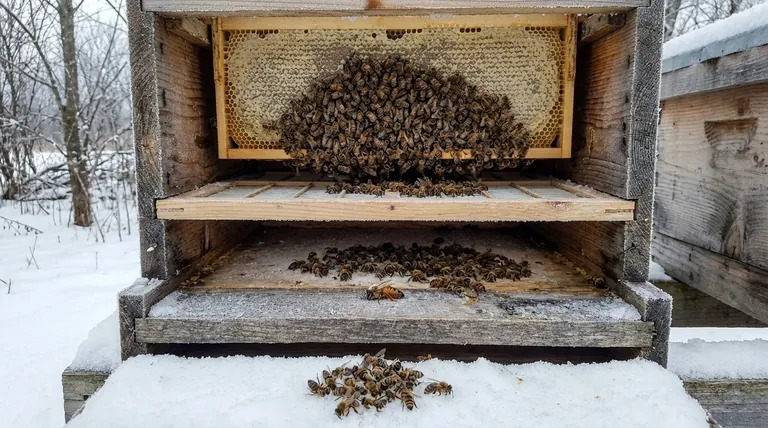
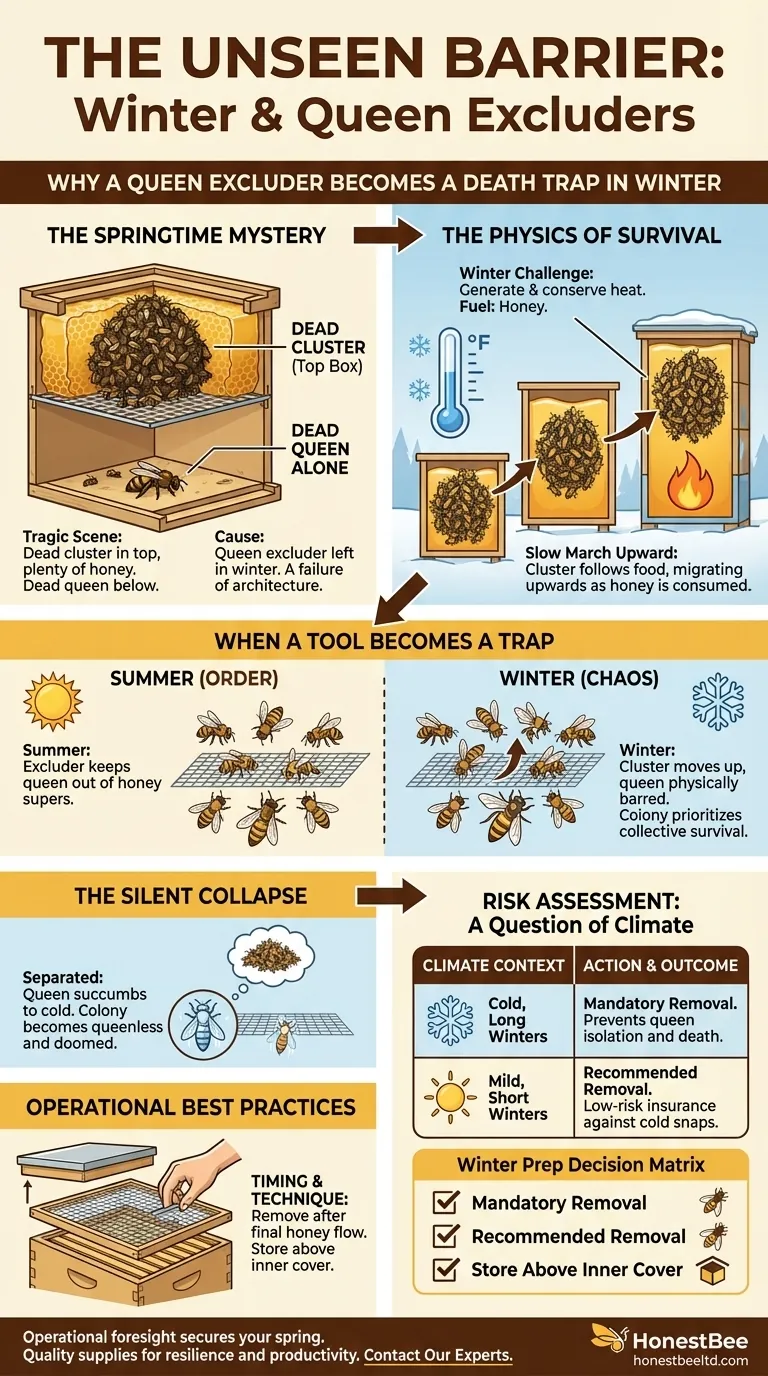
Inside, you find a tragic scene: a dead cluster of bees in the top box, with plenty of honey stores just inches away. Below, on the floor of the bottom brood box, lies the dead queen, alone.
What went wrong? This wasn't starvation or disease. This was a failure of architecture. The culprit is a simple piece of equipment used with the best intentions: a queen excluder left in the hive over winter. It’s a preventable mistake rooted in misunderstanding the colony’s psychology of survival.
The Physics of Survival
To a honey bee colony, winter is a challenge of thermodynamics. Survival depends on generating and conserving heat, fueled by meticulously stored honey. This dictates their every move.
A Slow March Upward
As temperatures plummet, the bees form a tight winter cluster. To generate heat, they shiver their flight muscles, consuming honey as fuel. As they exhaust the honey in one area of a frame, the entire cluster slowly, collectively, migrates upward.
This isn't a random drift; it's a non-negotiable, instinct-driven march toward the next pocket of life-sustaining energy stored above them. They follow the food.
When a Tool Becomes a Trap
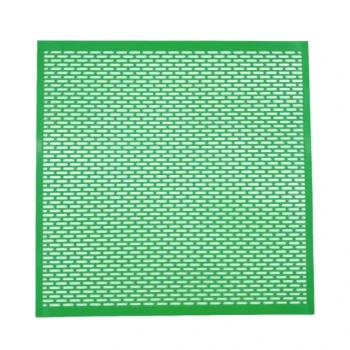
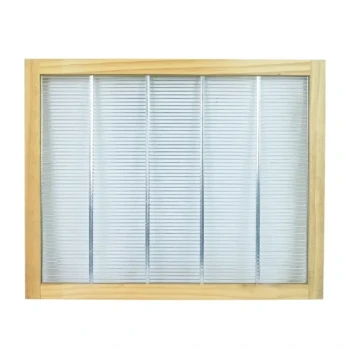
The queen excluder is a brilliant tool of order in the summer. Its grid is perfectly calibrated—wide enough for worker bees to pass through, but too narrow for the queen's larger thorax. It ensures honey supers remain free of brood.
But in winter, this tool of order becomes an instrument of chaos.
The Inescapable Logic of the Barrier
As the winter cluster eats its way upward, worker bees pass through the excluder without a thought. The queen, however, cannot. She is physically barred from following her colony to the life-giving warmth and food.
The cluster, driven by the singular, overwhelming instinct to survive, will not come back down for her. The superorganism prioritizes the collective.
The Silent Collapse
Separated from the thermal mass of the cluster, the queen quickly succumbs to the cold. She freezes to death, alone.
The colony is now queenless. Even if the workers survive until spring, they are doomed. Without a queen to lay eggs, the colony will dwindle and collapse. The beekeeper is left with a dead-out and a painful lesson.
Risk Assessment: A Question of Climate
The decision to remove the excluder is a critical risk calculation where the primary variable is your local climate.
- Cold, Long Winters: In any region where temperatures consistently drop below freezing, removing the queen excluder is non-negotiable. The risk of the cluster moving above it is almost a certainty. The consequence is catastrophic.
- Mild, Short Winters: In subtropical climates where brood-rearing continues year-round, the risk is lower. The cluster may not need to make a significant upward migration. Even so, removing the excluder is a zero-cost insurance policy against an unusual cold snap.
Operational Best Practices
For commercial apiaries, winter preparation is a systematic protocol, not a casual checklist. Managing the queen excluder should be a deliberate step.
Timing and Technique
The excluder has served its purpose for the season once the final honey flow is over. This is the ideal time for removal.
A simple efficiency hack is to place the removed excluder on top of the inner cover, directly beneath the telescoping outer cover. This keeps the equipment with its hive, preventing it from being lost or damaged while ensuring it poses no threat to the colony's winter movement.
Winter Prep Decision Matrix
| Action | Climate Context | Rationale | Outcome for Your Operation |
|---|---|---|---|
| Mandatory Removal | Cold, freezing winters | Prevents queen isolation and certain death. | Maximizes colony survival rates. |
| Recommended Removal | Mild, frost-free winters | A low-risk "insurance policy" against colony loss. | Mitigates preventable risks. |
| Store Above Inner Cover | All climates | Keeps equipment ready and organized for spring. | Increases operational efficiency. |
This level of operational foresight—preparing for winter to guarantee a strong spring—is what separates a hobby from a successful commercial enterprise. It requires not only knowledge but also durable, reliable equipment that stands up to seasonal management routines. As a trusted wholesale supplier, HONESTBEE provides the professional-grade beekeeping supplies that successful commercial apiaries and distributors rely on, ensuring every part of your operation is built for resilience and productivity.
Protect your investment and ensure your hives are ready for a powerful start next season. Contact Our Experts
Visual Guide
Related Products
- High Performance Plastic Queen Excluder for Beekeeping and Apiary Management
- Professional Plastic Queen Excluder for Modern Beekeeping
- Lightweight Durable Plastic Queen Excluder Scraper for Beekeeping
- Metal Queen Bee Excluder for Beekeeping
- Premium Wood Framed Metal Wire Queen Bee Excluder
Related Articles
- How Plastic Queen Excluders Improve Hive Longevity and Colony Health
- Plastic Queen Excluders vs. Alternatives: A Beekeeper’s Guide to Smarter Hive Management
- Why Plastic Queen Excluders Outperform Metal and Wood: Science, Savings, and Hive Protection
- How to Choose Queen Excluders Based on Colony Behavior and Queen Traits
- The Geometry of Order: Why the Queen Excluder is a Beekeeper's Most Strategic Tool