The Beekeeper's Blind Spot
Every experienced beekeeper understands the tangible weight of a super box brimming with honey. They feel it in their arms and, over time, in their lower back. But the most underestimated force in an apiary isn't gravity—it's the slow, relentless pressure of the environment.
We often focus on the bees, the queen, and the honey flow. The box itself is a given. And what the box sits on? It's often an afterthought. This is a psychological blind spot. We dismiss the hive stand as an optional accessory, a corner we can cut, failing to recognize it as the single most important piece of infrastructure protecting the entire system.
A colony's failure often doesn't start with a virus or a mite. It starts with a slow rot from the ground up, a persistent wobble on an uneven base, or a back injury that makes a beekeeper dread their next inspection.
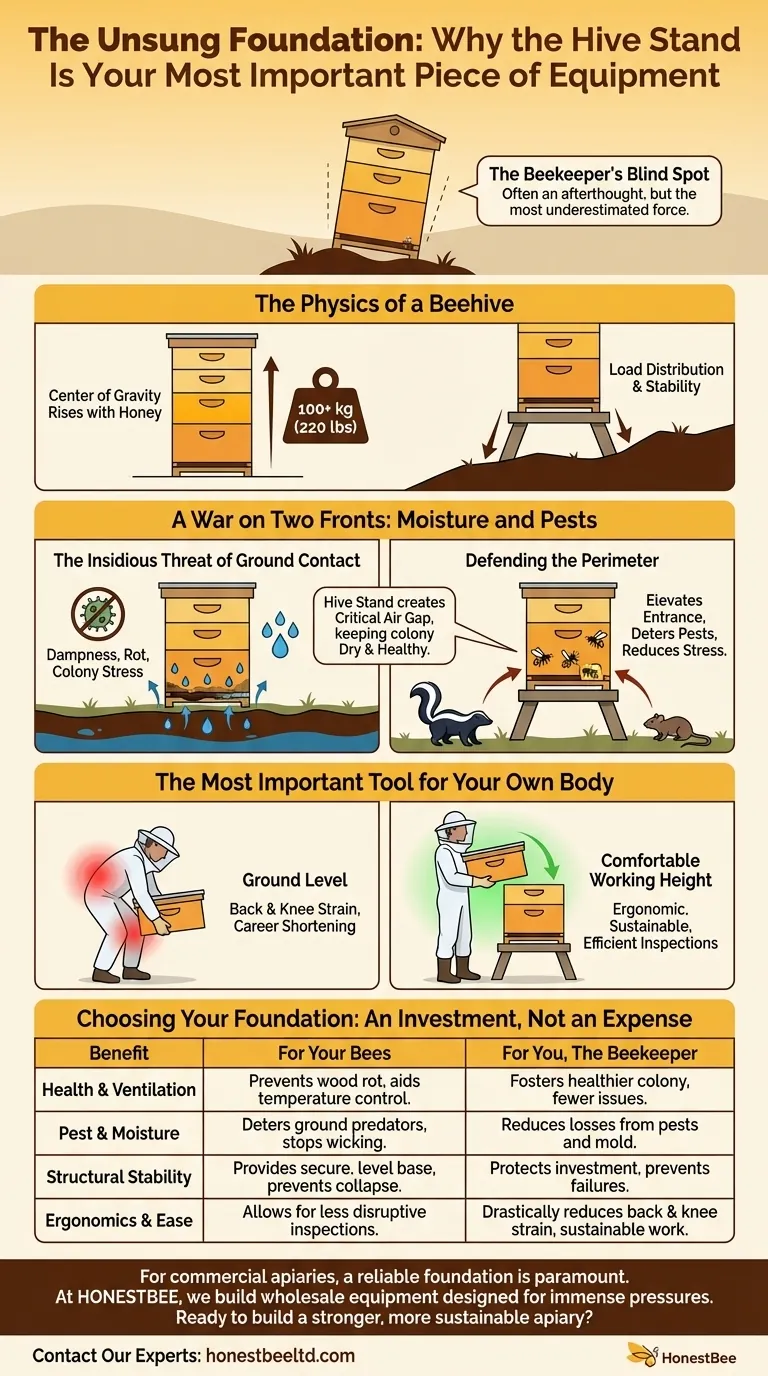
The Physics of a Beehive
A mature beehive is a marvel of engineering, but it’s also a surprisingly precarious structure.
As bees fill supers, the hive becomes a tall, top-heavy tower. Its weight can easily exceed 100 kg (220 lbs), with a center of gravity that rises with every millimeter of drawn comb filled with honey.
Placing this tower directly on the ground is a structural gamble. Uneven terrain creates stress points. Soft soil allows for sinking. A sturdy, level hive stand isn't just a platform; it’s a foundation designed to manage this specific engineering challenge. It distributes the load and provides the stability needed to prevent a catastrophic collapse during a storm or from an accidental bump.
A War on Two Fronts: Moisture and Pests
The ground is not a neutral environment. It is a source of constant threats that a simple elevation can almost completely neutralize.
The Insidious Threat of Ground Contact
Direct contact with the ground invites moisture. Water wicks up into the bottom board, creating a perpetually damp environment. This isn't just bad for the wood, promoting rot and decay; it’s terrible for the colony.
Dampness forces the bees to expend precious energy fighting off mold and regulating internal humidity. A hive stand creates a critical air gap, allowing for proper ventilation that keeps the colony dry, warm, and healthy. It's the difference between a house with a solid foundation and one built directly on a swamp.
Defending the Perimeter
The world is full of creatures that would love to raid a hive, from skunks looking for a meal of bees to rodents seeking shelter. A hive stand elevates the entrance, creating a simple but effective barrier. It makes the colony less accessible and easier for the guard bees to defend, reducing stress and preserving the colony's strength.
The Most Important Tool for Your Own Body
A hive stand's most immediate and personal benefit is for the beekeeper. Beekeeping is a profoundly physical job, and sustainability isn't just about the bees—it's about you.
Lifting a 30 kg (66 lbs) super from ground level is a recipe for long-term back and knee strain. It’s an awkward, inefficient movement that, repeated over hundreds of hive inspections, can shorten a beekeeping career.
Raising the hive to a comfortable working height transforms the work. It turns a painful chore into a manageable task. Inspections become quicker, less disruptive to the bees, and profoundly easier on your body. This ergonomic advantage is not a luxury; it’s a fundamental requirement for anyone serious about keeping bees for the long haul.
Choosing Your Foundation: An Investment, Not an Expense
Whether you build or buy, a hive stand is a non-negotiable investment in risk management. Its value is measured not just in convenience, but in averted disasters—the collapsed hive, the pest-ridden colony, the career-ending injury.
The benefits are layered, protecting both the colony and the keeper.
| Benefit | For Your Bees | For You, The Beekeeper |
|---|---|---|
| Health & Ventilation | Prevents wood rot and aids in temperature/humidity control. | Fosters a healthier, more productive colony with fewer issues. |
| Pest & Moisture | Deters ground predators and stops moisture from wicking into the hive. | Reduces colony losses from pests and mold. |
| Structural Stability | Provides a secure, level base for a heavy, top-heavy hive, preventing collapse. | Protects your investment and prevents dangerous hive failures. |
| Ergonomics & Ease | Allows for less disruptive inspections. | Drastically reduces back and knee strain, making work sustainable. |
For commercial apiaries and equipment distributors, where every hive is a significant asset, a reliable foundation is paramount. Sourcing durable, load-rated stands isn't just best practice; it's essential operational security. At HONESTBEE, we build wholesale equipment designed to withstand the immense pressures of commercial beekeeping, ensuring your foundation is as resilient as your bees.
Ready to build a stronger, more sustainable apiary from the ground up? Contact Our Experts
Visual Guide
Related Products
- Metal Hive Feet Bee Hive Stand for Ant Protection
- Plastic Bee Hive Stand for Beekeeping
- Metal Bee Hive Stand Bee Box Stand for Beekeeping
- Professional Ant-Proof Beehive Stand with Integrated Moat for Beekeeping
- Plastic Bee Frame Beekeeping Hive Frames for Wholesale
Related Articles
- How to Stabilize Beehive Stands in Wet Soil: Proven Techniques for Beekeepers
- How to Choose and Install a Beehive Stand for Pest Control and Colony Health
- The Unseen Foundation: Why a Beehive Stand Dictates Your Apiary's Success
- Beyond the Box: How a Simple Stand Prevents Compounding Failures in Beekeeping
- The Unseen Architecture of a Productive Apiary: Why Your Beehive Stand Height is a System Design Choice