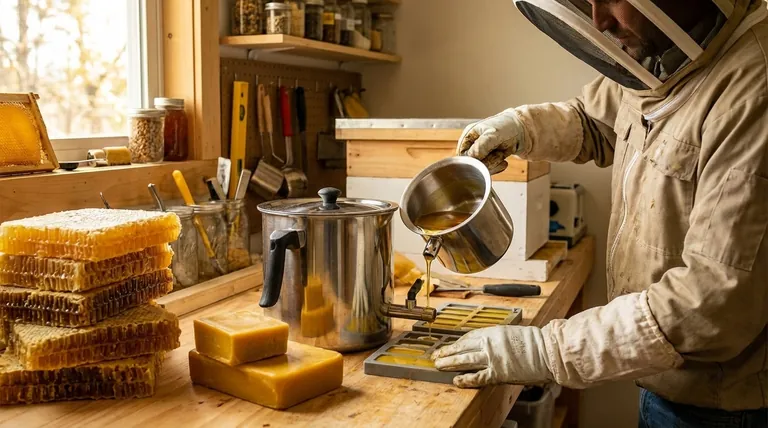
It happens in an instant. One moment, your workshop is filled with the pleasant, familiar scent of honey and warm wax. The next, a pot of golden liquid erupts into a startling, aggressive flame. A "close call" like this isn't just a risk for hobbyists; for a commercial apiary or distributor, it's a significant threat to inventory, equipment, and personnel. You thought you were just melting wax, but you accidentally stumbled upon a dangerous secret of its chemistry. If you've ever felt that a fire is a constant, lurking risk during wax processing, you're not wrong—but you might be focused on the wrong problem.
The Common Struggle: Why "Watching the Pot" Is a Losing Strategy
For many commercial beekeepers, wax rendering is a necessary but often frustrating task. The goal is simple: turn raw cappings and comb into clean, valuable blocks of wax. The common approach is often improvised—a large stockpot on a propane burner, a repurposed deep fryer, or an electric hot plate cranked to high. The primary safety protocol? "Just keep a close eye on it."
This approach, however, is fundamentally flawed and carries significant business consequences:
- Inconsistent Quality: Direct, uneven heat can easily scorch the wax, darkening its color and reducing its market value.
- Wasted Labor: A team member must be dedicated to constantly monitoring and stirring the pot, a low-value task that prevents them from working on more productive jobs.
- Constant Fire Risk: "Keeping an eye on it" is not a reliable safety system. A moment of distraction is all it takes for the temperature to spike, leading to a dangerous fire that can destroy thousands of dollars in product and damage your facility.
- A Cap on Growth: This manual, high-risk method is impossible to scale. You can't safely increase your wax processing volume when your entire system relies on guesswork and constant supervision.
Many operators believe the problem is bad luck or an unavoidable part of the job. They try different pots or different heat sources, but the underlying risk remains. That's because these solutions are only addressing the symptom, not the root cause.
The Real Culprit: It's Not the Liquid Wax, It's the Invisible Vapor
The fundamental misunderstanding lies in the difference between two critical numbers: the melting point and the flash point.
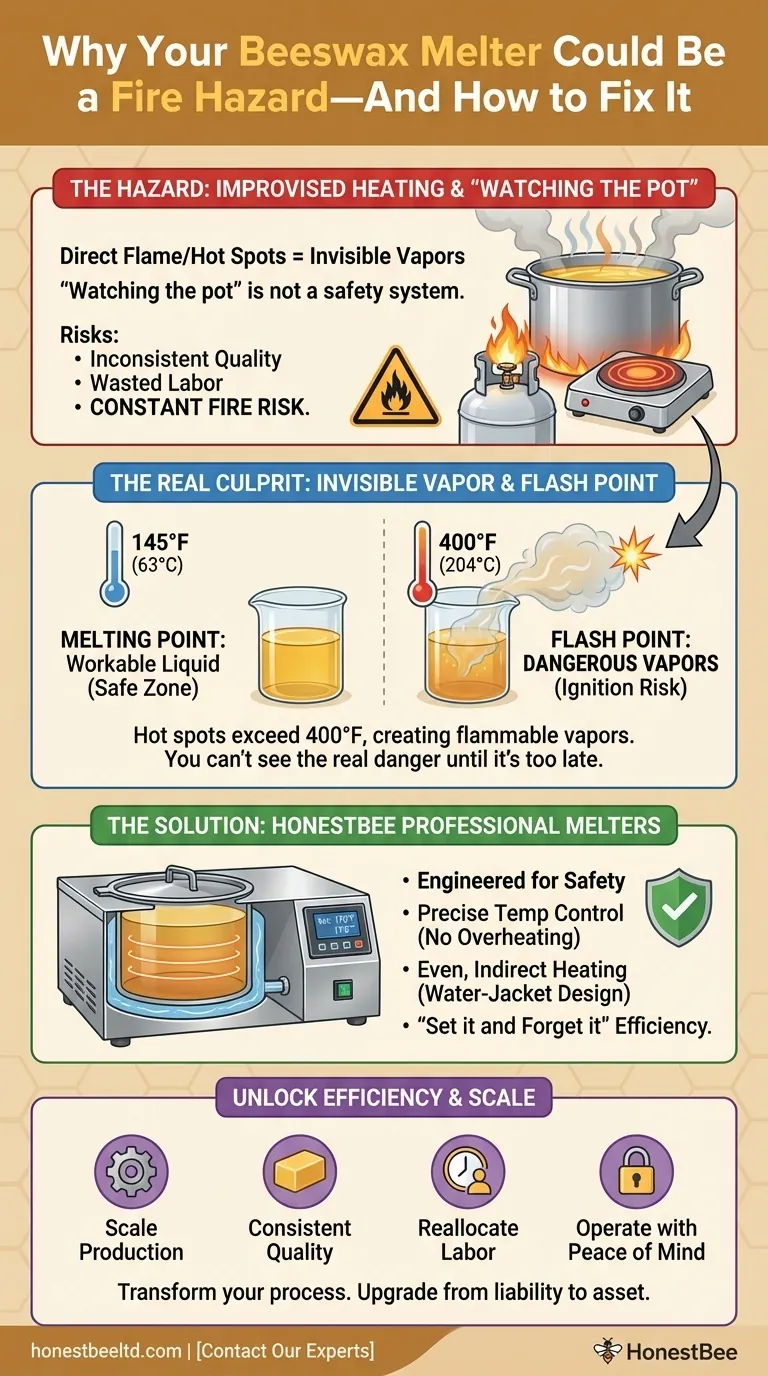
Beeswax becomes a workable liquid around 145°F (63°C). This is the temperature everyone aims for.
However, the flash point of beeswax is approximately 400°F (204°C). This is not the temperature at which the liquid wax itself ignites. It's the temperature at which the wax produces a high volume of invisible, flammable vapors. If these vapors come into contact with an ignition source—like the open flame of a propane burner or an electrical spark from a faulty hot plate—they will ignite instantly in a flash fire.
This is why makeshift heating methods are so dangerous. A direct flame or a glowing electric coil doesn't heat the pot evenly. It creates intense hot spots at the bottom, easily exceeding 400°F in those areas. While the rest of the wax is a perfect liquid, the bottom is invisibly pumping flammable vapor into the air, waiting for a spark. You're not managing a pot of liquid; you're unknowingly managing a potential fuel-air bomb.
The strategy of "watching the pot" fails because you can't see the real danger—the vapors. By the time you see smoke, the temperature is already far too high.
From Hazard to Control: The Role of the Professional Wax Melter
To truly eliminate the risk, you don't need better reflexes; you need a tool that makes it impossible to accidentally reach the flash point. You need to replace guesswork with precision and direct heat with controlled, indirect heat.
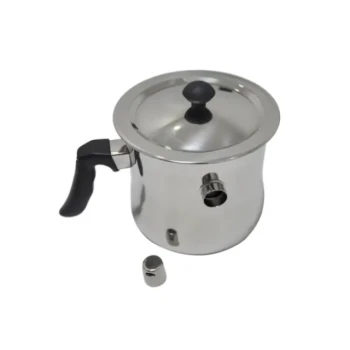
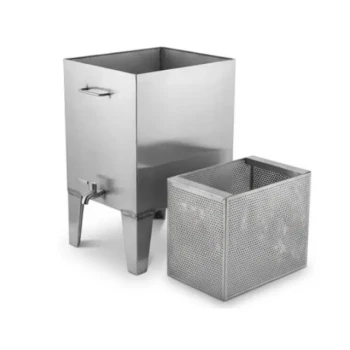
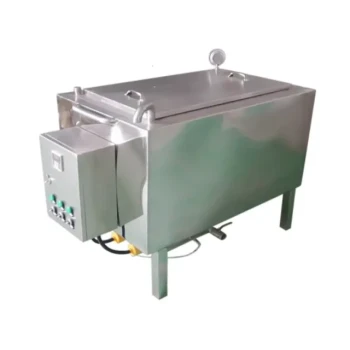
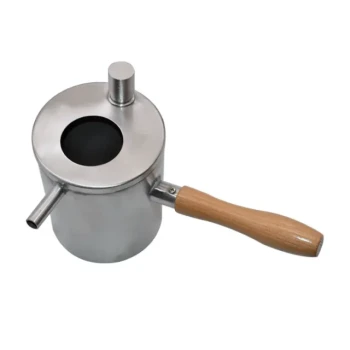
This is precisely why professional, temperature-controlled wax melters were designed. They are not just "bigger pots"; they are engineered solutions built on a deep understanding of wax chemistry.
A HONESTBEE professional wax melter directly solves the root cause in several ways:
- Precise Temperature Control: You set the thermostat to a safe temperature—say, 170°F—and the unit maintains it. It physically cannot run away and approach the 400°F danger zone.
- Even, Indirect Heating: Many of our melters use a water-jacketed design. Like a massive, industrial-grade double boiler, it uses heated water to gently and evenly melt the wax. This completely eliminates the hot spots that cause vapor production.
- Designed for Efficiency: These are not repurposed cookers. They are built with features like bottom drain valves for easy, clean dispensing and are designed for safe, "set it and forget it" operation.
This isn't about adding a fancy gadget; it's about adopting a professional process that aligns with the fundamental science of the material you work with every day.
Beyond Safety: Unlocking Efficiency and Scale
Once you eliminate the constant risk and inefficiency of manual wax melting, your operation can transform. This isn't just about preventing a fire; it's about unlocking new potential.
With a reliable, safe, and automated wax processing system, you can:
- Scale Your Production: Process larger batches of wax with confidence, turning a production bottleneck into a profitable revenue stream.
- Improve Product Quality: Deliver consistently beautiful, perfectly rendered wax to your customers, batch after batch.
- Reallocate Your Labor: Free your team from pot-watching duty to focus on beekeeping, honey extraction, and other activities that grow your business.
- Operate with Peace of Mind: Know that your workshop is safe, your process is reliable, and your business is built on a professional foundation.
Your wax is a valuable asset, not a liability waiting to happen. By upgrading your process, you do more than just manage risk—you create new opportunities for growth and profitability. If your current wax melting setup is holding you back or causing safety concerns, it's time to explore a solution designed for the demands of a commercial operation. Let's discuss the specific needs of your apiary and how the right equipment can make your entire process safer and more profitable. Contact Our Experts.
Visual Guide
Related Products
- Beeswax Melter for Candle Making Honey Bee Wax Melter
- Steam Beeswax Melter Wax Warmer for Wax Processing
- Electric Commercial Beeswax Melter for Factory Use
- Solar Beeswax Melter Easy Solar Wax Melter for Beeswax
- Professional Stainless Steel Wax Melter for Beekeeping and Crafts
Related Articles
- How to Melt Beeswax Safely: Expert Methods to Avoid Fire Risks
- The Beekeeper's Paradox: Why Slow Heat Unlocks the True Value of Beeswax
- The Physics of Patience: Why Controlled Heat is Non-Negotiable for Beeswax
- How to Melt Beeswax Safely: Preserving Quality While Avoiding Hazards
- How to Optimize Industrial Beeswax Melting: Key Parameters for Quality & Efficiency