The Overlooked Foundation
In beekeeping, we often focus on complex variables: queen genetics, mite treatments, and nectar flow dynamics. We study the intricate biology inside the hive, yet we often overlook the most fundamental point of contact between that complex system and the world: the ground.
This is a classic human bias. We are drawn to complexity and tend to undervalue simple, foundational interventions. The hive stand is a perfect example. It’s not an accessory; it is a critical piece of infrastructure that addresses systemic risks at their source.
Failing to use a proper stand doesn't just create one problem. It creates a cascade of interconnected failures that compound over time.
The First Point of Failure: The Ground Interface
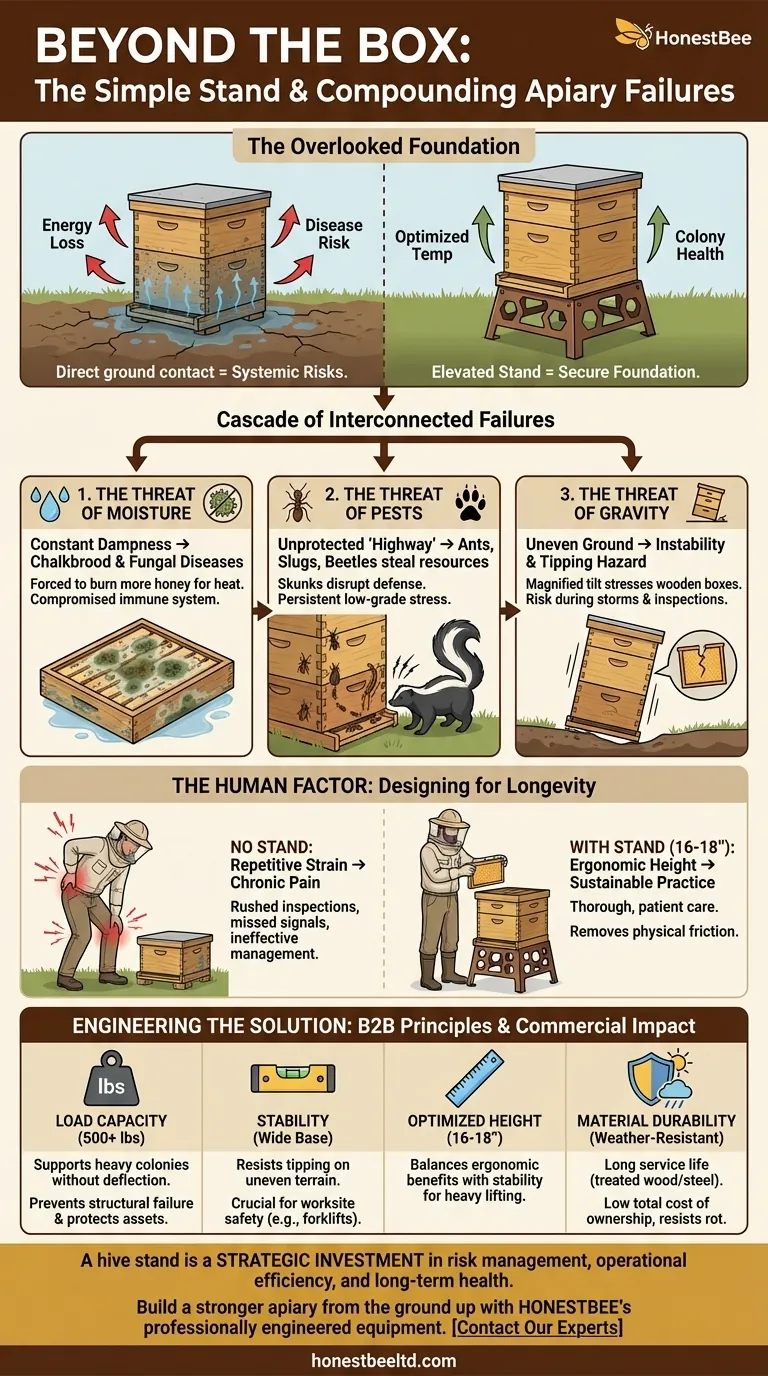
Imagine a cool, damp spring morning. The ground is saturated. A hive sitting directly on the soil wicks that moisture straight into its wooden base. Inside, the bees must burn more energy—more honey—just to maintain the 95°F (35°C) needed for the brood nest.
This single point of contact creates three distinct, systemic threats.
1. The Threat of Moisture
Constant dampness does more than chill the colony. It creates an ideal environment for chalkbrood and other fungal diseases. The humid, poorly ventilated space at the bottom of the hive becomes a liability, forcing the colony to operate with a permanently compromised immune system.
2. The Threat of Pests
Placing a hive on the ground is like building a fortress and leaving the main gate undefended. It provides an easy highway for ants, slugs, and small hive beetles. These pests don't just steal resources; their constant presence places the entire colony under low-grade, persistent stress, diverting energy from foraging and brood-rearing.
Larger predators like skunks can repeatedly scratch at the entrance, killing guard bees night after night and disrupting the colony's defensive behavior. A simple elevation of 16 inches makes the hive a much less appealing target.
3. The Threat of Gravity
A mature beehive is a vertical structure of immense weight. A single deep hive body full of honey can weigh nearly 100 pounds (45 kg). A productive colony can easily exceed 300 pounds.
On uneven ground, this weight creates instability. A slight tilt at the base is magnified at the top, stressing the wooden boxes and creating a serious tipping hazard during storms or routine inspections. A stable, level foundation isn't a convenience; it's a non-negotiable requirement of physics.
The Human Factor: Designing for a Beekeeper's Longevity
The hive stand’s second critical role is protecting the beekeeper. Beekeeping is a physical practice. The repetitive strain of lifting heavy boxes and bending over for inspections accumulates, leading to chronic back and knee pain.
This isn't just about comfort. It's about effectiveness.
A beekeeper rushing through an inspection because their back is aching is more likely to miss the subtle signs of disease or a failing queen. They are less likely to perform the thorough, patient management that strong colonies require.
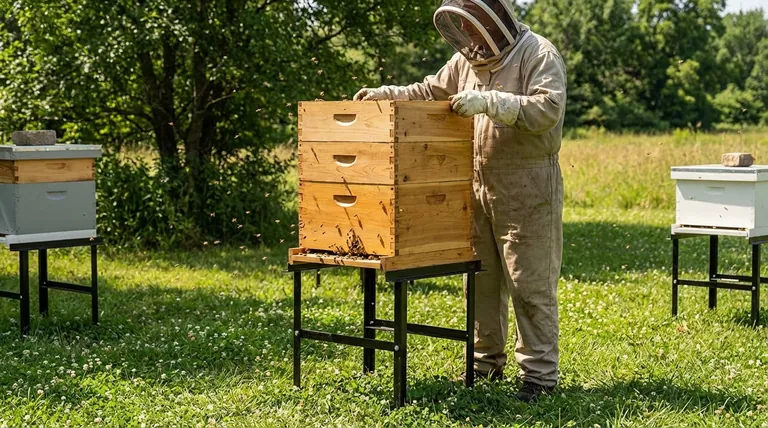
Raising the hive to an ergonomic working height—typically 16 to 18 inches—removes the physical barrier to good beekeeping. It transforms a strenuous chore into a sustainable practice. Good equipment doesn't just make the work easier; it removes the friction that prevents us from doing our best work.
Engineering the Solution: From Problem to Principle
For commercial apiaries and wholesale distributors, where efficiency and colony health translate directly to the bottom line, the hive stand is an essential piece of capital equipment. Its design must be evaluated with engineering rigor.
| Attribute | Engineering Principle | Impact on Commercial Operations |
|---|---|---|
| Load Capacity | Must support a minimum of 500 lbs (227 kg) without deflection. | Prevents structural failure with tall, heavy colonies, ensuring apiary safety and protecting the asset. |
| Stability | A wide, level base that resists tipping on uneven terrain. | Crucial for worksite safety, especially when using equipment like forklifts or hive loaders. |
| Height | Optimized at 16-18 inches (40-46 cm). | Balances ergonomic benefits for the beekeeper with the stability needed for lifting heavy supers. |
| Material Durability | Constructed from weather-resistant materials (e.g., treated wood, steel). | Ensures a long service life and low total cost of ownership, resisting rot and degradation across seasons. |
Ultimately, the choice of a hive stand is a strategic decision. It is an investment in risk management, operational efficiency, and the long-term health of both your colonies and your beekeepers. For professionals, relying on robust, purpose-built equipment isn't a luxury—it's the foundation of a scalable and successful operation.
At HONESTBEE, we supply durable, stable, and professionally engineered beekeeping equipment designed for the rigorous demands of commercial apiaries. Our hive stands provide the secure foundation your operation needs to thrive.
Ready to build a stronger apiary from the ground up? Contact Our Experts.
Visual Guide
Related Products
- Plastic Bee Hive Stand for Beekeeping
- Metal Hive Feet Bee Hive Stand for Ant Protection
- Metal Bee Hive Stand Bee Box Stand for Beekeeping
- Professional Ant-Proof Beehive Stand with Integrated Moat for Beekeeping
- Professional Galvanized Steel Frame Rest for Beehives
Related Articles
- How to Determine the Optimal Beehive Stand Height for Comfort and Efficiency
- The Unseen Architecture of a Productive Apiary: Why Your Beehive Stand Height is a System Design Choice
- Beyond the Box: How a Simple Stand Prevents Compounding Failures in Beekeeping
- How to Choose and Install a Beehive Stand for Pest Control and Colony Health
- The Unseen Foundation: Why a Beehive Stand Dictates Your Apiary's Success