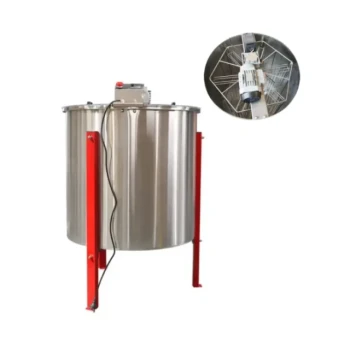
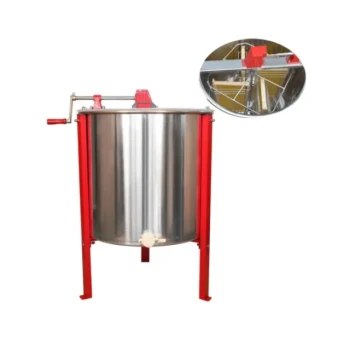
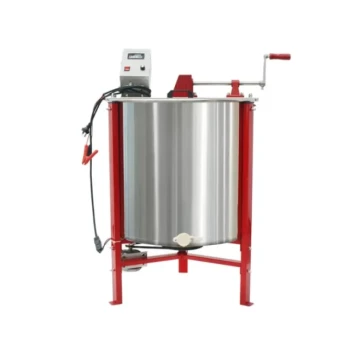
Yes, many honey extractors can accommodate different frame sizes, but this capability depends entirely on the specific design and size of the extractor's basket. While versatility is common, you must always verify the manufacturer's specifications to ensure it can handle your specific deep, medium, or shallow frames before making a purchase.
The central issue isn't whether extractors can be versatile, but understanding how an extractor's design—primarily whether it is radial or tangential—dictates its compatibility with different frame sizes and even frame types like foundationless comb.
The Core Factor: Extractor Design
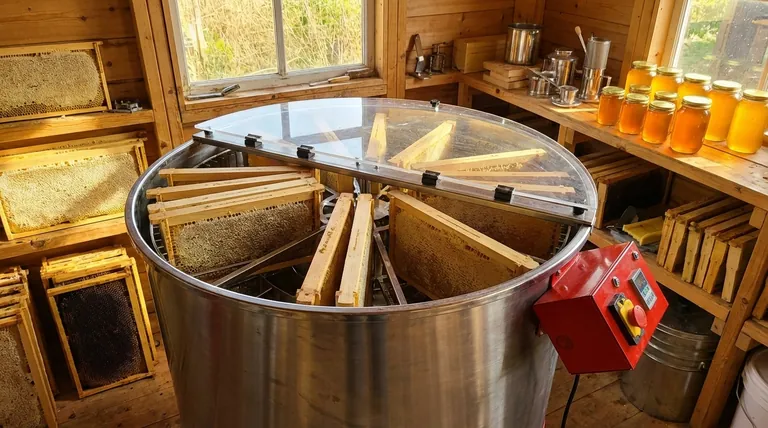
The mechanical design of the extractor's internal basket is the single most important factor determining which frames it can accept. The two primary designs operate on different principles.
Radial Extractors: The High-Capacity Choice
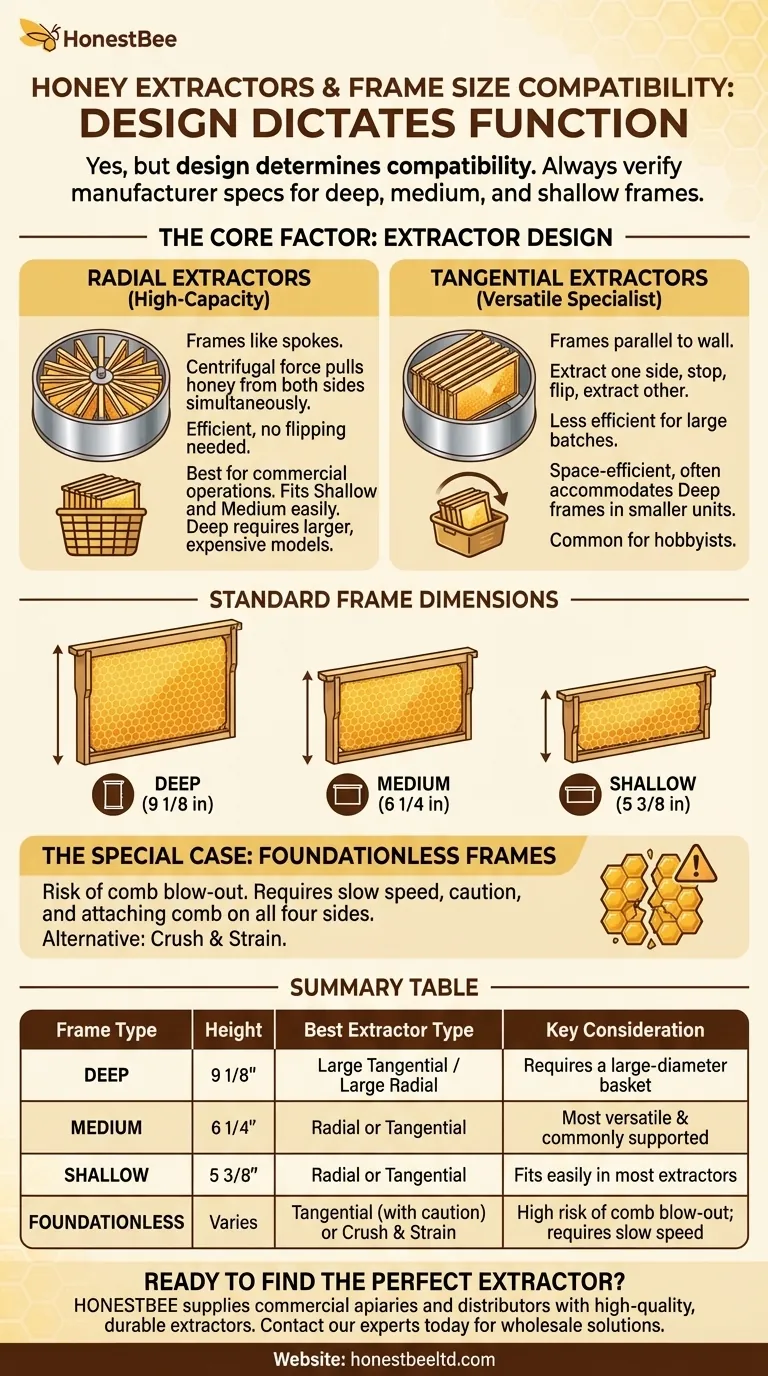
In a radial extractor, frames are positioned like the spokes of a wheel, with the top bar facing outwards. Centrifugal force pulls honey from both sides of the comb simultaneously.
This design is highly efficient and is often preferred for commercial operations. Because honey is extracted from both sides at once, there is no need to stop and flip the frames.
Most radial extractors easily fit shallow and medium frames. However, fitting deep frames requires a much larger-diameter basket, making these models significantly larger and more expensive.
Tangential Extractors: The Versatile Specialist
A tangential extractor holds frames with one side of the comb facing outward, parallel to the wall of the drum. This requires you to extract one side, stop the machine, flip the frames, and then extract the other side.
While less efficient for large batches, this design is often more space-efficient and can frequently accommodate larger (deep) frames in a smaller overall unit. Many smaller, hobbyist-level extractors utilize this design.
Matching Your Frames to the Machine
Beyond the core design, you must consider the specifics of your beekeeping operation and equipment.
Standard Frame Dimensions
Beekeeping equipment is standardized around three common frame heights for Langstroth hives:
- Deep: 9 1/8 inches
- Medium: 6 1/4 inches
- Shallow: 5 3/8 inches
An extractor must have a basket tall enough and wide enough to allow these frames to spin without hitting the center shaft or the outer wall.
The Special Case: Foundationless Frames
It is possible to extract from foundationless frames, but it carries a significant risk. Without the support of a plastic or wax foundation, the delicate new comb can easily disintegrate or "blow out" under the intense centrifugal force.
If you choose to machine-extract foundationless comb, you must attach the comb to all four sides of the frame. Start the extractor at a very slow speed, allowing some honey to be removed to lighten the frame before gradually increasing the speed.
Common Pitfalls and Trade-offs
Choosing an extractor involves balancing cost, capacity, and compatibility. Understanding the trade-offs is key to making a sound investment.
The "Crush and Strain" Alternative
For beekeepers with foundationless frames or a very small number of hives, the crush and strain method is often a more practical choice.
This low-tech process involves simply crushing the comb and letting the honey drain through a sieve. It requires no expensive equipment and allows you to easily harvest the clean beeswax as a valuable secondary product. The primary downside is that the bees must rebuild all the comb from scratch.
Capacity vs. Footprint
An extractor's capacity, which can range from two frames to over 100, directly impacts its cost and physical size. A large radial extractor that can handle 20 medium frames might be highly efficient, but it will be a poor investment if you only have two hives and limited storage space.
Electric vs. Manual Control
Electric models offer superior control, particularly the ability to slowly ramp up the spinning speed. This control is invaluable for protecting delicate new comb or foundationless frames from shattering during extraction.
Making the Right Choice for Your Operation
Base your decision on the type of hives you run and the scale of your beekeeping.
- If your primary focus is running multiple hive sizes (e.g., deep brood boxes and medium honey supers): Look for a larger tangential extractor specified to handle deep frames or a large-diameter radial extractor.
- If your primary focus is hobby-scale beekeeping with standard frames: A small 2-4 frame tangential extractor offers the best balance of cost, functionality, and storage footprint.
- If your primary focus is natural beekeeping with foundationless frames: Carefully consider the crush and strain method first, as it eliminates the risk of comb destruction and yields pure beeswax.
Ultimately, matching the extractor's capabilities to your specific needs ensures an efficient harvest and protects your investment.
Summary Table:
| Frame Type | Height | Best Extractor Type | Key Consideration |
|---|---|---|---|
| Deep | 9 1/8" | Large Tangential / Large Radial | Requires a large-diameter basket |
| Medium | 6 1/4" | Radial or Tangential | Most versatile and commonly supported |
| Shallow | 5 3/8" | Radial or Tangential | Fits easily in most extractors |
| Foundationless | Varies | Tangential (with caution) or Crush & Strain | High risk of comb blow-out; requires slow speed |
Ready to find the perfect honey extractor for your operation?
At HONESTBEE, we supply commercial apiaries and beekeeping equipment distributors with high-quality, durable extractors designed for efficiency and longevity. Whether you need a high-capacity radial model for large-scale harvesting or a versatile tangential extractor for mixed frame sizes, our wholesale-focused operations ensure you get the right equipment at a competitive price.
Contact our experts today to discuss your specific needs and ensure your harvest is a sweet success.
Visual Guide
Related Products
- HONESTBEE 72 Frame Industrial Electric Honey Extractor for Beekeeping
- Commercial Electric 12 Frame Honey Extractor Spinner Motorized Honey Extractor
- HONESTBEE 3-Frame Manual Acrylic Honey Extractor
- electric honey extractor honey centrifuge 3 frame honey extractor stainless steel honey frame extractor
- HONESTBEE 6 Frame Self Reversing Electric Honey Extractor for Beekeeping
People Also Ask
- What is the importance of balancing honeycomb frames within a honey extractor? Ensure Stability and Protect Machinery
- How is honey separated from the frames after they are uncapped? Efficient Extraction Methods for High Yields
- What are the main benefits of using a honey extractor? Maximize Yields and Protect Your Honeycomb
- What are the recommended methods for removing honey from the honeycomb? Top Extraction Techniques for Maximum Efficiency
- How do manual honey extractors compare to electric honey extractors? Choosing the Right Tool for Your Apiary Growth