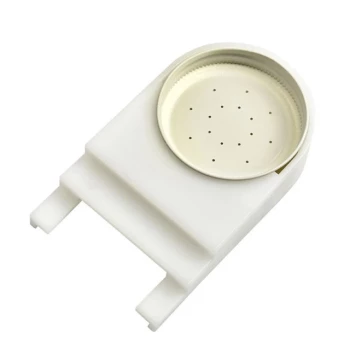
Beekeepers feed sugar syrup to colonies primarily to stimulate population growth, ensure survival during periods of nectar scarcity, and help bees build adequate food stores for winter. This intervention acts as a critical caloric substitute for natural flower nectar, typically applied during the spring or fall to maintain colony health and momentum.
Feeding syrup is a strategic management tool used to bridge the gap between natural resource availability and the colony's energy needs. It prevents starvation when nature falls short and accelerates development when rapid growth is required.
Managing Resource Scarcity
Bridging the "Dearth"
Bees rely on natural nectar for carbohydrates, but environmental factors often cause gaps in availability.
When natural sources are unavailable, feeding syrup prevents starvation and stops the colony from shrinking due to energy conservation.
Ensuring Winter Survival
To survive the winter, a colony must maintain a specific internal temperature, which requires significant energy reserves.
Beekeepers feed syrup in the fall to ensure the hive has sufficient food stores if the bees were unable to gather enough natural honey during the season.
Mitigating High Hive Density
Natural forage is finite and can be depleted quickly in crowded apiaries.
When there are more than two hives per acre, supplemental feeding is often necessary to offset competition and ensure every colony has enough calories to survive.
Stimulating Colony Growth
Accelerating Spring Build-up
Beekeepers use syrup to mimic a nectar flow, signaling the colony to ramp up activity.
This promotes rapid population growth in the spring, ensuring the colony is at full strength to take advantage of the primary bloom or migratory honey flow.
Fueling Comb Construction
Building the wax honeycomb requires a massive caloric investment from the bees.
Syrup provides the consistent energy surplus bees need to secrete wax and build out their infrastructure efficiently, especially when natural resources are inconsistent.
Supporting Vulnerable Colonies
Installing Package Bees
New colonies, such as package bees, are installed into hives with no existing food stores or comb.
Feeding is essential during this unnatural transition to ensure the bees have the immediate energy required to establish their new home.
Recovery and Stabilization
Colonies recovering from stress or unnatural situations often lack the foragers or energy to gather food effectively.
Providing syrup gives these colonies a "free" energy source, allowing them to stabilize without expending their limited energy on foraging flights.
Understanding the Limitations
Calories vs. Complete Nutrition
It is critical to understand that sugar syrup provides calories (carbohydrates) but not protein.
While syrup fuels adult bees and comb building, raising the brood requires protein from pollen. Syrup alone is not a complete nutritional solution for colony expansion; pollen or pollen substitutes are often needed alongside it.
The Risk of Dependency
Feeding is an intervention, not a permanent state for a healthy colony.
The objective is to assist the bees during specific gaps or developmental phases, not to permanently replace their natural foraging behavior.
Strategic Feeding Decisions
To effectively manage your colonies, you must match your feeding strategy to your specific objective.
- If your primary focus is Winter Survival: Prioritize feeding in the fall to help bees backfill the hive with heavy stores for the cold months.
- If your primary focus is Spring Growth: Feed syrup to stimulate the queen to lay eggs and build population strength before the main nectar flow.
- If your primary focus is New Colonies: Provide continuous feed to package bees to fuel the energy-intensive process of building new wax comb.
Successful beekeeping requires using syrup not as a crutch, but as a precise tool to align colony energy levels with environmental realities.
Summary Table:
| Objective | Feeding Season | Primary Benefit |
|---|---|---|
| Winter Survival | Fall | Ensures caloric reserves to maintain hive temperature. |
| Spring Build-up | Early Spring | Mimics nectar flow to stimulate queen laying and population. |
| Comb Construction | Growth Phases | Provides the high energy needed for bees to secrete wax. |
| Scarcity Management | Summer Dearth | Prevents starvation when natural nectar is unavailable. |
| New Installations | Initial Setup | Supports package bees while they establish a new hive. |
Maximize Your Apiary Productivity with HONESTBEE
Strategic feeding is only one part of a successful beekeeping operation. At HONESTBEE, we empower commercial apiaries and distributors with the professional-grade tools needed to scale efficiently. From high-capacity honey-filling machines and automated hive-making equipment to a full spectrum of essential beekeeping consumables, our wholesale solutions are designed for durability and performance.
Ready to elevate your beekeeping business? Contact us today to discover how our comprehensive equipment portfolio can streamline your production and enhance colony health.
Related Products
- HONESTBEE Round Hive Top Bee Feeder for Syrup
- HONESTBEE Entrance Bee Feeder Efficient Hive Front Liquid Feeding Solution for Beekeeping
- Rapid Bee Feeder White Plastic 2L Round Top Feeder for 8 or 10-Frame Bee Hives
- HONESTBEE Professional Hive Top Bee Feeder Feeding Solution
- White Plastic 0.5L Beekeeping Entrance Feeder for Bees
People Also Ask
- What can the round hive top feeder be used for? A Guide to Efficient, Safe Bee Feeding
- What is the capacity of the round hive top feeder for syrup and pollen? A Guide to Targeted Apiary Support
- What types of hive boxes is the round hive top feeder compatible with? Universal Fit for 8 & 10-Frame Langstroth Hives
- What types of feed can be used with the round hive top feeder? Versatile Feeding for Optimal Apiary Health
- How do you use a top feeder for bees? Expert Guide to Installation and High-Volume Hive Feeding