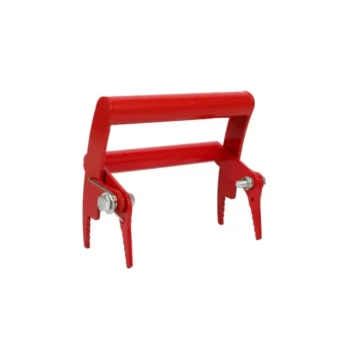
Professional sampling pliers and cutting tools serve a critical role in the structural analysis of Apis florea nests: they are used to physically deconstruct the comb into precise, isolated sections. Researchers employ these instruments to separate the nest's functional zones, enabling the accurate quantification of the colony’s resource allocation and reproductive status.
By enabling the precise physical partitioning of the comb, these tools allow researchers to quantify the relationship between nutritional reserves and reproductive activity, revealing how the colony adapts to periods of scarcity or expansion.
The Process of Nest Deconstruction
Separating Functional Zones
The primary function of these tools is to divide the single-comb nest into its three distinct biological layers.
Researchers use cutting tools to isolate the honey storage area located at the very top of the comb.
Below the honey storage, the tools are used to separate the pollen area in the middle section.
Finally, the brood area at the bottom of the comb is surgically removed for analysis.
Ensuring Data Accuracy
The use of specialized pliers and cutting tools is not merely for convenience; it is a requirement for data integrity.
A clean physical separation ensures that materials from one zone do not contaminate the measurements of another.
This precision is vital when calculating the exact proportion of the nest dedicated to each function.
Scientific Implications of Partitioning
Revealing Nutritional Reserve Patterns
By isolating the top and middle sections, researchers can assess the colony's current nutritional standing.
Measuring the volume or mass of the honey and pollen zones reveals how the colony manages resources during periods of scarcity.
Analyzing Reproductive Strategies
The bottom section of the comb, harvested via cutting tools, provides data on the colony's future population.
Comparing the size of the brood area against the storage areas illuminates the colony's strategy during periods of expansion.
This comparison helps scientists understand the trade-offs the bees make between storing food and raising new members.
Technical Considerations and Trade-offs
The Necessity of Precision
The value of the data derived from this method is entirely dependent on the precision of the cut.
If the cutting tool crushes the cell walls or smears pollen into the honey zone, the resulting proportion measurements will be skewed.
The Destructive Nature of Analysis
It is important to recognize that this form of structural study is destructive.
The "deconstruction analysis" permanently alters the nest, making it a terminal method of study rather than an observational one.
Consequently, this technique provides a snapshot in time rather than a longitudinal view of a single specific nest's evolution.
Making the Right Choice for Your Research
To derive meaningful insights from the samples collected using these tools, align your analysis with your specific biological questions.
- If your primary focus is nutritional ecology: Prioritize the precise separation of the top and middle zones to calculate the ratio of carbohydrate (honey) to protein (pollen) reserves.
- If your primary focus is population dynamics: Focus on the proportion of the bottom brood area relative to the total comb size to determine if the colony is in a maintenance or growth phase.
Precision in deconstruction is the prerequisite for clarity in analysis.
Summary Table:
| Tool Application | Functional Zone | Data Insight Gained |
|---|---|---|
| Precision Cutting | Honey Storage (Top) | Carbohydrate reserves & resource management |
| Section Partitioning | Pollen Area (Middle) | Protein availability & nutritional standing |
| Surgical Removal | Brood Area (Bottom) | Reproductive strategy & population growth |
| Deconstruction Analysis | Total Comb Structure | Nest proportion & environmental adaptation |
Elevate Your Apiary Operations with HONESTBEE
As a professional researcher, commercial apiary, or distributor, you understand that precision is the prerequisite for clarity. At HONESTBEE, we specialize in providing the high-quality beekeeping tools, specialized hardware, and industrial machinery required for both field research and commercial honey production.
Why Partner with HONESTBEE?
- Comprehensive Wholesale Catalog: From professional sampling tools to large-scale honey-filling and hive-making machines.
- Industry Expertise: We supply the full spectrum of equipment and essential consumables tailored for the unique needs of commercial beekeeping.
- Global Support: We cater to distributors and large-scale operations with reliable shipping and high-durability products.
Whether you are conducting structural studies on Apis florea or scaling up a commercial honey brand, our portfolio is designed to enhance your efficiency. Contact us today to discuss your equipment needs and discover how our wholesale solutions can drive your success.
References
- A Zewdu, B Gebreamlak. Assessment of Alien Honeybee Species (Apis florea) in North West and Northern Ethiopia. DOI: 10.15580/gjas.2016.3.012016019
This article is also based on technical information from HonestBee Knowledge Base .
Related Products
- Multi-Function Plier-Style Frame Grip Hive Tool
- Heavy-Duty Plier Action Frame Grip
- HONESTBEE 15-in-1 Beekeeper Multi-Tool with Hammer and Pliers for Beekeeping
People Also Ask
- What are the benefits of a multi-functional hive tool? Streamline Your Apiary Workflow with One Tool
- What advantages do multi-functional hive tools offer? Maximize Your Apiary Efficiency and Workflow
- What tools are used in beekeeping? A Complete Guide to Essential Beekeeping Equipment
- What is the importance of using the right tools in honey production? Boost Quality, Yield & Profitability
- What is the tool used in beekeeping? Master the 4 Essential Tools for Your Hive