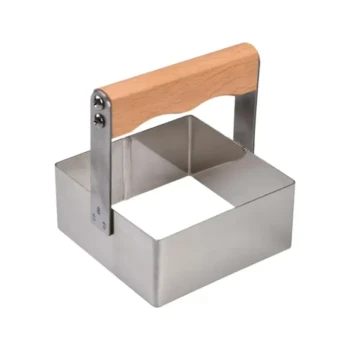
Commercial apiaries should combine cold treatment, sanitation, strong physical barriers, and airflow-managed storage to prevent greater wax moth damage. Freeze susceptible frames using a validated protocol—commonly −18°C to −20°C for approximately 24–48 hours—then transfer them to clean, sealed or moth-resistant storage. Essential equipment includes temperature-controlled freezers, ventilated frame racks, enclosed storage rooms, tightly fitted hive bodies or supers, and tools for cleaning and inspecting combs.
The most reliable strategy is integrated protection: sanitize frames, kill existing eggs and larvae with validated cold treatment, and store combs in cool, bright, dry, well-ventilated equipment that prevents reinfestation.
Why Stored Honeycombs Are Highly Vulnerable
Stored combs lose the colony’s natural protection
Active colonies normally remove or restrict wax moths. Once supers and frames are removed, eggs and larvae can develop with little biological resistance.
Greater wax moth larvae tunnel through comb, create silk webbing, damage wooden frames, and may weaken hive components. Drawn comb therefore represents a significant capital asset that requires dedicated off-season protection.
Warm, dark, humid storage increases risk
Wax moths favor warm, poorly ventilated, undisturbed areas. Accumulated wax debris, silk, cocoons, and damaged timber also provide suitable hiding and breeding sites.
Storage design should therefore reduce temperature, moisture, darkness, and access points rather than relying on a single treatment.
Use Temperature as the Primary Control
Freeze frames before long-term storage
Deep-freezing is one of the most dependable non-chemical methods for protecting stored comb. Commercial operations commonly use temperatures around −18°C to −20°C, with exposure periods of roughly 24–48 hours, depending on load size, equipment performance, and the temperature at the center of the stack.
The entire frame load must reach the target temperature. A freezer’s air temperature alone does not prove that eggs or larvae inside densely packed supers have been exposed sufficiently.
Select freezers for commercial throughput
A suitable freezer or cold-storage unit should provide:
- Verified low-temperature performance, not just a nominal thermostat setting.
- Adequate internal volume for the apiary’s frame inventory.
- Forced-air circulation or an arrangement that allows cold air to reach all supers.
- Temperature logging and alarms for batch verification.
- Shelving or loading space that prevents excessive stacking density.
- Reliable door seals and fast recovery after frequent opening.
After treatment, frames should be moved promptly into protected storage. Repeated thawing and refreezing increases handling risk and can allow surviving pests to resume development.
Treat temperature claims cautiously
A short exposure at approximately +5°C should not be treated as equivalent to deep-freezing unless a validated protocol demonstrates complete control for the specific load and equipment. For commercial use, rely on documented time-temperature procedures rather than an unverified temperature target.
Build Storage Around Airflow and Exclusion
Use ventilated frame storage racks
Racks should hold frames with consistent spacing so air can circulate around the comb. This reduces stagnant, humid pockets and makes inspection easier.
Open or screened rack designs can also increase light exposure, which is generally less favorable to wax moth development than dark, enclosed piles. However, ventilation alone will not protect heavily infested comb.
Choose climate-controlled storage enclosures
For high-value inventories, a climate-controlled room or enclosure provides more consistent protection than improvised stacks. Important features include:
- Stable cool operating conditions.
- Controlled ventilation to limit humidity accumulation.
- Dehumidification or moisture management where required.
- Insect-resistant screens and sealed joints.
- Easy-clean floors and surfaces.
- Space for inspection and stock rotation.
- Temperature and humidity monitoring.
The enclosure should be designed for the actual volume of supers and frames. Overcrowding defeats the purpose of climate control by restricting airflow and creating concealed warm zones.
Prevent moth entry with tight-fitting components
Use sound hive bodies, supers, lids, and storage boxes with tight joints and minimal gaps. Repair cracked timber, damaged corners, loose lids, and openings around stacked equipment.
Tightly fitted components are particularly important when frames are stored in stacks. They reduce access for adult moths while also limiting sheltered locations for egg-laying.
Consider sealed storage only when moisture is controlled
Airtight bags, containers, or wrapped stacks can prevent reinfestation after treatment, but they may also trap condensation. Comb should be clean and dry before sealing, and packaging should be compatible with the chosen treatment.
Sealed storage is most effective when combined with prior freezing and routine inspection. It should not substitute for moisture control.
Prepare Frames Before They Enter Storage
Remove webbing, cocoons, and wax debris
Use frame scrapers and hive tools to remove:
- Silk tunnels.
- Cocoon clusters.
- Larvae and pupae.
- Loose wax debris.
- Propolis and damaged material that obstructs inspection.
Cleaning does not reliably eliminate hidden eggs, so it should be followed by freezing or another approved control method.
Separate clean and suspect inventory
Do not place visibly infested frames beside untreated, clean comb. Quarantine suspect supers, inspect them separately, and clean storage racks after handling them.
A simple inventory system should record treatment date, storage location, frame count, and inspection status. This supports batch traceability and reduces accidental mixing.
Maintain the wider apiary environment
Commercial prevention also depends on removing conditions that support moth populations. Keep bottom boards and equipment areas free of wax debris, repair hive cracks, and avoid leaving unnecessary weak or damaged frames in colonies.
Strong colonies remain an important natural defense, but colony strength does not protect supers stored outside the hive.
Use Biological or Chemical Controls Carefully
Consider Bacillus thuringiensis treatments
A biological treatment containing Bacillus thuringiensis (Bt) can be applied to both sides of comb according to the product label. Bt targets susceptible wax moth larvae and is generally preferred over persistent chemical residues when the product is approved for the intended use.
Application equipment should produce even coverage without damaging fragile comb. Treated frames still require clean, dry, protected storage and periodic inspection.
Treat fumigants as regulated options
Chemical fumigants can present residue, worker-safety, ventilation, and regulatory risks. Paradichlorobenzene should not be used around comb intended for honey production unless specifically legal and approved for that exact application, because residues can contaminate wax and future honey.
Sulfur dioxide and other fumigation approaches also require strict adherence to local regulations, label directions, worker protection, sealed equipment, and complete airing before comb returns to colonies. Chemical treatment should be a controlled last resort—not the default substitute for freezing and sound storage design.
Understanding the Trade-offs
Freezing is effective but capacity-intensive
Cold treatment provides strong control without chemical residues, but commercial operations need sufficient freezer capacity, electrical reliability, loading discipline, and documented temperature performance.
For large inventories, businesses may combine seasonal freezing with ventilated rack storage and regular inspection rather than attempting to freeze every frame simultaneously.
Ventilation reduces risk but does not eradicate pests
Racks, light exposure, and airflow make storage less favorable to wax moths. They do not reliably kill eggs, larvae, or pupae already hidden inside comb or frame joints.
Use ventilation as a prevention layer after sanitation and treatment, not as the sole control method.
Chemical controls can create downstream liabilities
Fumigants may be economical for some large-scale operations, but misuse can expose workers, contaminate wax, damage business reputation, and complicate honey-safety compliance.
Distributors and resellers should provide equipment and treatments with clear application instructions, regulatory documentation, and customer-service support—not simply promote the fastest treatment.
Overpacking defeats storage equipment
Tightly packed supers restrict airflow and make it difficult for cold air to penetrate. They also create inspection blind spots where larvae can remain undetected.
Storage capacity should be calculated using the required spacing, circulation, access aisle, and treatment load—not merely the maximum number of boxes that physically fit.
Making the Right Choice for Your Goal
Select equipment and procedures according to inventory size, storage duration, climate, and regulatory requirements.
- If your primary focus is maximum residue-free protection: Use a validated −18°C to −20°C freezing protocol, temperature logging, clean packaging, and sealed or moth-resistant post-treatment storage.
- If your primary focus is large-volume seasonal storage: Install ventilated frame racks or climate-controlled enclosures with humidity monitoring, inspection access, and enough spacing to prevent stagnant air.
- If your primary focus is rapid operational handling: Standardize frame scraping, batch labeling, quarantine inspection, and transfer procedures so treated comb moves directly into protected storage.
- If your primary focus is sourcing and fulfillment: Choose suppliers that can provide freezers, racks, storage enclosures, monitoring devices, cleaning tools, and approved biological treatments through one coordinated product channel.
- If your primary focus is chemical-risk reduction: Prioritize freezing, sanitation, physical exclusion, and Bt products approved for the intended use before considering regulated fumigation.
With validated treatment, disciplined hygiene, and properly engineered storage equipment, commercial apiaries can preserve drawn comb, reduce replacement costs, and keep valuable frames ready for the next honey flow.
Summary Table:
| Method | Key Requirement | Best For |
|---|---|---|
| Freezing | Deep freeze at -18°C to -20°C for 24-48 hours | Complete kill without chemicals |
| Ventilated Storage | Spaced racks, airflow, and light | Reducing risk of infestation |
| Climate-Controlled Room | Stable cool temps, humidity control | High-value or long-term storage |
| Sealed Storage | Airtight containers (post-freeze) | Preventing reinfestation |
Ensure your comb stays protected with our top-quality storage equipment. From freezers and ventilation systems to monitoring and cleaning tools, we have everything you need to safeguard your hive products. For commercial apiaries and distributors, we offer one-stop sourcing with fast delivery and professional support. Contact us today to find the ideal solution for your operation!
Related Products
- Heavy Duty Stainless Steel Honeycomb Cutter
- Professional Frame Comb Fork and Lifter for Efficient Handling
- Professional Bent Tine Honey Uncapping Fork with Ergonomic Grip
- Heart-Shaped Comb Honey Frame and Honeycomb Cassette
- Professional Wide Blade Honey Scraper for Beekeeping and Honey Processing
People Also Ask
- How is a comb cutter used to produce cut comb honey? Master the Art of Precision Harvesting
- Why is the comb-cutting technique preferred for Apis cerana queen rearing? Boost Success with Natural Bee Biology
- What is the cut comb honey method? A Guide to Pure, Artisanal Honey Production
- How is the cut comb method used to harvest honey? Master the Art of Premium Unprocessed Honey Production
- What is cut comb honey, and how is it prepared? Experience Honey in Its Purest Form