Lorenzo Langstroth revolutionized beekeeping by strictly applying a specific measurement known as "bee space" to the internal architecture of the hive. By maintaining a precise gap of 3/8 of an inch between the wooden frames and the hive walls, he ensured that bees would neither glue the components together nor fill the void with excess wax. This engineering decision allowed frames to remain independent and movable, creating the first practical system for non-destructive hive management.
The Core Insight Before Langstroth, harvesting honey often required destroying the comb and disruption of the colony. Langstroth's design respects the bees' natural instincts: by adhering to the precise "bee space" tolerance, the hive becomes a standardized, modular system where every part remains accessible and manageable.
The Behavioral Science Behind the Design
Langstroth’s innovation was not just about building a box; it was about engineering a space that aligned with biological triggers. He utilized the concept of "bee space" to solve two distinct behavioral problems.
The Problem of Propolis
If a gap inside a hive is too small—specifically under 1/4 inch (6.4 mm)—bees perceive it as a crack in their home.
They instinctively seal these small crevices with propolis, a sticky, resinous substance. This effectively glues hive parts together, making inspection impossible without prying and breaking the equipment.
The Problem of Burr Comb
Conversely, if a gap is too wide—larger than 3/8 inch (9.5 mm)—bees view it as a void that must be utilized.
They will bridge these wide gaps with burr comb (excess honeycomb). This cross-comb connects adjacent frames together, turning the internal structure into a solid, immovable block of wax.
The "Goldilocks" Zone
Langstroth identified that bees leave a gap between 1/4 inch and 3/8 inch completely clear for use as a passageway. By targeting the 3/8 inch measurement in his design, he utilized the maximum space available that bees would still respect as a corridor rather than a wall or a void.
Engineering the Movable Frame
Langstroth applied this biological rule to the physical construction of the hive, resulting in the "movable frame" hive used globally today.
Suspended Frame Architecture
Langstroth designed wooden frames that hang inside the hive box.
Crucially, these frames are not flush with the walls. They are suspended so that a 3/8-inch gap exists on all sides—between the frame and the wall, and between the frames themselves.
Non-Destructive Management
Because the bees interpret this 3/8-inch gap as a walkway, they keep it clean and clear of obstructions.
This allows beekeepers to lift out honey-filled frames for inspection or harvesting without cutting through wax or breaking propolis seals. The colony remains undisturbed, and the comb structure is preserved for reuse.
Understanding the Trade-offs
While the Langstroth design is the industry standard, it relies heavily on precision manufacturing and maintenance.
The Precision Requirement
The effectiveness of the Langstroth hive is entirely dependent on maintaining the specific 3/8-inch tolerance.
If equipment is poorly manufactured and the gap drifts outside the 1/4 to 3/8-inch range, the system fails. A variation of just a few millimeters will result in frames that are either glued down with propolis or bridged with burr comb, negating the benefits of the design.
Material Instability
Wood is an organic material that expands and contracts with moisture and temperature.
Beekeepers must be aware that warping or swelling wood can alter the internal spacing of the hive. Over time, this natural shifting can close the "bee space," leading to stuck frames despite the original design intent.
Making the Right Choice for Your Goal
Whether you are building your own equipment or purchasing a standard setup, understanding the application of bee space is critical.
- If your primary focus is Ease of Management: Stick to standard Langstroth equipment, as the components are mass-produced to meet the specific 3/8-inch spacing requirements, ensuring frames remain movable.
- If your primary focus is Custom or DIY Construction: You must strictly adhere to the 1/4 to 3/8-inch tolerance in your blueprints; failing to do so will result in a hive that becomes fused together by the bees.
By adhering to the precise limits of bee space, you align your management style with the bees' natural instincts rather than fighting against them.
Summary Table:
| Measurement | Bee Perception | Resulting Behavior | Impact on Hive Management |
|---|---|---|---|
| < 1/4 inch (6.4mm) | A crack or crevice | Sealed with propolis | Components become glued together |
| 1/4 to 3/8 inch | A natural walkway | Left clear as a corridor | Frames remain movable and accessible |
| > 3/8 inch (9.5mm) | A void/empty space | Filled with burr comb | Cross-combing creates immovable blocks |
Elevate Your Beekeeping Operation with HONESTBEE
Precision is the difference between a productive season and a management nightmare. At HONESTBEE, we understand the critical importance of the 3/8-inch bee space. We provide commercial apiaries and distributors with precision-engineered equipment designed to honor the biological instincts of the honeybee.
From high-durability Langstroth hives and frames to industrial honey-filling machines and specialized hive-making hardware, our comprehensive wholesale portfolio supports every stage of your business. Whether you are scaling a commercial apiary or stocking your distribution center with premium beekeeping tools and industry consumables, we deliver the quality your colony deserves.
Ready to optimize your production? Contact us today at HONESTBEE to discuss our wholesale offerings and custom machinery solutions.
Related Products
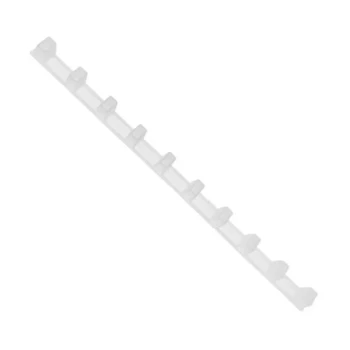
- Durable Plastic Frame Spacer
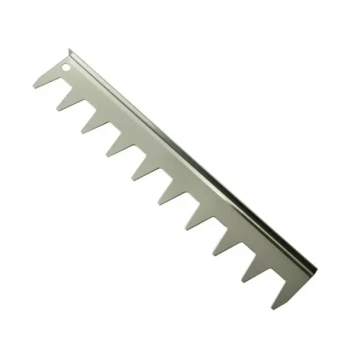
- Stainless Steel 9 Frame Hive Spacer Durable Precise for Commercial Beekeeping
- Ergonomic Plastic Frame Spacer Tool for Rapid Hive Management Beekeeping
- Wholesales Dadant Size Wooden Bee Hives for Beekeeping
- Metal Bee Hive Stand Bee Box Stand for Beekeeping
People Also Ask
- Are plastic bee hive frames good? A Guide to Modern Durability vs. Natural Appeal
- Are plastic bee frames good? A Guide to Durability, Efficiency & Bee Acceptance
- What are the advantages of using Standard Langstroth 10-frame equipment? Scale Your Commercial Apiary Efficiency
- How do you clean plastic frames? A Gentle Guide to Preserving Your Frames
- How must plastic frames be prepared for bees? Expert Tips for 100% Acceptance & Success