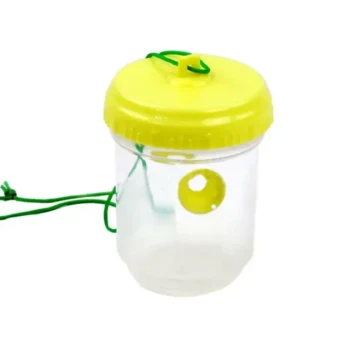
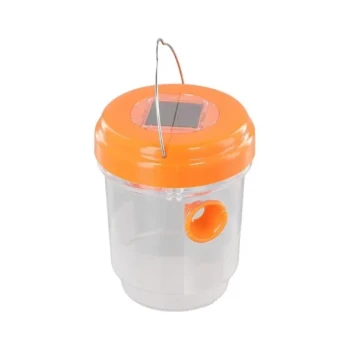
Bait trapping devices serve as a critical physical defense layer by utilizing specific chemical attractants to lure and capture invasive hornets, particularly Vespa velutina nigrithorax. By targeting founding queens or active workers, these devices directly reduce the population density of predators in a specific area, thereby relieving the predation pressure placed on native honeybee colonies.
By capturing founding queens and foraging workers, bait traps function not merely as elimination tools but as strategic instruments for density control and early warning, disrupting the hornet lifecycle before it devastates local apiaries.
The Mechanics of Attraction and Capture
Utilizing Chemical Lures
The core mechanism of these devices is the release of specific chemical attractants. These lures are formulated to draw hornets into the trap, effectively converting their foraging instincts into a vulnerability.
Targeting Key Lifecycle Stages
Bait traps are designed to capture individuals at two critical points in their lifecycle: the founding queens and the workers. Capturing a founding queen prevents the establishment of a new colony, while capturing workers diminishes the workforce available to hunt bees.
Reducing Local Density
The immediate technical goal is to reduce the individual density of hornets within a defined perimeter. By physically removing predators from the environment, the devices lower the overall population capable of attacking nearby hives.
Strategic Role in Colony Defense
Mitigating Predation Pressure
The ultimate function of these devices within a protection strategy is to mitigate predation pressure on native honeybee populations. A lower density of hornets results in fewer attacks, giving the bee colony a better chance of survival and stability.
Early Warning Systems
Beyond physical removal, bait traps serve as a standard technical method for early warning. They alert apiary managers to the presence and expansion of Vespa velutina nigrithorax, allowing for timely intervention before an infestation becomes unmanageable.
Physical Prevention Around Apiaries
These devices are particularly suitable for deployment directly around apiaries. This creates a zone of physical prevention, intercepting predators as they approach the hives to forage.
Understanding the Trade-offs
Localized Impact vs. Eradication
It is important to recognize that bait traps are tools for controlling expansion and density, not necessarily total eradication. They function best within a specific area to reduce immediate threats rather than eliminating the species entirely from a region.
The Need for Specificity
The effectiveness of the trap relies heavily on the specific chemical attractants used. The goal is to maximize the capture of the target invasive species while minimizing the impact on non-target insects.
Implementing Bait Traps Effectively
To integrate bait trapping devices into your protection strategy effectively, align your usage with your specific conservation goals:
- If your primary focus is prevention and monitoring: Deploy devices early in the season to capture founding queens, serving as an early warning system against colony establishment.
- If your primary focus is immediate apiary relief: Position devices around hives to capture foraging workers, directly reducing the density of active predators attacking your bees.
By systematically reducing predator density, bait trapping provides a necessary physical barrier that helps stabilize threatened bee populations against invasive threats.
Summary Table:
| Function | Mechanism | Strategic Impact |
|---|---|---|
| Population Control | Captures founding queens and workers | Disrupts lifecycle and prevents colony establishment |
| Physical Defense | Chemical attractants & traps | Reduces hornet density around apiaries and hives |
| Monitoring | Early warning system | Alerts managers to invasive species presence and expansion |
| Pressure Relief | Target-specific luring | Minimizes predation pressure on native honeybee populations |
Secure Your Apiary’s Future with HONESTBEE
Protecting threatened bee colonies requires more than just passion—it requires professional-grade equipment. At HONESTBEE, we specialize in supporting commercial apiaries and distributors with a comprehensive range of beekeeping tools, specialized hive-making machinery, and essential consumables.
Whether you are looking for high-performance hornet mitigation solutions or honey-filling equipment, our wholesale portfolio is designed to enhance your operational efficiency and colony survival rates. Empower your beekeeping business with the industry’s best—contact HONESTBEE today to explore our full product range!
References
- Ana Bessa, Frederico Santarém. Climate and land‐use drivers of invasion: predicting the expansion of <i>Vespa velutina nigrithorax</i> into the Iberian Peninsula. DOI: 10.1111/icad.12140
This article is also based on technical information from HonestBee Knowledge Base .
Related Products
- Reusable Clear Small Hive Beetle Traps for Beehives Beetle Trapping Tools
- Plastic Beetle Blaster Trap Beekeeping Tools and Supplies
- Gourd Shaped Hanging Wasp Trap Professional Wasp Catcher
- Professional Multi-Component Bucket Wasp Trap
- Reusable Aluminium Beetle Trap for Small Hive Beetles Silver Bullet
People Also Ask
- What is the recommended approach for managing small hive beetles in warm and tropical climates? Build a Strong Hive Defense
- Why are beetle traps less effective during winter? Seasonal Shifts in Pest Control Explained
- When and how should disposable traps for small hive beetles be removed? Master Hive Hygiene and Efficiency
- How do small hive beetle traps contribute to colony management? Enhance Diagnostic Accuracy and Protect Hive Health
- What is the recommended number of beetle traps per hive? Optimize Your Hive's Beetle Defense