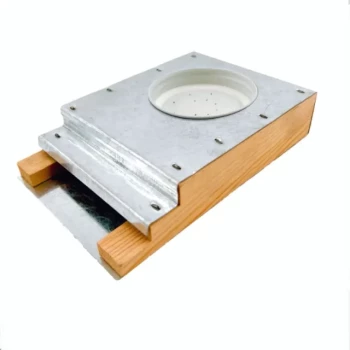
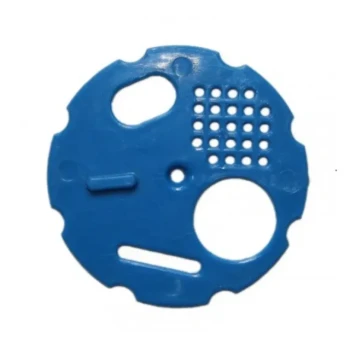
Entrance reducers function as a force multiplier for colony defense. By physically minimizing the size of the hive's opening, they significantly decrease the surface area that guard bees are required to patrol, making it nearly impossible for adult Small Hive Beetles to bypass the colony’s frontline defenses undetected.
Consolidating the entrance transforms a broad vulnerability into a manageable choke point. This physical adjustment allows the colony to concentrate its defensive resources, effectively preventing beetle infiltration before it begins—a strategy that is particularly vital for the survival of weaker or compromised colonies.
The Mechanics of Defensive Consolidation
Reducing the Patrol Perimeter
A standard, wide-open hive entrance presents a massive perimeter that requires a large population of bees to monitor effectively.
An entrance reducer minimizes this physical opening, drastically lowering the "surface area" of the threat. This ensures that the available guard bees are not spread too thin across the threshold.
Concentrating Defensive Forces
By narrowing the physical pathway, the reducer allows the colony to condense its guard force into a tight formation.
This concentration ensures that any adult Small Hive Beetle attempting to enter faces immediate, dense resistance. The beetles are unable to slip past guard bees, which is a common occurrence in hives with undefended gaps.
Strategic Protection for Vulnerable Colonies
Supporting Weak Hives
Strong colonies often have the population density to defend a full entrance, but weak or newly split colonies do not.
For these compromised hives, an entrance reducer is a critical survival tool. It aligns the defensible space with the colony's actual population capabilities, preventing pests from exploiting the hive's lack of numbers.
Preventing Initial Infiltration
The primary utility of the reducer is preventing the initial breach.
Small Hive Beetles cause the most damage once they establish inside and lay eggs. By stopping the adult beetle at the gate, the reducer acts as a preventative shield, protecting the honey, pollen, and brood from biological stress and destruction.
Integration into Pest Management
A Component of IPM
Entrance reducers should be viewed as a fundamental physical barrier within a broader Integrated Pest Management (IPM) strategy.
They do not use chemicals but rely on mechanical exclusion. When combined with the bees' natural defensive behaviors, reducers effectively delay pest spread throughout the apiary.
Enhancing Other Defenses
While reducers handle the front door, they work best when the rest of the hive is secure.
Using precision-manufactured hive components ensures high airtightness, eliminating cracks and crevices elsewhere that beetles could use as alternative entry points.
Understanding the Trade-offs
Ventilation Constraints
While narrowing the entrance blocks pests, it also restricts airflow.
In extremely hot climates or during peak summer, a reduced entrance can lead to overheating or high humidity within the hive. Beekeepers must balance defense against the need for ventilation.
Foraging Traffic Jams
A very small entrance can create a bottleneck for foragers during a heavy nectar flow.
If the entrance is too small relative to the colony's population, incoming and outgoing bees may struggle to pass, potentially reducing foraging efficiency.
Not a Cure for Established Infestations
Entrance reducers are barriers, not traps.
If Small Hive Beetles are already inside the hive, reducing the entrance will not remove them. In fact, if the infestation is severe, it may trap beetles inside; therefore, this tool is best used as a preventative measure rather than a treatment.
Making the Right Choice for Your Goal
To effectively utilize entrance reducers against Small Hive Beetles, assess the current state of your apiary and apply the following guidelines:
- If your primary focus is protecting a weak or new colony: Install the reducer immediately to the smallest setting to maximize the density of guard bees at the entrance.
- If your primary focus is general prevention in strong hives: Use a moderate reducer setting that balances defensive security with adequate airflow and traffic flow for foragers.
By mechanically narrowing the path of entry, you empower your bees to defend their own home more effectively against the persistent pressure of pest invasion.
Summary Table:
| Feature | Defensive Impact | Best Use Case |
|---|---|---|
| Reduced Perimeter | Minimizes the area guard bees must patrol | General prevention in all hives |
| Force Concentration | Creates a choke point for dense resistance | Protecting weak or newly split colonies |
| Physical Barrier | Prevents initial adult beetle infiltration | Integrated Pest Management (IPM) |
| Traffic Control | Balances defense with foraging efficiency | Strong colonies during nectar flow |
Empower Your Apiary’s Defense with HONESTBEE
Don't let pests compromise your productivity. HONESTBEE specializes in supporting commercial apiaries and distributors with high-precision beekeeping tools and machinery designed for maximum hive security. From specialized hive-making equipment to essential industry consumables, our comprehensive wholesale offering ensures your colonies are protected and your operations are efficient.
Ready to scale your beekeeping business with professional-grade hardware and supplies?
Contact our expert team today to discuss your wholesale needs!
References
- Peter Neumann, Marc Oliver Schäfer. Quo vadis Aethina tumida? Biology and control of small hive beetles. DOI: 10.1007/s13592-016-0426-x
This article is also based on technical information from HonestBee Knowledge Base .
Related Products
- Steel Round Disc Entrance Reducer for Flexzion Bee Hive Nuc Box Gate
- Beehive Entrance Reducer Guardian Metal Hive Entrance for Bees
- HONESTBEE Entrance Bee Feeder Professional Hive Nutrition Solution for Beekeeping
- Beehive Entrance Discs Plastic Bee Entrance Disc for Bee Hives
- Professional Hive Front Entrance Bee Feeder
People Also Ask
- What is the purpose of an entrance reducer for a beehive? Strengthen Colony Defense and Prevent Robbery
- Why are entrance reducers used to counter hornet infestations? Protect Your Hive with Strategic Choke Points
- Why is it critical to maintain a smaller entrance for a newly established bee hive? Boost Colony Growth and Security
- Under what conditions should a beekeeper adjust the size of a beehive entrance? Seasonal & Defense Management Tips
- What is the function of an entrance reducer on a beehive? Strengthen Colony Defense and Climate Control