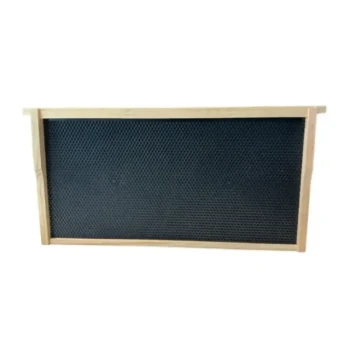
Standardized beehives and high-purity wax foundations function as a controlled manufacturing infrastructure, allowing for the precise production of honey even during non-flowering periods. By replacing natural nectar sources with specialized feeding solutions and utilizing marked foundations, producers can dictate the honey's composition, ensuring a consistent and predictable supply for global distributors.
Controlled non-floral honey production relies on the synergy between standardized hive environments and structural foundations to bypass seasonal limitations. This hardware-driven approach enables the creation of specific honey profiles through artificial feeding while maintaining the mechanical integrity required for industrial extraction.
The Beehive as a Standardized Production Hub
Creating a Controlled Environment
Modern beehives provide the standardized living space necessary for colony stability and environmental control. This predictable habitat allows beekeepers to manage the transition from floral nectar to artificial feeding solutions, such as sugar solutions enriched with plant extracts.
Enabling Selective Harvesting
Advanced hive structures allow for the monitoring of the capping rate, which must typically exceed 70% to ensure maturity. This control over the harvesting timeline is essential for maintaining low moisture content and preventing the post-harvest fermentation that can ruin large-scale B2B shipments.
Facilitating Efficient Management
Standardized frames and internal hardware support routine inspections and rapid scaling for high-volume orders. This physical foundation is what allows for the stable honey yields and rigorous quality control measures that wholesalers require for their supply chains.
The Strategic Role of Internal Wax Foundations
Directing Composition and Purity
By introducing marked, new wax foundations, beekeepers can isolate honey converted specifically from feeding solutions. This method ensures that the resulting product is not contaminated by old residues, providing precise control over the final source and chemical composition of the honey.
Maximizing Energy and Yield
Embossed foundations provide a hexagonal template that reduces the energy bees must spend on wax secretion. By minimizing this biological tax, the colony can dedicate its full energy to processing the provided feeding solutions, significantly increasing total output.
Ensuring Structural Integrity
Professional-grade beeswax foundations enhance the mechanical strength of the frames. This is critical for high-speed centrifugal extraction, allowing the combs to remain intact for cyclic reuse and ensuring that the honey remains free of wax debris during processing.
Understanding the Trade-offs and Pitfalls
Composition vs. Perception
While controlled feeding allows for precise composition, it requires expert management to ensure the balance of nutrients remains healthy for the colony. Distributors must be aware that non-floral honey serves specific industrial and food-service needs that differ from premium, single-origin floral honeys.
The Risk of Immature Harvesting
A common pitfall in controlled production is harvesting before the honey is fully matured. If the 70% capping threshold is ignored to speed up delivery, the resulting high moisture content can lead to fermentation, making the batch unsellable in the wholesale market.
Contaminant Management
The use of low-quality foundations can introduce unwanted chemicals into the wax. To maintain premium trading standards, it is essential to source foundations made from high-purity beeswax to prevent the migration of contaminants into the final honey product.
Optimizing Your Sourcing Strategy
Choosing the right production partner is essential for maintaining a reliable, year-round inventory of controlled honey.
- If your primary focus is consistent year-round supply: Prioritize partners who utilize standardized hive systems and artificial feeding protocols to bypass seasonal nectar gaps.
- If your primary focus is product purity and safety: Select suppliers who use high-purity, marked wax foundations to ensure the honey's composition is accurately tracked and free of residues.
- If your primary focus is industrial processing efficiency: Look for honey produced with reinforced foundations that allow for high-speed centrifugal extraction and minimal particulate matter.
By integrating these technical standards into your procurement process, you can ensure a stable, high-quality supply chain that meets the rigorous demands of the global market.
Summary Table:
| Component | Role in Controlled Production | B2B Strategic Advantage |
|---|---|---|
| Standardized Beehives | Provides a controlled environment for artificial feeding. | Ensures stable, year-round honey yields and consistent supply chains. |
| Marked Wax Foundations | Isolates honey sources and prevents contamination. | Guarantees high product purity and precise chemical composition control. |
| Hexagonal Templates | Reduces energy spent on wax secretion. | Maximizes honey output by redirecting colony energy to processing. |
| Reinforced Frames | Provides structural integrity for high-speed extraction. | Facilitates efficient centrifugal processing and reduces wax debris. |
| Capping Management | Enables precise monitoring of honey maturity (>70%). | Prevents fermentation and ensures low moisture content for safe shipping. |
Scale Your Honey Supply Chain with HONESTBEE
At HONESTBEE, we specialize in empowering commercial apiaries and B2B distributors with the high-performance infrastructure needed for controlled honey production. From hive-making and honey-filling machinery to high-purity wax foundations and essential consumables, we provide a one-stop sourcing solution tailored to your growth.
Why partner with HONESTBEE?
- Comprehensive Portfolio: A full spectrum of beekeeping tools and industrial machinery.
- OEM/ODM Support: Tailored product specifications to meet your market's unique standards.
- Rapid Fulfillment: Ultra-fast delivery and efficient order processing for high-volume orders.
- Industry Expertise: Professional guidance to ensure your supply chain remains reliable and certified.
Ready to enhance your profit margins with a dependable trading partner? Contact us today to receive our full wholesale catalog and expert consultation.
References
- Hibah M. Albasri, E. Nafea. COMPARATIVE STUDY OF SELECTED EGYPTIAN HONEYS AND THEIR ANTIBACTERIAL EFFECTS IN VITRO. DOI: 10.15666/aeer/2305_99759989
This article is also based on technical information from HonestBee Knowledge Base .
Related Products
- Beeswax Machine Press Embosser Wax Foundation Mold Printer Bee Hive Equipment Making Sheet
- Beeswax Foundation Sheets Beehive Foundation for Wholesale
- Notebook Style Beeswax Foundation Mould Wax Foundation Mold
- Colorful Silicone Beeswax Foundation Mold Mould for Beekeeping
- HONESTBEE Wired and Assembled Wooden Bee Frames Foundation for a Thriving Hive
People Also Ask
- What equipment is needed to make beeswax foundation? A Guide to DIY Wax Sheet Production
- What miscellaneous equipment is needed for making foundation? A Guide to the Essential Tools
- What miscellaneous equipment is useful when making beeswax foundation? Essential Support Tools for Beekeepers
- What specific equipment is required for making beeswax foundation? Essential Tools for High-Quality Production
- What is the recommended temperature for melting beeswax to make foundation sheets? Master the 70°C-80°C Ideal Range