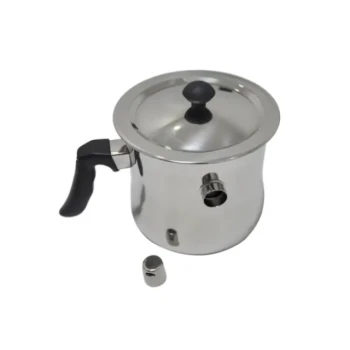
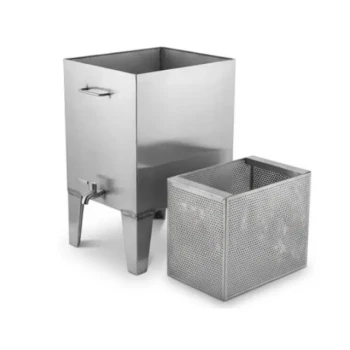
To establish a functional beeswax foundation production line, specific equipment is required to handle the melting, dipping, and temperature regulation processes. The core setup necessitates three separate vats: one dedicated to dipping wax sheets, a second for holding the dipping boards, and a third for melting a continuous supply of wax. This primary system must be supported by pine dipping boards and a hot-box to maintain the pliability of finished sheets.
Core Insight: Successful foundation production relies on temperature control and hygiene. While a three-vat system and wooden boards handle the physical creation of wax sheets, specialized sterilization equipment is the critical differentiator that ensures the wax is free of pathogens like American Foulbrood before it enters the hive.
The Core Production Assembly
To convert raw beeswax into usable sheets, you must control the state of the wax through a specific sequence of heated vessels and physical molds.
The Three-Vat System
The primary reference dictates a configuration of three distinct vats to maintain workflow efficiency. You need a dedicated vat for the actual dipping process and a separate supply vat to melt wax continuously, ensuring the dipping level remains constant.
Board Maintenance
The third vat is specifically required for holding the dipping boards. Keeping these boards at the correct temperature and moisture level is essential to prevent the wax from sticking or cracking during the dipping phase.
Pine Dipping Boards
The material of your equipment matters. Pine dipping boards are the standard requirement for collecting the wax film from the dipping vat. The texture and thermal properties of pine facilitate the smooth release of the wax sheet.
The Hot-Box
Once sheets are dipped, they must not cool too quickly or they will become brittle. A hot-box is required to warm the finished wax sheets, keeping them pliable for subsequent embossing or cutting.
Preparation and Sterilization
Before the wax reaches the dipping vats, it must be refined and treated. This stage is critical for the biological security of the apiary.
High-Pressure Sterilization
Standard melting is often insufficient for disease control. You require high-pressure equipment capable of treating wax at approximately 120°C and 1 atmosphere of pressure.
Pathogen Elimination
This specific heat and pressure combination is the only reliable method to destroy dormant pathogens, specifically American Foulbrood (AFB) spores. Without this equipment, you risk cross-infecting different apiaries with contaminated foundation.
Filtration and Refining
Specialized filtration equipment is necessary to remove physical impurities from the raw wax. Producing high-purity refined beeswax ensures a uniform specification, which is critical for consistent sheet strength.
Forming, Cutting, and Finishing
Once the wax sheets are formed and safe, they must be shaped into the hexagonal pattern and sized for specific hive frames.
Manual Embossing
For manual production, a manual embossing roller is used to press the hexagonal cell pattern into the smooth sheets created by the dipping boards.
Sizing and Trimming
Precision tools are required to cut the continuous ribbon or individual sheets to standard sizes (e.g., 8 inch x 16.5 inch). This includes circular blades installed after rollers for automated width cutting, or manual tools like pizza cutters and masonite templates.
Separation and Lubrication
To prevent sheets from fusing together, you need paper separators (created using a paper cutter) or plastic sheets. A solution of phosphate-free, biodegradable liquid dish soap and water is required to lubricate the dipping boards and embossing rollers.
Understanding the Trade-offs
Producing your own foundation offers control, but it requires balancing equipment costs against operational complexity.
Source Control vs. Processing Complexity
Using your own cappings allows you to create chemical-free foundation, avoiding the contaminants found in commercial mixtures. However, this places the entire burden of sterilization on you; without an autoclave or high-pressure cooker, you cannot guarantee the wax is AFB-free.
Manual vs. Automated Precision
Manual tools like wooden paddles and hand rollers are cost-effective for small batches but suffer from inconsistency. Automated lines with circular blades and continuous melting vats ensure standardized sizing but require a significantly higher capital investment and floor space.
Making the Right Choice for Your Goal
The equipment you select should depend heavily on your production volume and safety requirements.
- If your primary focus is biological safety: Prioritize the high-pressure sterilization equipment (120°C/1 atm) above all else to ensure American Foulbrood spores are eliminated.
- If your primary focus is small-scale self-sufficiency: Start with the three-vat system, pine boards, and a manual embossing roller, using wax strictly from your own healthy hives to minimize disease risk.
- If your primary focus is commercial consistency: Invest in automated embossing rollers with integrated circular blades to ensure every sheet meets precise standard hive dimensions.
The quality of your foundation ultimately depends on the precision of your temperature control and the rigor of your sterilization process.
Summary Table:
| Equipment Category | Essential Tools | Primary Function |
|---|---|---|
| Processing Vats | Three-Vat System | Melting, dipping, and board maintenance at stable temperatures. |
| Forming Tools | Pine Dipping Boards | Collecting wax films with smooth release properties. |
| Conditioning | Hot-Box | Keeping finished wax sheets pliable for embossing and cutting. |
| Bio-Security | High-Pressure Sterilizer | Eliminating pathogens like American Foulbrood (120°C/1 atm). |
| Finishing | Embossing Rollers & Blades | Creating hexagonal patterns and trimming sheets to hive specs. |
| Consumables | Soap Lubricant & Paper | Preventing sticking and separating finished sheets. |
Scaling Your Apiary or Distribution Business?
As a professional beekeeper or distributor, efficiency and biological safety are paramount. HONESTBEE provides the comprehensive industrial solutions you need to succeed. From high-pressure sterilization vats and automated hive-making machines to honey-filling lines and a full spectrum of premium beekeeping tools, we support your growth every step of the way.
Our Value to You:
- Wholesale Excellence: Competitive pricing on full-scale equipment and industry consumables.
- Safety First: Hardware designed to meet the rigorous sterilization standards required for pathogen-free wax.
- Total Solutions: We supply everything from specialized machinery to honey-themed cultural merchandise.
Upgrade your production line today. Contact HONESTBEE Experts to discuss our wholesale offerings and equipment customization.
Related Products
- Beeswax Machine Press Embosser Wax Foundation Mold Printer Bee Hive Equipment Making Sheet
- Fully Automatic Beeswax Embossing Machine Foundation Mill
- Manual Beeswax Comb Foundation Machine Wax Foundation Mill Embossing Machine
- Electric Flatting and Embossing Machine with Tray for Beekeeping
- Electric Beeswax Foundation Machine With Operating Tray and Wax Foundation Roller
People Also Ask
- What equipment is needed to make beeswax foundation? A Guide to DIY Wax Sheet Production
- What miscellaneous equipment is needed for making foundation? A Guide to the Essential Tools
- What miscellaneous equipment is useful when making beeswax foundation? Essential Support Tools for Beekeepers
- What is the recommended temperature for melting beeswax to make foundation sheets? Master the 70°C-80°C Ideal Range
- What are the advantages of implementing a pulley and belt drive system in beeswax foundation machinery? Master Quality.