Controlled-environment hardware and specialized storage facilities reduce losses by establishing a precise defense against environmental degradation. By strictly maintaining optimal temperature and humidity levels, these systems prevent the natural spoilage of honey and shield it from external contaminants. This technological intervention ensures the product remains stable and secure throughout the entire supply chain.
The core function of these facilities is to stabilize the physical and chemical integrity of the honey immediately after harvest. By acting as a barrier against moisture and temperature fluctuations, they transform storage from a passive holding phase into an active preservation strategy.
The Mechanics of Environmental Control
Stabilizing Temperature and Humidity
The primary driver of post-harvest loss in honey is environmental fluctuation. Controlled-environment hardware regulates the ambient climate to slow down chemical reactions that lead to spoilage.
By maintaining specific set points, these facilities prevent the honey from crystallizing prematurely or degrading due to heat exposure. This is critical in regions with unstable weather patterns that could otherwise compromise the harvest.
Preventing Moisture Absorption and Fermentation
Honey is hygroscopic, meaning it naturally absorbs moisture from the air. If the water content rises too high, the honey will begin to ferment, rendering it unsellable.
Industrial-grade storage containers utilize superior sealing technologies that act as a barrier against atmospheric moisture. This prevents the fermentation process before it can start, ensuring the honey retains its intended viscosity and chemical composition.
Hardware Impact on Purity and Integrity
Eliminating Contamination Risks
Unlike recycled containers, which are prone to degradation, industrial storage solutions feature corrosion resistance. This prevents chemical leaching and physical contamination of the honey over long periods.
Specialized filtration equipment further enhances quality by removing particulate impurities. Crucially, this hardware is designed to filter the honey while maintaining its natural physical properties, ensuring the final product remains pure without losing its market value.
Reducing Physical Losses
Economic loss often occurs through simple leakage or structural failure of inferior storage vessels. Industrial packaging solutions are engineered to withstand the rigors of transport and long-term warehousing.
By replacing ad-hoc storage with purpose-built hardware, producers significantly extend the shelf life of their inventory. This directly translates to reduced waste and greater food security within the supply chain.
Understanding the Trade-offs
Initial Investment vs. Operational Savings
While controlled environments and industrial hardware significantly reduce product loss, they require a higher upfront capital investment compared to traditional or recycled storage methods.
Maintenance Requirements
These systems are not "set and forget." Maintaining precise temperature and humidity levels requires reliable energy sources and consistent monitoring to ensure the hardware functions correctly.
Making the Right Choice for Your Operations
To maximize the value of your honey harvest, select your infrastructure based on your specific operational risks:
- If your primary focus is preventing fermentation: Prioritize storage containers with industrial-grade sealing and humidity control to block atmospheric moisture absorption.
- If your primary focus is extending shelf life: Invest in corrosion-resistant hardware and climate-controlled facilities to prevent physical degradation and leakage over time.
- If your primary focus is market purity: Utilize specialized filtration and packaging equipment that removes impurities without altering the honey's chemical profile.
Investing in the right preservation environment is the single most effective step to convert raw harvest volume into reliable economic revenue.
Summary Table:
| Feature | Protection Mechanism | Primary Benefit |
|---|---|---|
| Climate Control | Regulates Temp & Humidity | Prevents premature crystallization and heat degradation |
| Industrial Sealing | Moisture Barrier | Stops hygroscopic absorption and yeast fermentation |
| Corrosion Resistance | Chemical Stability | Eliminates leaching and physical contamination |
| Filtration Systems | Impurity Removal | Maintains market purity without altering chemical profile |
| Engineered Packaging | Structural Integrity | Reduces physical leakage and transport-related waste |
Elevate Your Honey Production with HONESTBEE
Don't let post-harvest losses erode your profits. HONESTBEE provides commercial apiaries and distributors with the professional-grade infrastructure needed to secure every drop of your harvest. From industrial honey-filling machines and specialized hive-making hardware to advanced storage solutions and essential consumables, our comprehensive wholesale offering is designed to maintain your product's integrity from hive to market.
Ready to scale your operations and protect your yield? Contact our specialists today to discover how our beekeeping tools and machinery can optimize your supply chain.
References
- Marcelo Werneck Barbosa. Government Support Mechanisms for Sustainable Agriculture: A Systematic Literature Review and Future Research Agenda. DOI: 10.3390/su16052185
This article is also based on technical information from HonestBee Knowledge Base .
Related Products
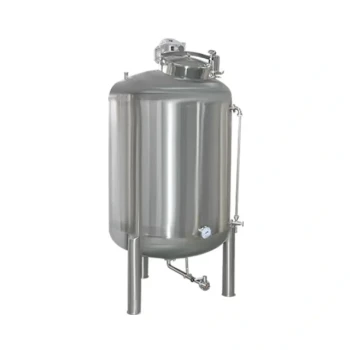
- Stainless Steel Honey Storage and Settling Tank with Double Strainer
- Professional Honey Storage Tank with Agitation System
- Stainless Steel Honey Storage Tank with Lid for Honey
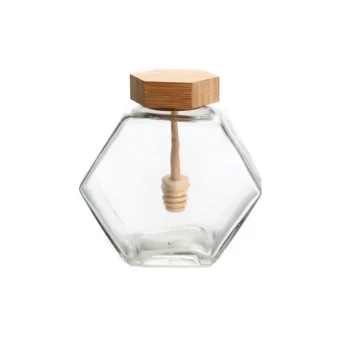
- Hexagonal Glass Honey Jar with Wooden Lid Integrated Dipper Elegant Functional Storage
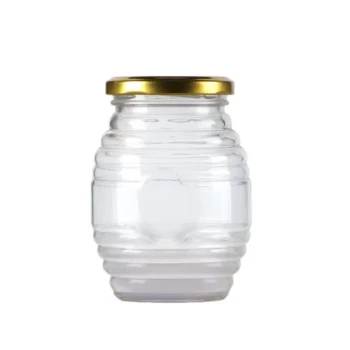
- Classic Glass Honey Jar with Metal Lug Cap for Beehive Storage
People Also Ask
- What economic role do honey storage tanks play? Boost Your Revenue Through Strategic Inventory Management
- What roles do industrial honey storage tanks and filtration meshes play in processing? Ensure Purity & Consistency
- What is the purpose of a honey storage tank? Streamline Your Honey Processing for Quality & Efficiency
- What role do settling tanks play in honey production? Achieve Pure, High-Clarity Honey Naturally
- Why are large settling tanks used in the honey clarification process? Achieve Natural Purity & Batch Consistency