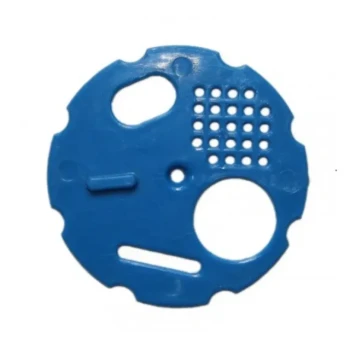
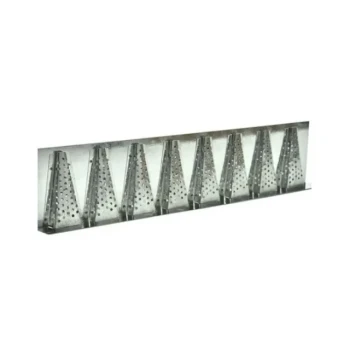
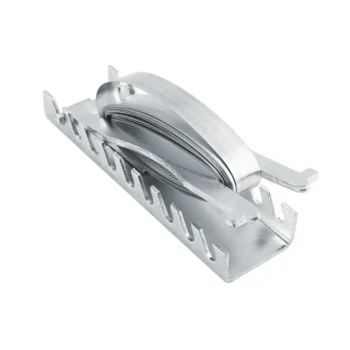
Hive entrance control devices serve as the first line of physical defense by regulating the dimensions of the colony's entry point. These precision-manufactured inserts restrict the opening size to accommodate worker bees while mechanically blocking the larger adult Small Hive Beetles (SHB) from gaining access.
The core strategy is exclusion through precision. By reducing the entrance to a defensible "checkpoint," these devices exploit the physical size difference between the bees and the beetles, preventing the pest from bypassing guards to reach the hive's vulnerable core.
The Mechanics of Physical Exclusion
Exploiting Size Differentials
The primary function of these devices is to leverage the physical size difference between the hive's inhabitants and the invading pests.
Specifically, in the context of stingless bees, the workers are significantly smaller than adult Small Hive Beetles. A precision-manufactured insert creates a physical barrier that is biologically permeable to the bees but impermeable to the beetles.
Creating a Defensive Checkpoint
In technical terms, this is about managing the "Piquera," or hive entrance.
By narrowing the entrance, the device transforms a wide, difficult-to-guard perimeter into a single, manageable defensive checkpoint. This allows the colony to concentrate its guard bees in one specific location, rather than spreading them thin across a large opening.
Protection of the Core
The ultimate goal of this restriction is to secure the internal environment.
By stopping the beetle at the threshold, the device prevents the pest from infiltrating the core area of the hive. This is critical, as beetles seek the dark, protected areas of the hive to hide and reproduce.
Understanding the Limits of Entrance Defense
The Necessity of Internal Inspection
While entrance reducers are effective at blocking adults, they cannot address beetles that may have already bypassed the perimeter or were introduced via other means.
Beetles often hide in dark corners or the undersides of frames. Therefore, relying solely on entrance restriction is insufficient; regular inspection using hive tools and smokers is required to visually verify the colony's health and detect pests early.
The Role of Environmental Controls
Entrance devices defend the "door," but they do not manage the population pressure outside the hive.
Larvae can crawl considerable distances, and adult beetles must be deterred from the apiary grounds. Effective defense often requires supplementary measures, such as managing ground cover with salt or diatomaceous earth (DE), to reduce the overall pest load surrounding the hive.
Making the Right Choice for Your Goal
To effectively protect your apiary, you must combine physical exclusion with active management.
- If your primary focus is Exclusion: Install precision-manufactured inserts that are calibrated to the specific size of your worker bees to physically block adult beetles.
- If your primary focus is Detection: Utilize hive tools and smokers to routinely inspect hidden frame areas and dark corners where beetles congregate.
- If your primary focus is Deterrence: Treat the ground beneath the hive with diatomaceous earth or salt to create a hostile environment for beetle larvae and adults outside the hive.
Physical entrance controls are your shield, but consistent vigilance is your sword.
Summary Table:
| Defense Mechanism | Primary Function | Technical Benefit |
|---|---|---|
| Size Exclusion | Exploits physical size differential | Blocks adult beetles while allowing bee passage |
| Piquera Management | Narrows the entry perimeter | Concentrates guard bees at a single checkpoint |
| Core Protection | Secures internal hive environment | Prevents pests from reaching dark breeding areas |
| Physical Barriers | Precision-manufactured inserts | Provides a mechanically impermeable threshold |
Secure Your Apiary with HONESTBEE Professional Equipment
Protecting your colony from Small Hive Beetles requires more than just luck—it requires precision engineering. HONESTBEE provides commercial apiaries and distributors with the high-quality physical defense tools and essential consumables needed to maintain healthy, productive hives.
Why partner with HONESTBEE?
- Wholesale Excellence: We offer a full spectrum of beekeeping tools, hive-making machinery, and honey-filling equipment.
- Comprehensive Inventory: From precision entrance inserts to hive tools, smokers, and essential consumables, we supply everything your business needs.
- Tailored Solutions: Whether you are managing industrial-scale apiaries or distributing specialized hardware, our products are designed for durability and performance.
Contact HONESTBEE today to discover how our comprehensive wholesale offerings can enhance your beekeeping operations and protect your investments.
References
- Rafael A. Calderón-Fallas, Luis Sánchez-Chaves. Revisión sobre la presencia del Pequeño Escarabajo de la Colmena, Aethina tumida (Coleoptera: Nitidulidae) infestando colonias de abejas nativas sin aguijón (Apidae: Meliponini). DOI: 10.15359/rcv.41-1.3
This article is also based on technical information from HonestBee Knowledge Base .
Related Products
- Steel Round Disc Entrance Reducer for Flexzion Bee Hive Nuc Box Gate
- Beehive Entrance Reducer Guardian Metal Hive Entrance for Bees
- Multi-Functional Rotary Hive Entrance Disc for Beekeeping
- Professional Hive Front Entrance Bee Feeder
- Beehive Entrance Discs Plastic Bee Entrance Disc for Bee Hives
People Also Ask
- What is the purpose of an entrance reducer for a beehive? Strengthen Colony Defense and Prevent Robbery
- Why are entrance reducers used to counter hornet infestations? Protect Your Hive with Strategic Choke Points
- Why is it critical to maintain a smaller entrance for a newly established bee hive? Boost Colony Growth and Security
- Under what conditions should a beekeeper adjust the size of a beehive entrance? Seasonal & Defense Management Tips
- What is the function of an entrance reducer on a beehive? Strengthen Colony Defense and Climate Control