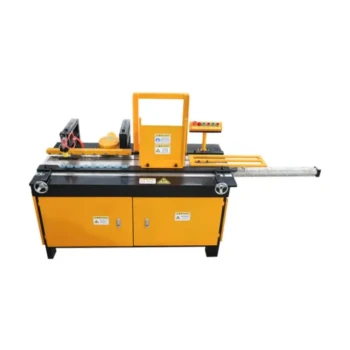
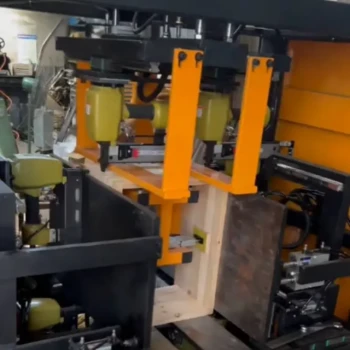
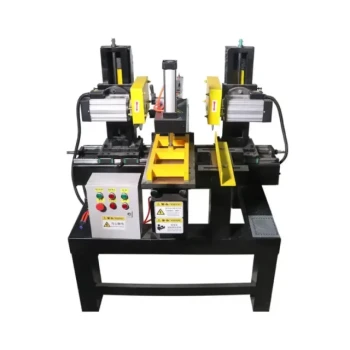
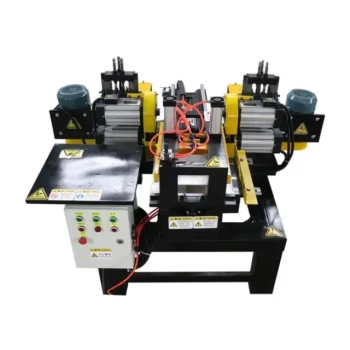
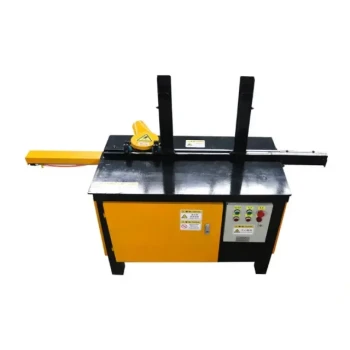
Hive-making machines ensure structural quality by utilizing high-precision woodworking technology to strictly adhere to the biological requirements of the colony, specifically "Bee Space." By mechanically enforcing these exact dimensions, the equipment eliminates structural inconsistencies, preventing the colony from altering the hive's architecture in ways that hinder human management.
The core advantage of automated hive manufacturing is the rigorous enforcement of biological standards. By guaranteeing precise gap dimensions, these machines prevent bees from cementing components together, preserving the hive’s modularity and enabling efficient, scientific apiary management.
The Role of Precision in Hive Health
Adhering to Bee Space Principles
The primary function of a hive-making machine is to cut and shape components that respect Bee Space.
This refers to the specific gap size bees leave open for movement. If the gaps between components are too wide or too narrow, the colony's natural behavior changes.
Eliminating Irregular Comb Construction
When hive dimensions are inaccurate, bees often fill the excess space with irregular combs (burr comb).
High-precision machinery ensures that frames and boxes fit perfectly, removing the extra space that triggers this unwanted construction. This keeps the combs straight and confined to the frames, which is essential for inspection.
Impact on Apiary Management Standards
Preventing Propolis Buildup
Bees instinctively seal gaps that are too small with propolis, a sticky resinous substance.
If a hive is manufactured with inconsistent tight spots, bees will glue the parts together. Machine precision maintains the correct spacing, preventing this gluing and ensuring beekeepers can separate hive parts without excessive force or damage.
Preserving Modular Functionality
Modern apiary management relies on the ability to move frames and boxes between different hives.
Machine-made hives offer standardized modularity, meaning a component from one hive fits perfectly into another. This interchangeability is the foundation of scientific management, allowing for resource balancing and efficient disease control.
Understanding the Operational Trade-offs
The Requirement for Calibration
While machines offer superior consistency, they depend entirely on rigorous calibration.
If the machinery drifts even slightly from the Bee Space specification, the error is replicated across thousands of units. This turns a minor deviation into a systemic management failure across an entire apiary.
Reliance on Material Stability
Precision machining creates perfect cuts, but it cannot change the nature of the wood itself.
Even perfectly machined components rely on the stability of the raw material. If the wood warps or shrinks significantly after processing, the precise "Bee Space" gaps established by the machine can be compromised.
Ensuring Long-Term Apiary Success
To leverage the benefits of precision manufacturing, focus on how these standards align with your management goals.
- If your primary focus is Colony Health: Ensure your equipment maintains exact Bee Space dimensions to reduce stress and prevent irregular comb building.
- If your primary focus is Operational Efficiency: Prioritize standardized, machine-cut components to ensure modularity and prevent parts from being propolized shut.
Investing in precision-manufactured equipment is the most effective way to align the biology of the bee with the logistics of the beekeeper.
Summary Table:
| Feature | Precision-Made Advantage | Impact on Management |
|---|---|---|
| Bee Space Adherence | Maintains exact gaps (6-9mm) | Prevents colony stress and irregular comb building |
| Dimensional Accuracy | Eliminates excess gaps/tight spots | Prevents propolis buildup; easy frame removal |
| Standardized Modularity | Identical component dimensions | Enables resource balancing across different hives |
| Automated Cutting | High-precision woodworking | Ensures uniform quality across thousands of units |
Elevate Your Apiary Production with HONESTBEE
At HONESTBEE, we empower commercial apiaries and distributors with the high-precision tools necessary for modern, scientific beekeeping. Our industry-leading hive-making machines and honey-filling equipment are designed to meet rigorous biological standards, ensuring your hives maintain perfect 'Bee Space' and modular efficiency.
Whether you are scaling your operation or supplying the market, our comprehensive wholesale portfolio—ranging from specialized machinery to essential consumables and honey-themed cultural merchandise—provides the quality you need to succeed.
Ready to optimize your production? Contact us today to explore our full equipment range!
References
- Michaela Fenske. The Urban Beekeeper. DOI: 10.1002/germ.201970206
This article is also based on technical information from HonestBee Knowledge Base .
Related Products
- High-Efficiency Pneumatic Bee Hive Making Machine for Rapid Box Assembly
- Mini Desktop Bee Hive Frame Forming Making Machine
- Beehive Handle and Frame Rest Cutting Machine: Your Specialized Hive Machine
- Automatic High-Speed Bee Hive Box Stapling Machine
- Beehive Machine Double End Saw for Precision Hive Component Manufacturing
People Also Ask
- How does the introduction of professional beehive-making machinery benefit sustainable beekeeping? Scale Your Apiary
- Why is specialized beehive-making machinery critical for low-defense breeding? Enhance Selection with Precision Tools
- How does the introduction of specialized beehive making machinery contribute to increasing the scale of regional beekeeping industries?
- What is the importance of specialized beehive making machinery in a circular bio-economy? Build Local Sustainability
- Why is specialized beehive-making machinery essential? Scale Your Apiary with Precision Industrial Standards