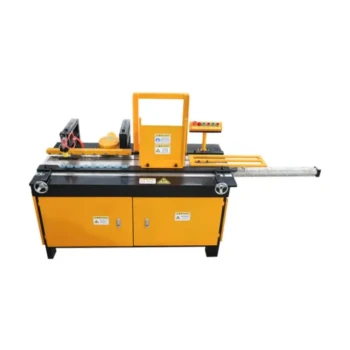
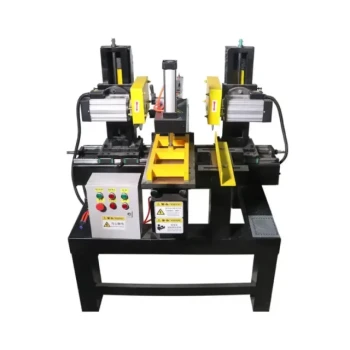
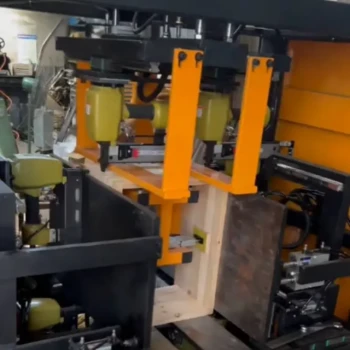
Industrial-grade hive-making machines fundamentally transform commercial beekeeping by shifting production from manual craftsmanship to automated, high-precision manufacturing. By ensuring that every hive body and frame maintains exact internal dimensions, these machines create the standardization necessary to scale operations from dozens of colonies to thousands.
The Core Takeaway The primary value of industrial hive machinery is interchangeability. By producing components with zero variance, these machines allow beekeepers to move frames and boxes seamlessly between hives, which is the operational key to unlocking labor efficiency and rapid commercial expansion.
The Role of Standardization in Colony Management
Precision as a Prerequisite for Scale
To manage an apiary at an industrial scale, "craft" variations must be eliminated.
Industrial machines ensure internal dimensions and frame specifications are perfectly uniform. This precision is not merely aesthetic; it is the structural foundation that allows a business to scale.
Simplifying Complex Operations
The ability to swap components between hives dictates the speed of management.
With standardized frames, complex biological tasks—such as colony splitting, merging, and pest inspections—become routine procedures. Resources like brood or honey can be instantly transferred from a strong colony to a weak one without hardware compatibility issues.
Maximizing Labor Efficiency
When equipment fits together perfectly every time, labor hours are significantly reduced.
Field workers do not waste time adjusting ill-fitting frames or repairing inconsistent boxes. This efficiency increases the management capacity of each beekeeper, allowing fewer staff to care for a larger number of hives.
Driving Economic Scalability
Removing Growth Bottlenecks
Manual hive construction is slow and often caps the growth rate of an apiary.
Automated machinery provides a high-volume supply chain, alleviating growth bottlenecks caused by hive shortages. This allows commercial enterprises to rapidly expand colony counts and breeding density to meet market demand.
Reducing Hardware Costs
Standardization via automation drives down the unit cost of infrastructure.
By utilizing high-precision cutting and assembly processes, these machines minimize material waste and labor costs. This lowers the financial barrier for rapid deployment, making it economically viable to maintain the massive inventory required for commercial honey production.
Facilitating Logistics and Mechanization
Enabling Migratory Beekeeping
Commercial operations often require transporting thousands of hives across long distances.
Machine-produced hives offer the structural consistency and durability needed for cross-regional transportation. Uniform boxes stack securely, maximizing space on trucks and minimizing damage during the migration process.
Supporting Automated Extraction
The benefits of precision extend to the honey house.
Standardized frames are a prerequisite for unified extraction equipment. When every frame is identical, uncapping and spinning machines can operate at maximum speed without jamming or breaking combs.
Understanding the Trade-offs
High Initial Investment
While unit costs decrease over time, the upfront capital required for industrial-grade machinery is significant.
Beekeepers must weigh this investment against their projected scale. For operations under 150 colonies, the efficiency gains may not immediately offset the cost of the machinery itself compared to manual methods.
Rigidity of Standardization
Industrial processing relies on uniformity, which can limit flexibility.
Once a specific dimensional standard is adopted (e.g., Langstroth dimensions), shifting to a different hive style becomes operationally difficult. The enterprise becomes "locked in" to that specific hardware ecosystem.
Making the Right Choice for Your Goal
To determine how industrial hive-making technology fits your operation, consider your primary objectives:
- If your primary focus is Rapid Expansion: Prioritize machinery that offers high-speed automated assembly to eliminate hardware shortages during the swarm season.
- If your primary focus is Operational Efficiency: Focus on the precision of frame manufacturing to ensure seamless interchangeability during inspections and splits.
- If your primary focus is Migratory Beekeeping: Ensure the machinery produces structurally durable, perfectly square boxes that stack securely for transport.
Ultimately, industrial hive-making machines are not just about building boxes; they are about building a predictable, scalable infrastructure that turns beekeeping into a manageable industry.
Summary Table:
| Key Feature | Benefit for Commercial Apiaries | Operational Impact |
|---|---|---|
| Dimensional Precision | Zero variance in hive components | Guaranteed interchangeability of frames/boxes |
| Automated Production | High-volume supply chain | Removes growth bottlenecks during rapid expansion |
| Standardized Frames | Uniform hardware specifications | Enables use of high-speed automated extraction |
| Structural Durability | Consistent, square box construction | Facilitates secure stacking for migratory transport |
| Labor Optimization | Reduced manual assembly/adjustments | Increases colony management capacity per worker |
Scale Your Beekeeping Enterprise with HONESTBEE
Transitioning to large-scale commercial beekeeping requires more than just bees—it requires a predictable, high-precision infrastructure. HONESTBEE specializes in empowering commercial apiaries and distributors with the professional-grade tools needed to dominate the market.
From industrial hive-making machines that ensure perfect standardization to automated honey-filling systems and high-capacity extraction machinery, we provide the full spectrum of beekeeping hardware. Whether you are expanding your colony count or optimizing a wholesale distribution network, our comprehensive portfolio of tools and essential consumables is designed to maximize your labor efficiency and reduce unit costs.
Ready to industrialize your honey production? Contact HONESTBEE Today to discuss our wholesale offerings and discover how our equipment can transform your operational scalability.
References
- Abadi Kidanemariam Berhe, Delenasaw Yewhalaw. Community Perception on Beekeeping Practices, Management, and Constraints in Termaber and Basona Werena Districts, Central Ethiopia. DOI: 10.1155/2016/4106043
This article is also based on technical information from HonestBee Knowledge Base .
Related Products
- High-Efficiency Pneumatic Bee Hive Making Machine for Rapid Box Assembly
- Beehive Handle and Frame Rest Cutting Machine: Your Specialized Hive Machine
- Beehive Machine Double End Saw for Precision Hive Component Manufacturing
- Mini Desktop Bee Hive Frame Forming Making Machine
- Automatic High-Speed Bee Hive Box Stapling Machine
People Also Ask
- How does the introduction of professional beehive-making machinery benefit sustainable beekeeping? Scale Your Apiary
- Why is specialized beehive-making machinery critical for low-defense breeding? Enhance Selection with Precision Tools
- How does the introduction of specialized beehive making machinery contribute to increasing the scale of regional beekeeping industries?
- What is the importance of specialized beehive making machinery in a circular bio-economy? Build Local Sustainability
- Why is specialized beehive-making machinery essential? Scale Your Apiary with Precision Industrial Standards