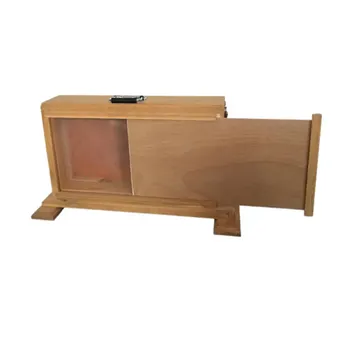
Modern beehives generally deliver substantially higher annual honey yields and better sanitation control than traditional hives. Traditional hives typically produce about 5–10 kg of honey per hive annually, with some sources placing the upper limit near 7 kg. Modern frame and top-bar systems can produce approximately 20–45 kg per hive per year, depending on colony strength, forage, climate, and management, while their standardized and inspectable structures support cleaner, more controlled production.
Modern hive equipment is not simply a housing upgrade; it is production infrastructure. By improving colony management, inspection, harvesting, and sanitation, it gives commercial apiaries a more reliable foundation for increasing output and financial returns.
Why Modern Hives Produce More Honey
Standardized Space Improves Colony Management
Modern hives provide organized internal space through standardized frames, bars, and hive components. This allows colonies to separate brood areas from honey-storage areas more effectively and gives beekeepers greater control over how the colony uses available room.
Traditional hives offer less predictable internal organization. Their fixed or irregular comb structures make it harder to manage storage capacity, expand the colony, or intervene at the right time.
Removable Frames Enable More Frequent Harvesting
The detachable structure of modern hives allows beekeepers to inspect combs and remove mature honey without destroying the colony’s entire nest. This supports more efficient harvesting and, where local conditions permit, multiple harvests per year.
Traditional hives often require comb destruction or substantial disturbance during harvest. That reduces the colony’s stored resources and can limit the frequency and efficiency of production.
Higher Yield Per Hive Improves Apiary Efficiency
Available production figures vary by region and operating conditions, but the comparison is consistent: modern hives can produce several times more honey per hive than traditional systems. One modern hive may perform approximately like two traditional hives in production terms, while requiring less space and enabling more systematic management.
For a commercial apiary, this difference compounds across hundreds or thousands of colonies. Higher productivity per hive can reduce the number of units, sites, labor hours, and handling steps needed to reach a target output.
How Modern Hives Improve Sanitation
Inspectable Comb Makes Problems Easier to Detect
Modern hive components can be removed and examined individually. Beekeepers can inspect brood health, identify pests or disease symptoms, assess food stores, and isolate problematic combs before issues spread through the apiary.
Traditional hives make these inspections more difficult because the comb is often fixed to the structure. Limited visibility can delay detection and make corrective action more disruptive.
Standardized Equipment Supports Cleaner Handling
Modern hive equipment creates a more consistent production environment. Standard dimensions make it easier to replace damaged or contaminated components, maintain orderly storage, and apply repeatable cleaning and maintenance procedures.
This supports higher hygiene standards, but the equipment itself does not guarantee sanitary honey. Clean extraction tools, appropriate storage, responsible colony management, and compliance with food-safety requirements remain essential.
Better Control Helps Protect Honey Purity
A managed frame system reduces unnecessary comb damage and makes it easier to separate brood, pollen, and honey. That gives beekeepers greater control over what enters the harvest and helps support more consistent honey purity.
Traditional systems can still produce quality honey when carefully managed, but their limited inspectability and less standardized structure make consistent control more difficult at commercial scale.
Why Commercial Apiaries Need Modern Equipment
It Converts Beekeeping Into a Repeatable Production Process
Commercial production depends on repeatability. Standardized hives, frames, stands, feeders, protective equipment, and harvesting tools allow teams to follow consistent inspection, maintenance, and collection procedures across many colonies.
This is particularly important for distributors and B2B suppliers serving professional apiaries. A complete, compatible product portfolio reduces procurement complexity and helps customers standardize their operations.
It Increases Revenue Potential Per Colony
Higher yield per hive creates more value from the same colony and apiary footprint. It can also improve the economics of labor, transportation, extraction, packaging, and site management because more honey is produced through a controlled system.
Modern equipment additionally supports more efficient recovery of valuable byproducts such as beeswax and pollen. These secondary outputs can strengthen the commercial return of an apiary when collected and processed appropriately.
It Supports Disease and Pest Monitoring
Commercial apiaries must monitor colonies systematically rather than relying on occasional visual checks. Removable frames and accessible hive interiors make routine inspection more practical and help beekeepers respond earlier to disease, pest, queen, or nutrition problems.
Early intervention can protect colony health and reduce the operational disruption associated with widespread problems. The result is better continuity of production across the season.
It Makes Scaling More Practical
Traditional hives may be suitable for local or low-volume beekeeping, but their irregular designs create difficulties when an operation expands. Modern systems use consistent dimensions, interchangeable components, and established management methods that are easier to teach, transport, stock, and maintain.
For suppliers, this creates a clear operational advantage: customers can source replacement parts and complementary equipment through one coordinated supply channel instead of assembling incompatible products from multiple vendors.
Understanding the Trade-offs
Yield Is Not Guaranteed by the Hive Alone
A modern hive can provide greater production capacity, but actual yield depends on forage availability, weather, colony genetics, queen quality, disease control, nutrition, and beekeeper skill. Figures such as 20–45 kg per hive should be treated as potential or reported ranges, not universal guarantees.
A poorly managed modern hive may underperform, while a carefully maintained traditional hive may produce respectable results in favorable conditions.
The Initial Investment Is Higher
Modern hives require capital for boxes, frames, foundations or bars, stands, covers, feeders, protective clothing, tools, and extraction equipment. Commercial operators must also account for transport, storage, replacement components, and worker training.
The investment is justified when higher yield, lower handling difficulty, improved sanitation control, and longer-term scalability outweigh the initial cost.
Standardization Requires Operational Discipline
Modern equipment works best when components are compatible and maintained consistently. Poorly fitting parts, damaged frames, inadequate cleaning, or inconsistent inspections can undermine both productivity and hygiene.
Commercial buyers should evaluate not only unit price, but also product quality, dimensional consistency, material durability, replacement availability, delivery speed, and supplier responsiveness.
Making the Right Choice for Your Goal
Modern hive equipment should be selected as part of a complete production system rather than as an isolated purchase.
- If your primary focus is higher honey yield: Choose standardized frame or top-bar systems that maximize usable storage space, support colony expansion, and enable efficient inspection and repeated harvesting.
- If your primary focus is sanitation and honey purity: Prioritize removable components, cleanable materials, controlled honey handling, and equipment that allows brood, pollen, and honey areas to be inspected separately.
- If your primary focus is commercial scaling: Build a standardized apiary platform with interchangeable hive parts, compatible harvesting tools, reliable replacement stock, and a supplier capable of one-stop fulfillment.
- If your primary focus is procurement efficiency: Work with a responsive supplier offering a full-spectrum product range, technical expertise, dedicated service, and rapid delivery for coordinated order fulfillment.
For commercial apiaries, modern hive equipment provides the practical control needed to produce more honey, maintain higher sanitation standards, and scale with greater confidence.
Summary Table:
| Aspect | Traditional Hives | Modern Hives |
|---|---|---|
| Annual Honey Yield | 5-10 kg per hive | 20-45 kg per hive |
| Sanitation Control | Limited inspectability, fixed comb | Inspectable frames, standardized components |
| Harvesting Efficiency | Destructive or disruptive | Non-destructive, multiple harvests possible |
| Scalability | Difficult, irregular design | Easy, interchangeable parts |
| Investment | Lower initial cost | Higher initial cost, but better ROI |
Ready to transform your apiary? HONESTBEE is your one-stop partner for commercial beekeeping. We supply the full spectrum of modern hives, machinery, and consumables – from hive-making to honey-filling – and offer OEM/ODM support, certifications, and rapid delivery. Whether you're a distributor seeking reliable supply or a beekeeper aiming to scale, our dedicated team ensures fast response and expert guidance. Contact us today to discuss your wholesale needs and unlock higher yields with efficient, hygienic solutions. Contact us now!
Related Products
- Modern Flat-Mount Hive Number Set for Beekeeping
- Professional Observation Hive: The Ultimate Portable Solution for Beekeeping Education, Exhibitions, and Colony Displays
- Professional Insulated Plastic Bee Hives
- High-Performance Langstroth Bee Hives for Global Professional Beekeeping
- Metal Bee Hive Stand Bee Box Stand for Beekeeping
People Also Ask
- What is the impact of regular technical extension contact on the management of modern beekeeping hives? Enhance Hive Efficiency
- What are the primary advantages of modern beekeeping hives? Scale Your Apiary with Industrial Efficiency
- What are the structural and management advantages of modern beekeeping hives? Scale Your Honey Yields Today
- Why should the promotion of modern beekeeping hives be integrated with professional beekeeping tool kits and technical support?
- Why do forest beekeepers consider transitioning from traditional bark hives? Modernizing for Sustainable Yields