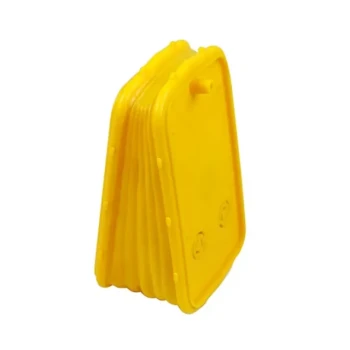
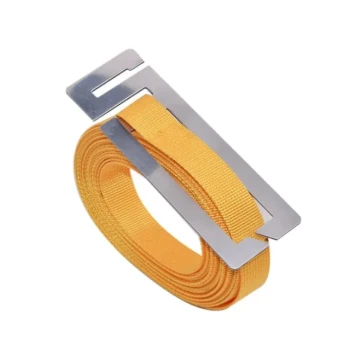
Moving objects function as passive behavioral conditioning tools for honeybees. By placing dynamic items, such as fluttering plastic strips, near the hive entrance, beekeepers expose the colony to continuous, low-intensity visual stimuli. This process teaches the bees to disregard movement as a threat, significantly reducing their defensive response to passing humans or livestock.
Core Takeaway This method relies on visual desensitization to normalize a dynamic environment for the colony. By habituating bees to constant motion, apiarists can maintain "friendly" colonies in semi-intensive settings or populated areas where natural defensive triggers would otherwise cause safety issues.
The Biological Mechanism
Visual Desensitization
Honeybees are naturally evolved to perceive large moving objects near their nest as potential predators.
By introducing an object that moves constantly but offers no actual threat, the bees undergo a process of habituation. Over time, their sensory systems stop flagging this visual input as a danger signal.
Raising the Defensive Threshold
In a standard apiary, a sudden movement usually triggers guard bees to release alarm pheromones.
However, when bees are acclimated to moving strips, the threshold for this reaction is raised. The colony learns to tolerate visual disturbances that would typically incite a stinging response.
Practical Application in Apiary Management
Accustoming Bees to Dynamic Environments
The primary goal of using moving objects is to simulate a busy environment in a controlled manner.
Plastic strips catch the wind, creating the continuous, low-intensity stimuli required for this conditioning. This prepares the bees for real-world disturbances, such as tree branches swaying or people walking nearby.
Facilitating Proximity to Villages
This technique is particularly valuable for semi-intensive beekeeping located near human habitation.
By dampening the colony's reactive nature, beekeepers can keep hives closer to villages or livestock with a reduced risk of unprovoked attacks. It maintains a "friendly" colony state essential for community safety.
Understanding the Trade-offs
Habituation vs. Genetics
It is critical to understand that this method modifies behavior, not genetics.
While it reduces reactiveness to movement, it does not change the breed's underlying aggression levels. If the hive is disturbed by vibrations or strong odors (like sweat or alcohol), the bees may still react defensively regardless of the visual aids.
Specificity of the Stimulus
The desensitization is specific to visual triggers.
Bees accustomed to plastic strips may ignore a walking human, but they may still react aggressively to other stimuli, such as opening the hive for inspection. This is a management aid, not a replacement for protective gear or smoke.
Making the Right Choice for Your Goal
To determine if moving object aids are right for your apiary, consider your environment:
- If your primary focus is safety near populated areas: Implement moving visual aids to desensitize the colony to frequent human or animal movement, reducing the radius of the "danger zone" around the hive.
- If your primary focus is remote, commercial production: This technique may be less critical, as the bees are rarely exposed to external movement triggers outside of scheduled inspections.
By strategically using visual stimuli, you transform a defensive reflex into manageable tolerance.
Summary Table:
| Feature | Description | Impact on Management |
|---|---|---|
| Mechanism | Passive visual habituation | Reduces defensive triggers from motion |
| Primary Tool | Fluttering plastic strips | Provides constant, low-intensity stimuli |
| Core Benefit | Raised defensive threshold | Safer hive placement near people/livestock |
| Limitation | Specific to visual triggers | Does not replace smoke or protective gear |
| Best Use Case | Semi-intensive/Urban apiaries | Maintains "friendly" colonies in busy areas |
Elevate Your Apiary Operations with HONESTBEE
Maintaining a safe and productive apiary requires the right balance of biological management and high-quality equipment. At HONESTBEE, we empower commercial apiaries and distributors by supplying a comprehensive range of professional tools and machinery.
Whether you are looking for specialized beekeeping hardware, advanced honey-filling machines, or durable consumables, our wholesale portfolio is designed to meet the demands of large-scale operations.
Ready to scale your beekeeping business?
Contact us today to discover how our premium equipment and industry expertise can streamline your production and enhance your value to customers.
References
- Wolfgang Edrich. In Search of an Appropriate Beekeeping Technology for African Honey Bees. DOI: 10.1080/0005772x.2010.11417361
This article is also based on technical information from HonestBee Knowledge Base .
Related Products
- Yellow Plastic Bucket Pail Perch for Beekeeping
- Durable Plastic Hive Number Set for Beekeeping
- Durable Plastic Interlocking Hive Connector for Beekeeping
- All-Weather Plastic Bellows for Bee Smokers
- Plastic Bee Frame Beekeeping Hive Frames for Wholesale
People Also Ask
- What are the strategic benefits of installing beekeeping hives at an elevation of 1 to 6 meters? Protect Your Assets
- What are the key advantages of modern improved beekeeping hives? Scale Your Honey Yield and Production Efficiency
- How do container-type consumables like plastic buckets function in urban beekeeping systems? Expert Setup Tips
- What are the advantages and disadvantages of plastic beekeeping equipment? Choose the Best Gear for Your Apiary
- Why Increase Hive Installation Quantity in Commercial Apiaries? Offset Climate Risks with Scalable Infrastructure