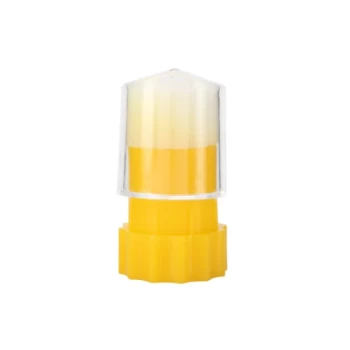
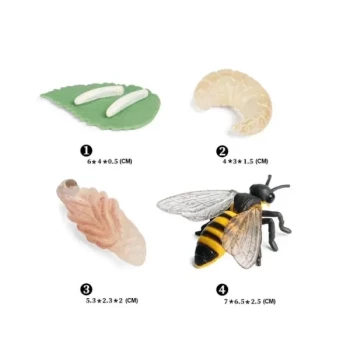
Professional marking materials ensure accuracy by enabling the distinct identification of thousands of individual bees or specific age cohorts within a colony. By using tools like colony-specific tags or non-toxic pigments, researchers can trace movement with granular precision. This specific identification is the only way to reliably differentiate between random behavior and targeted migration.
The accuracy of mark-recapture experiments hinges on the ability to distinguish between accidental "drifting" and purposeful "active dispersal." Professional marking materials provide the data resolution necessary to build precise quantitative models of how parasitic bees transmit horizontally between colonies.
The Mechanics of Precision Tracking
Mass Identification of Cohorts
To generate statistically significant data, researchers must often track large populations. Professional materials allow for the simultaneous identification of thousands of worker bees, often specifically targeting those of the same age.
Colony-Specific Attribution
Using colony-specific tags or distinct pigments ensures that every recaptured bee can be linked back to its exact point of origin. This traceability is the foundation of accurate dispersal data.
Distinguishing Intent from Accident
Filtering Out Accidental Drifting
Honeybees naturally wander or make navigation errors, entering the wrong hive by mistake. This phenomenon, known as drifting, creates "noise" in the data.
Professional markings allow researchers to identify these stray bees. By recognizing them, scientists can filter out random movements that do not represent true biological dispersal.
Identifying Active Dispersal
In the context of parasitic transmission, researchers are looking for active dispersal. This is the purposeful movement of a bee toward a host colony.
Accurate marking ensures that only these intentional movements are used to calculate transmission rates. This distinction is critical for understanding how parasites spread horizontally between hives.
The Impact on Data Modeling
Building Quantitative Models
The ultimate goal of these experiments is often to predict disease or parasite spread. The high-quality data derived from professional markings allows for the construction of precise quantitative models.
Without the ability to separate active dispersers from accidental drifters, these models would be flawed and unreliable.
Understanding the Trade-offs
Group vs. Individual Resolution
While the primary reference highlights the ability to identify both individuals and groups, there is often a practical trade-off in application.
Non-toxic pigments are generally faster to apply to large groups (thousands) but may only provide cohort-level data (e.g., "this bee came from Hive A").
Colony-specific tags offer higher resolution for individual tracking but require more intensive labor to apply. Researchers must balance the need for sample size against the need for individual granularity.
Making the Right Choice for Your Goal
- If your primary focus is modeling parasite transmission: Prioritize marking methods that clearly distinguish active dispersal from random drifting to ensure model precision.
- If your primary focus is population dynamics: Use mass-marking pigments to track large cohorts of the same age effectively.
Professional marking is the bridge between observing random insect movement and understanding complex parasitic transmission dynamics.
Summary Table:
| Feature | Marking Method | Data Resolution | Primary Research Use Case |
|---|---|---|---|
| Non-toxic Pigments | Mass-marking cohorts | Cohort-level (e.g., Hive A vs Hive B) | Large-scale population dynamics |
| Colony-Specific Tags | Individual tagging | High-resolution individual tracking | Detailed parasitic transmission modeling |
| Precision Tools | Specific age cohorts | Granular behavior data | Analyzing age-related dispersal patterns |
| Filtering Capability | Error identification | Distinguishes drifting from dispersal | Accurate quantitative data modeling |
Elevate Your Apiary Management with HONESTBEE
At HONESTBEE, we understand that precision is the foundation of a successful commercial operation. Whether you are a large-scale commercial apiary or a specialist distributor, our comprehensive wholesale portfolio is designed to meet your every need.
We provide a full spectrum of professional beekeeping tools, machinery, and essential industry consumables—from high-precision hive-making and honey-filling machines to honey-themed cultural merchandise. Our mission is to empower you with the equipment and hardware required to streamline your workflow and ensure the health of your colonies.
Ready to scale your business with industry-leading tools?
Contact us today to explore how our wholesale solutions can bring unparalleled value and efficiency to your beekeeping enterprise.
References
- Peter Neumann, Randall Hepburn. Behavioural basis for social parasitismof Cape honeybees (<i>Apis mellifera capensis</i>). DOI: 10.1051/apido:2002008
This article is also based on technical information from HonestBee Knowledge Base .
Related Products
- Plastic Long Marker Device for Catching and Marking Bees Queen Bee Marking Tube and Cage
- Queen Bee Marking Pen POSCA Queen Marking Pens for Beekeeping Bee Markers
- Queen Bee Marking Tube Cage Bottle Catcher Holder with Clear Plastic Plunger Marker
- Durable Plastic Hive Number Set for Beekeeping
- Queen Bee Marking Pen UNI Medium Point for Queen and Bee Marking
People Also Ask
- Where on the queen bee's body should the mark be applied? Master the Art of Safe Queen Identification
- What are the primary objectives for marking a queen bee? Master Hive Management and Data Tracking
- Why is the physical marking of a queen bee important? Ensure Precise Colony Replacement Cycle Tracking
- How do you capture and immobilize a bee for marking? Master Safe Queen Handling for Your Apiary
- What are the different methods for applying a mark to a queen bee? Master Safe and Effective Queen Marking Techniques